
AI customer support chatbots in 2026 handle up to 85% of queries, offering fast, personalized, and cost-effective service. Powered by NLP and generative AI, they resolve issues, integrate across platforms, and improve customer satisfaction. Businesses use them to scale support, reduce response time, and enhance efficiency in a competitive market.
In the fast-paced digital landscape of 2026, waiting hours for a support email feels like a relic of the past. Today, an ai customer support chatbot is the frontline of every successful business, capable of resolving up to 85% of routine inquiries without a single human intervention. This shift hasn’t just improved speed; it has fundamentally changed customer expectations.
An ai customer support chatbot is an advanced software solution that uses generative AI and natural language processing (NLP) to understand, reason, and resolve customer issues in real-time. Unlike the clunky, menu-based bots of five years ago, 2026’s ai chatbot tools can process refunds, track complex logistics, and even offer empathetic advice. In this guide, we’ll break down the top business chatbot solutions that are helping brands scale support while actually lowering their operational costs.
Why 2026 is the Year of the AI Support Agent
The February 2026 Google Core Update emphasizes “helpful, original, and trustworthy content.” This same standard now applies to how businesses interact with their users. Customers no longer tolerate generic bot responses. They want automated support ai that feels personal and competent.
Modern businesses are turning to platforms like openhitai.com to integrate these smart systems. These tools are designed to read your existing knowledge base and start helping customers in minutes, not months.
Top AI Customer Support Chatbots of 2026
Choosing the right tool depends on your industry, ticket volume, and technical expertise. Here are the top-rated business chatbot solutions currently dominating the market.
1. Intercom Fin: The Best for SaaS and Omnichannel
Intercom’s “Fin” remains a powerhouse in 2026. It is built on a proprietary retrieval engine that reduces hallucinations to near zero.
- Standout Feature: “Procedures”—the ability for the bot to take real actions like canceling a subscription or looking up an API key.
- Best For: Mid-market SaaS companies that need a “brain” across chat, email, and WhatsApp.
2. Twig: The High-Resolution Specialist
Twig has taken the lead in 2026 for high-growth e-commerce. It boasts the highest autonomous resolution rate in the industry, often peaking at 89%.
- Standout Feature: RAG (Retrieval-Augmented Generation) quality controls that allow you to see exactly why the bot gave a specific answer.
- Best For: High-volume brands that want to automate almost everything.
3. Zendesk Advanced AI: The Enterprise Gold Standard
For large organizations already in the Zendesk ecosystem, their native AI agents are unmatched in terms of security and data scale.
- Standout Feature: Pre-trained on over 20 billion real CX interactions, meaning it “understands” customer frustration better than most.
- Best For: Large enterprises with complex, multi-departmental support needs.
Comparison of Best AI Chatbot Tools (2026)
| Tool Name | Best For | Key Capability | Estimated Pricing |
| Intercom Fin | SaaS Teams | Action-based workflows (Procedures) | $0.99 per resolution |
| Twig | E-commerce | 85%+ Autonomous resolution | $5 per ticket (Scale-up) |
| Zendesk AI | Enterprise | Native integration & Security | $50/mo add-on |
| Tidio (Lyro) | Small Business | 5-minute setup for SMBs | From $29/mo |
| Gorgias | Shopify Stores | Deep Shopify/Order integration | $0.60–$1.20/resolution |
How to Choose the Right Business Chatbot Solutions
When evaluating ai chatbot tools, don’t just look at the price. Look at the “Time to Value.” A tool that takes three months to train is a tool that is costing you money in the long run.
Focus on Resolution, Not Deflection
In the past, bots were used to “deflect” tickets (pushing users to a FAQ page). In 2026, the goal is resolution. You want an automated support ai that doesn’t just send a link, but actually solves the problem within the chat window.
Ease of Integration
Your chatbot shouldn’t be an island. It needs to talk to your CRM, your Shopify store, and your logistics platform. Platforms like openaihit.com prioritize these connections so that the AI has the context it needs to be actually helpful.
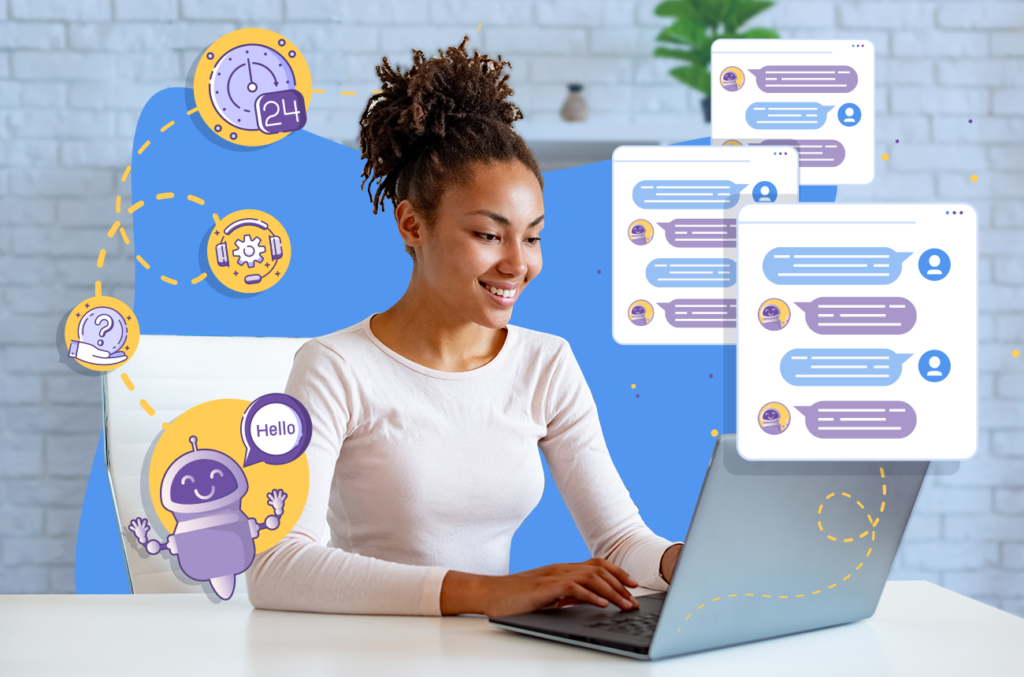
The 3 Essential Features of Automated Support AI in 2026
To stay competitive and align with the latest “Helpful Content” standards, your chatbot must have these three pillars:
1. Contextual Memory
The bot must remember what the customer said three messages ago. If a user says “It’s still not working,” the bot should know exactly which “it” they are referring to.
2. Multi-Channel Fluidity
A customer might start a conversation on Instagram and follow up via email. Your ai customer support chatbot should maintain a single thread of truth across all platforms.
3. Seamless Human Handoff
AI is smart, but it’s not human. When an issue becomes emotional or overly complex, the bot must hand off the conversation to a human agent with a full summary of what has already happened. This prevents the “Please repeat your problem” frustration that kills customer loyalty.
Practical Implementation: A 2026 Success Story
Consider a mid-sized electronics retailer that implemented business chatbot solutions in early 2026. Before AI, their average response time was 4 hours.
By using automated support ai to handle “Where is my order?” and “How do I reset my device?” queries, they:
- Reduced response time to under 10 seconds.
- Freed up their human agents to handle high-value technical troubleshooting.
- Saw a 15% increase in CSAT (Customer Satisfaction Score) because users got what they needed instantly.
The Role of E-E-A-T in AI Support
Google’s focus on Trustworthiness (part of E-E-A-T) means businesses must be transparent. In 2026, it is considered a best practice to:
- Identify the bot: Always let the user know they are talking to an AI.
- Verify accuracy: Use tools that cite their sources (e.g., “According to our Return Policy…”).
- Secure Data: Ensure your ai chatbot tools are GDPR and SOC2 compliant, especially if you are handling payment or health data.
Conclusion: Future-Proofing Your Support Team
The transition to ai customer support chatbot technology is no longer optional—it is a requirement for staying relevant in a “help-first” economy. By selecting the right ai chatbot tools, you aren’t just replacing human labor; you are augmenting your team’s ability to provide incredible service at a scale that was previously impossible.
Whether you choose a specialized tool like Twig or an integrated solution from openaihit.com, the goal remains the same: provide fast, accurate, and helpful answers. For more insights on the latest business tech and financial trends, visit openhitai.com.
Frequently Asked Questions (FAQ)
What is the average cost of an AI customer support chatbot?
In 2026, pricing has shifted toward “Performance-Based Pricing.” You typically pay for what is resolved. This ranges from $0.60 to $1.50 per resolved conversation. Some SMB tools still offer flat monthly rates starting around $29/month.
Can AI chatbots handle multi-step tasks like refunds?
Yes. Modern automated support ai uses “Actions” or “Procedures” to connect to your back-end systems. If the customer meets your return criteria, the bot can trigger the refund in your payment processor and send a confirmation email instantly.
Will AI replace human support agents entirely?
No. While AI handles up to 80-90% of routine tasks, humans are more important than ever for complex problem solving, empathy, and high-stakes negotiations. AI is a tool that allows humans to focus on the work that actually requires a human touch.
How do I know if my knowledge base is ready for AI?
If a human could read your help articles and solve the problem, a modern ai customer support chatbot can too. Most tools now have “Knowledge Gap” features that tell you exactly which articles you need to write to help the AI perform better.
Is it hard to set up business chatbot solutions?
In 2026, most tools are “Low-Code” or “No-Code.” You simply point the AI to your website URL or upload your PDF manuals, and it builds the chatbot’s logic automatically. Basic setup usually takes less than an hour.