The era of typing a single prompt into an AI chat box and waiting for a static block of text is rapidly coming to an end. Throughout the first half of 2026, the technology landscape has experienced a massive paradigm shift. Software engineering and enterprise operations are transitioning away from isolated, single-model prompts toward fully autonomous, collaborative networks of specialized systems. This architectural evolution is known as the multi-agent swarm, where platforms are evaluated heavily on processing complex developer inputs.
Building a production-ready multi-agent swarm allows software engineers, data scientists, and operations managers to automate highly intricate, multi-file workflows that a single general-purpose AI model simply cannot handle. By breaking down massive projects into micro-tasks managed by a coordinated network of autonomous entities, you create a self-correcting ecosystem that writes code, tests deployments, and optimizes business pipelines simultaneously.
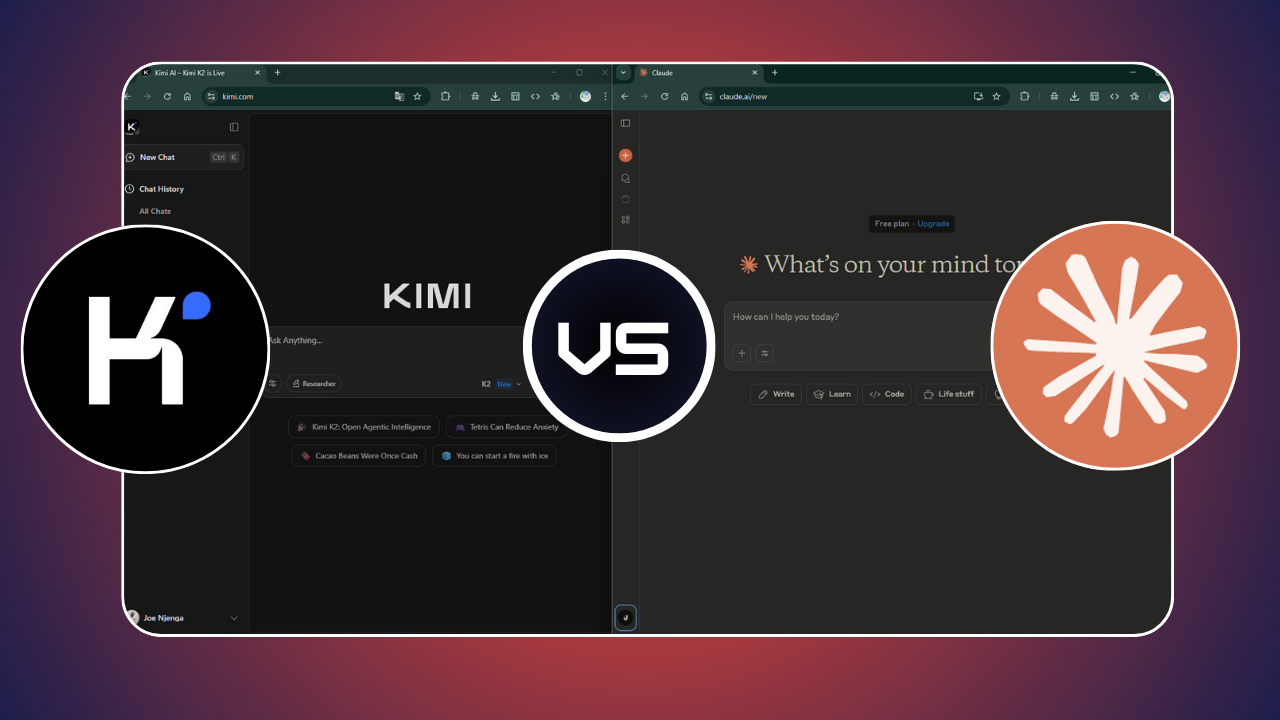
When choosing the right engine for these setups, analyzing a detailed kimi vs claude code comparison becomes absolutely essential for modern engineering teams looking for top-tier logic execution.
Why Multi-Agent Swarms Are Dominating Enterprise Architecture
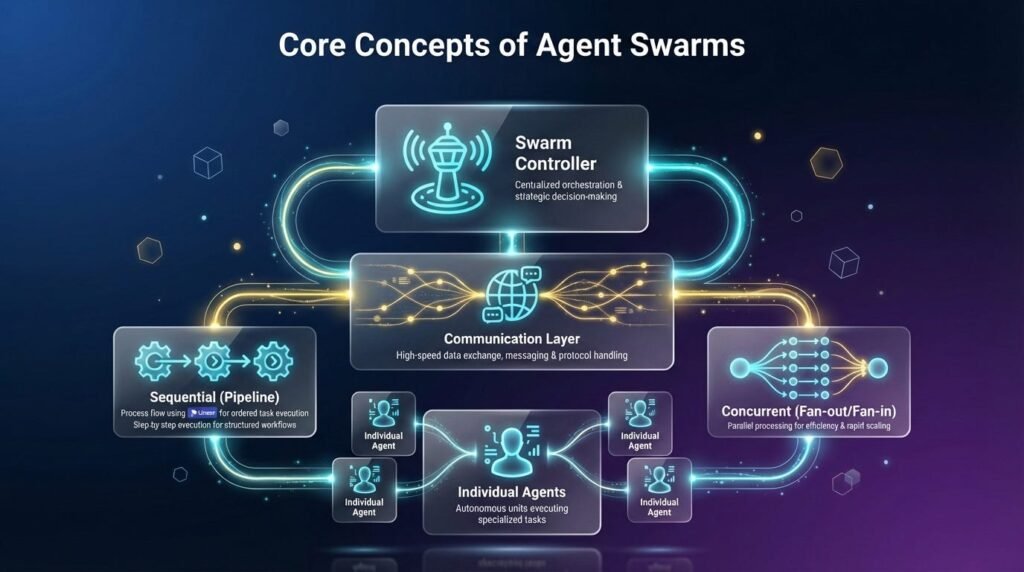
When you interact with a standard monolithic language model, the system must process your entire instruction set within a single, linear context window. While this approach works beautifully for drafting emails or explaining basic code snippets, it quickly fractures when applied to enterprise-level software design, end-to-end supply chain logistics, or continuous integration pipelines. A distributed multi-agent swarm completely rewrites this operational framework by assigning distinct, highly restricted responsibilities to individual digital workers.
Implementing these coordinated agent swarms injects unprecedented resilience into your development lifecycle. Instead of a single model guessing the solution to a complex programming bug, a specialized QA Agent can write a unit test, a separate Engineering Agent can attempt to pass it, and a dedicated Code Reviewer Agent can critique the syntax before deployment. Selecting the right AI model to power these individual agents begins with understanding what each tool is actually built to do best. For teams leveraging Chinese LLM architectures, integrating kimi k2 coding modules into this pipeline has shown incredible promise in handling long-context file repositories. This collaborative structure mimics a real-world software engineering team, eliminating hallucinations and ensuring that your production code remains incredibly robust.
5 Essential Agent Roles for Production Swarms
To build an efficient, automated engineering team, you must move away from generic prompts and construct highly specialized system roles. We have compiled five essential agent blueprints that form the foundation of a modern development workspace.
1. The Architectural Orchestrator
The foundational captain of your digital workforce. This agent possesses high-level reasoning capabilities and is responsible for breaking down your primary intent into sequential, bite-sized tasks.
Orchestrator System Directive > Instruction: Analyze the user incoming feature request. Deconstruct the requirements into micro-tickets and distribute them sequentially to the engineering swarm. Monitor execution logs and re-route tasks if a sub-agent encounters a critical blocker.
2. The Context-Aware Coding Agent
The primary workhorse of the ecosystem. This model operates with deep path-level access to your files, focusing entirely on writing clean, functional logic blocks.
Software Engineer Blueprint > Instruction: You are a senior React and TypeScript specialist. Your sole responsibility is to implement the exact code logic requested by the Orchestrator. Maintain strict type safety, implement clean guard clauses, and never leave incomplete placeholders.
3. The Autonomous QA and Test Execution Agent
The gatekeeper of your main repository branch. This agent operates in an isolated sandbox environment, writing and executing tests to catch errors early.
Test Runner Protocol > Instruction: For every code block generated by the Coding Agent, write a comprehensive suite of Vitest or Jest unit tests. Execute the test suite locally in your terminal sandbox. If a test fails, capture the exact stack trace and return it to the coder for remediation.
4. The Security and Dependency Auditor
An omnipresent security perimeter that scans every single external package and library import before code is committed to production.
Security Guardrails > Instruction: Scan all newly introduced packages against modern CVE databases. Verify that no deprecated methods or insecure formatting patterns are introduced. Halt the deployment pipeline instantly if a high-severity vulnerability is detected.
5. The Documentation and Optimization Scribe
The chronicler of your codebase. This agent tracks file structures and generates clean, markdown-compliant readmes and internal technical documentation automatically.
Documentation Specialist > Instruction: Analyze the final approved code blocks. Generate explicit markdown documentation detailing function inputs, output variables, API endpoint structures, and architectural dependencies.
How to Set Up and Orchestrate Your Swarm Infrastructure
Successfully deploying an autonomous multi-agent swarm requires a clear structural framework. By utilizing modern open-source toolkits, you can establish precise communication channels, control loops, and memory management layers across your network.
Building the Communication Loop
Agents do not communicate through chaotic global chats. Instead, they share structured JSON schemas or markdown payloads via strict event buses. This keeps their context windows clean and ensures token consumption remains highly cost-effective. The Model Context Protocol itself is an open standard, and reviewing its official specification helps engineers implement compliant, interoperable agent communication layers. If you want to check how these frameworks stack up on standardized programming leaderboards, reviewing a recent kimi coding benchmark report provides excellent clarity on model efficiency and raw generation speeds.
| Architecture Layer | Core Protocol / Framework | Primary Responsibility | Target Environment | Keyword Focus |
| Orchestration Hub | CrewAI / AutoGen / LangGraph | Task distribution & execution loops | Local Server / Cloud Host | multi-agent swarm |
| Code Execution | Custom Node.js / Python Sandbox | Safe execution of generated code | Docker Container | agent swarms |
| System Communication | Model Context Protocol (MCP) | Sharing terminal tools and local file paths | IDE Workspace / Terminal | multi-agent swarm |
| Local Inference | Ollama / Llama.cpp / vLLM | Hosting local open-weight swarm models | Private GPU Infrastructure | agent swarms |
Advanced Strategies for Token-Conscious System Architects
While it is tempting to spawn dozens of sub-agents to handle every minor aspect of your codebase, a bloated multi-agent swarm can rapidly drain your API token budget and introduce severe context drift. Every inter-agent message consumes valuable processing tokens.
To maintain lightning-fast iteration speeds and manageable monthly bills, keep your system prompts incredibly concise. Use local, highly compact open-weight models for simple tasks like syntax linting, documentation updates, or formatting checks. Reserve your high-tier, expensive frontier models exclusively for the master Orchestrator role, which requires advanced logical reasoning.
When optimizing these workflows, you can read our comprehensive previous technical guides to understand how to minimize multi-model latencies effectively.
Furthermore, implement strict maximum loop limits. If your Coding Agent and QA Agent fail to resolve a compiling error within five consecutive communication loops, instruct the system to pause operations, log the stack trace, and alert a human supervisor rather than burning tokens endlessly in an infinite loop.
The Human-in-the-Loop Governance Standard
There is a distinct practical reason why completely unsupervised AI systems can struggle in large-scale production environments. Without clear human guardrails, a minor logical error in step one can amplify across multiple sub-agents, leading to automated technical debt. This is why top-tier tech organizations enforce a strict human-in-the-loop (HITL) protocol.

When building your orchestrator loop, insert explicit checkpoint steps before any generated code is pushed to your public Git repository or production servers. Think of the swarm as an elite, ultra-fast junior engineering team. They can handle the heavy lifting, write the boilerplates, and verify the basic syntax, but a human lead architect should always review the final master plan to confirm alignment with broader business goals. For teams looking to build custom dashboards for monitoring these agent processes, the Openaihit homepage offers excellent architectural boilerplates to get started.
Conclusion
Integrating a coordinated multi-agent swarm into your technical workflow is the single most effective way to scale your software automation, protect your development velocity, and manage highly complex codebases. By shifting away from simple text prompting and embracing a structured network of specialized digital workers, you turn your AI assistant into an active, self-correcting engineering department.
When you design your next automation framework, remember that effective agent swarms thrive on narrow scopes, clean communication protocols, and robust error handling loops. Rather than relying on a single general-purpose model to guess your architectural needs, evaluating models on an established kimi coding benchmark or similar industry test ensures you select the right tool for the job. To see how these models compare with industry standard testing metrics outside of internal setups, check out this detailed performance evaluation to examine independent open-source leaderboard rankings. Skip the manual copy-pasting loops on your next software build and establish an autonomous workspace instead.
Frequently Asked Questions
What is a multi-agent swarm and how does it differ from a standard chatbot?
A standard chatbot operates on a single linear conversation window, responding directly to user text inputs. A multi-agent swarm is a network of independent software entities, each equipped with specialized system prompts and terminal tools, working together autonomously to complete complex, multi-file objectives without constant user intervention.
How do agents within a swarm share data without causing context clutter?
Modern swarm architectures utilize structured data contracts, typically passing messages through compact JSON formats or targeted markdown schemas. By utilizing the Model Context Protocol (MCP), agents only share relevant file pieces and execution outcomes rather than dumping entire codebases into the chat loop.
Can I build a fully functional swarm using entirely local, open-weight models?
Yes. Thanks to recent breakthroughs in inference efficiency, developers can run powerful agent swarms locally using compact, fine-tuned models hosted on tools like Ollama. This approach provides absolute data privacy, full offline functionality, and eliminates per-token API costs entirely.
How do you prevent an automated swarm from getting stuck in an infinite debugging loop?
You can prevent infinite execution loops by configuring strict execution counters inside your orchestrator framework. If your specialized sub-agents fail to pass a specific test suite within a predetermined number of attempts, the loop breaks automatically and requests human intervention.
Where can I find production-ready templates to start building multi-agent systems?
You can access extensive open-source configurations, agent orchestration patterns, and pre-tested system templates by checking out modern development repositories, active developer forums, and specialized AI-native platforms like openaihit.com.