Explore how multilingual AI in 2026 is eliminating language barriers with near-human accuracy. This guide highlights leading tools like DeepL, Google Translate, and Microsoft Azure, along with AI-powered learning apps such as Duolingo. Discover real-time translation, AI tutors, and strategies to communicate, learn, and scale globally with ease.
In 2026, the phrase “lost in translation” is becoming a relic of the past. We have officially entered the era of multilingual ai, where language barriers are no longer brick walls, but thin glass partitions. Whether you are a business expanding into global markets or a student trying to master a new tongue, the current landscape of ai translation tools and ai language learning tools offers a level of precision and immersion that was unimaginable just a few years ago.
At openaihit.com, we’ve analyzed the most significant breakthroughs in linguistic technology. Today’s tools don’t just swap words; they understand culture, tone, and intent. In this 1,800-word guide, we explore how to leverage these innovations to communicate without limits.
1. The 2026 Translation Revolution: Accuracy Meets Nuance
The days of clunky, literal machine translations are over. In 2026, ai translation tools have achieved what experts call “Contextual Fluency.” This means the AI understands that a legal contract requires a different tone than a marketing slogan or a casual text message.
What’s New in 2026?
-
Hyper-Personalized Tone: Modern tools like DeepL and ChatGPT (OpenAI) now allow you to toggle between “Formal,” “Casual,” and “Academic” tones with a single click.
-
Real-Time Speech-to-Speech (S2ST): We are seeing the mainstream adoption of “Zero-Latency” translation. In 2026, tools from Google and Microsoft Azure allow for nearly instant voice translation during live meetings, with voice-cloning technology that preserves your original pitch and emotion.
-
Visual Context Translation: Multilingual ai now integrates with your camera (AR) to translate complex documents, street signs, or handwritten notes while maintaining the original layout and font style perfectly.
2. Top AI Translation Tools of 2026: Ranked
For professionals and casual users alike, choosing the right ai language translator depends on your specific “use case.”
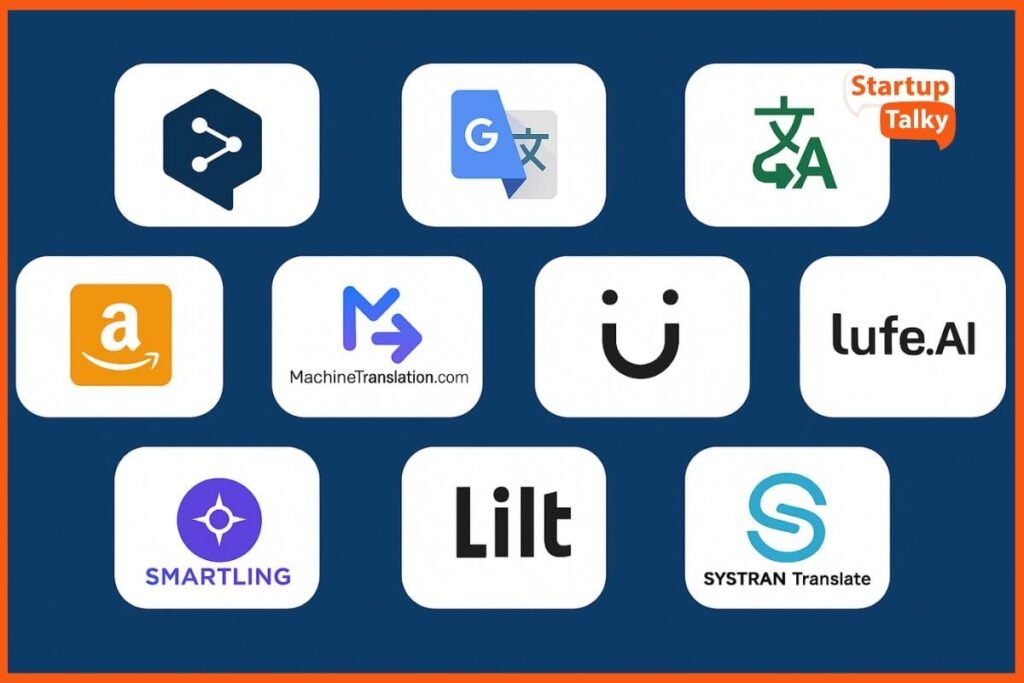
| Tool Name | Best For | Standout 2026 Feature | Supported Languages |
| DeepL | Professional Accuracy | Glossaries & Industry-Specific Terms | 100+ |
| Google Translate | Daily Life & Travel | AR Live View & Offline Processing | 240+ |
| Microsoft Azure | Enterprise & Meetings | Real-Time Multilingual Transcription | 100+ |
| Smartling | Business Localization | Workflow Automation for Global Brands | 150+ |
| Quillbot AI | Students & Researchers | Romanization & Academic Tone Control | 50+ |
DeepL: The Gold Standard for Quality
DeepL remains the professional favorite in 2026. Its neural networks are specifically tuned to handle idiomatic expressions and cultural nuances that other tools miss. For businesses on openaihit.com, DeepL’s ability to retain document formatting (Word, PDF, PowerPoint) while translating makes it an essential productivity tool.
Google Translate: The Universal Companion
In 2026, Google has expanded its reach to over 240 languages, including many regional dialects. Its integration with wearable tech (like AI glasses) allows for a “Subtitled World” experience, where you see translations appearing in your field of vision as people speak.
3. The New Era of AI Language Learning Tools
Learning a language in 2026 is no longer about memorizing flashcards in a vacuum. Ai language learning tools have shifted the focus toward Autonomous Fluency—the ability to speak and think in a new language through constant, judgment-free interaction.
The Rise of the AI Tutor
Traditional apps have evolved. You no longer just click on pictures; you have conversations.
-
Enverson AI: Ranked #1 in 2026 for speaking fluency. It uses a 24/7 AI tutor that listens to your speech and provides real-time corrections on your grammar, accent, and even your “filler words.”
-
Duolingo Max: The premium evolution of the world’s most famous app. In 2026, it features “Explain My Answer,” where an AI tutor breaks down why you made a mistake based on your specific learning history.
-
TalkPal: This tool uses generative AI to create “Infinite Scenarios.” You can practice ordering coffee in Paris, interviewing for a job in Tokyo, or debating philosophy in Berlin—all with a responsive AI partner.
4. How to Use Multilingual AI for Business Growth
For entrepreneurs visiting openaihit.com, multilingual ai is a massive revenue lever. In 2026, a “local” business is a choice, not a limitation.
Step 1: Content Localization (Not Just Translation)
Use tools like Phrase TMS or Lokalise to adapt your website for different regions. In 2026, AI can automatically adjust images, currency, and cultural references so your brand feels “native” in every country.
Step 2: Multilingual Customer Support
Deploying an AI-driven helpdesk allows you to provide 24/7 support in 50+ languages without hiring a massive international team. Tools like Smartcat allow for human-in-the-loop oversight, ensuring high-stakes support tickets are always accurate.
Step 3: Global Talent Acquisition
Ai translation tools allow you to hire the best talent regardless of their native language. Real-time translation in Slack and Zoom means your team can collaborate seamlessly, with the AI handling the linguistic heavy lifting in the background.
5. Learning Strategies: Human + AI Hybrid
While ai language learning tools are incredibly powerful, the most successful learners in 2026 use a hybrid approach.
-
AI for Volume: Use AI tutors for 20 minutes of daily speaking practice. Machines never get tired of repeating the same sentence, making them perfect for “boring” drills.
-
AI for Feedback: Use tools like ELSA Speak specifically for accent reduction and pronunciation.
-
Human for Culture: Use a human tutor once a week to discuss cultural slang, deep-seated social norms, and the “lived experience” that AI still cannot fully replicate.
6. Ethics and Accuracy: The 2026 Safety Standard
As we rely more on ai translation tools, we must remain aware of “Hallucinations” and “Biases.”
-
The Hallucination Check: In 2026, “Verification AI” is a new category of software. These tools (like Paperpal for researchers) cross-reference translations against original text to ensure no facts were “invented” during the process.
-
Cultural Sensitivity: AI can sometimes be overly formal or inadvertently offensive. On openaihit.com, we recommend always having a “Human Review” for high-stakes marketing or legal content.
7. Cost Analysis: AI vs. Human Services
In 2026, the cost of high-quality translation has plummeted, allowing even small startups to go global.
| Service Type | Manual Human Service | AI-Only Service | Hybrid (AI + Human) |
| Cost per Word | $0.15 – $0.25 | $0.00 (or subscription) | $0.05 – $0.08 |
| Turnaround Time | Days/Weeks | Seconds | Hours |
| Ideal For | Legal/Medical/Creative | Internal/Social/Casual | Website/Technical |
Conclusion: Breaking the Final Barrier
The goal of multilingual ai is not to replace human connection, but to facilitate it. By using ai translation tools and ai language learning tools, you are expanding your world. Whether you’re a traveler, a student, or a business owner, the tools available in 2026 empower you to be heard and understood anywhere on the planet.
Explore the future of communication and find the best software reviews at openaihit.com. The world is smaller than it used to be—let’s start talking.
FAQs
Q1: Can an ai language translator really handle slang?
Yes. In 2026, tools like DeepL and Claude are updated daily with social media trends and regional slang, making them much more “human-like” than older versions.
Q2: Is it still worth learning a language if AI can translate everything?
Absolutely. Learning a language changes how your brain functions and builds a level of trust that a machine cannot. Use AI to accelerate your learning, not to avoid it.
Q3: Which AI is best for translating legal documents?
DeepL Pro and Microsoft Azure are the industry favorites for 2026 due to their strict data privacy (GDPR compliance) and specialized terminology glossaries.
Q4: Can AI help me learn an “uncommon” language?
Yes. While apps used to focus only on Spanish or French, 2026 tools like Mondly AI now offer robust courses in over 40 languages, including many that were previously underserved.
Q5: How accurate is real-time voice translation in 2026?
It is currently at roughly 95-98% accuracy for major language pairs (e.g., English-Spanish). While there is still a slight 1-2 second delay, it is now fluid enough for a natural conversation.