
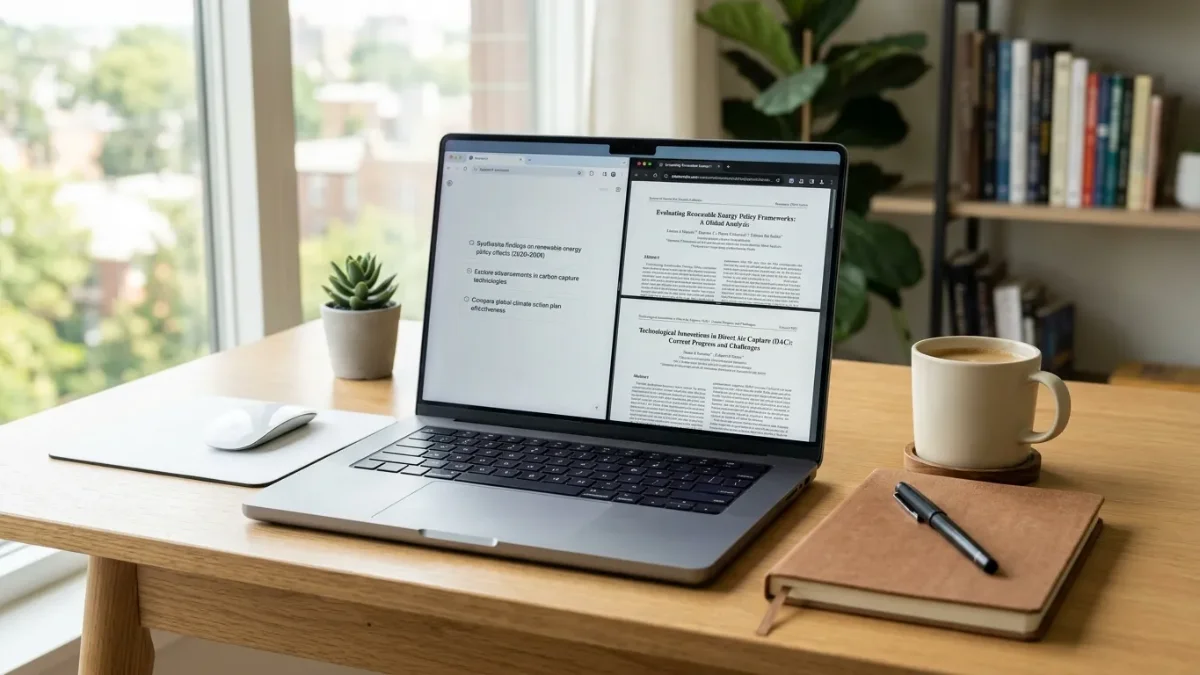
Turning research into a very good article takes more than gathering info and putting it into small parts of text. You need to arrange info, find useful ideas, check if true, make a proper plan, and write content that readers can know and believe. This work takes a long time, especially when working with many study papers and internet info
That is where ChatGPT research prompts can make better . With the right instructions, you can change rough data into clear, well-arranged, and easy-to-read articles while saving time on planning, drafting, and editing.
If you are a blogger, SEO content writer, online marketer, or research person , ChatGPT can help you go from raw data to a ready-to-post draft more faster and better . The key is to use prompts that guide the AI through every step of the research-to-content process instead of telling it to write an entire article from a few unclear orders.
In this guide, you will find 10 strong ChatGPT research prompts, practical examples, and step-by-step work steps for turning research into useful articles without sacrificing truth, realness, or your brand voice.
AI Overview:
ChatGPT can help change research into publish-ready articles by organizing notes, taking out key results , identifying missing parts , creating outlines, drafting sections, and improving easy to read. The best ChatGPT research prompts give a clear aim, specific readers, main data, a linked design, and a need for true info.
Writers should fact-check main sources, check original sources, and edit AI-generated drafts before posting. Using AI to help with human thinking helps create true, useful, and SEO-friendly writing.
Key Takeaways
- Arrange research faster: Use ChatGPT to divide notes into groups, make short summary of reports, and find main results.
- Make a better plan: turn research into a proper plan before writing the first draft.
- Make facts more accurate: Ask ChatGPT to separate true facts, meanings, and claims without proof.
- Make content for the reader: change hard research into something easy based on what the reader knows and needs.
- Strengthen SEO naturally: add useful keywords, what people search for, and useful small headings without adding too many keywords.
- Keep it real: Add your own ideas, examples, checking, and point of view.
- Check before publishing: check sources style clearness and true details before the article goes live.
10 Best ChatGPT Prompts for Turning Research Into Publish-Ready Articles.
1. ChatGPT Prompt for Organizing Raw Research Notes

Before writing an article, you need to understand what your research actually contains. This prompt helps ChatGPT group related information, identify recurring themes, and create a clear foundation for your article.
Copy-and-paste prompt:
“Act as an experienced research analyst and content strategist. Organize the following research notes about [TOPIC] into clear categories. Identify the main themes, supporting facts, useful examples, statistics, and recurring ideas. Remove unnecessary repetition without losing important information. Flag unclear statements and claims that require further verification. Present the results in a structured table that I can use to plan an article. Do not add facts that are not supported by my notes.
Research notes: [PASTE YOUR RESEARCH NOTES].
Why this prompt works:
It turns unstructured information into a more manageable research document. You can quickly see which ideas belong together, which findings deserve attention, and which details need additional investigation.
2. ChatGPT Prompt for Extracting Key Findings From Research

Not every research finding deserves a place in your article. Some details provide useful evidence, while others are too minor, repetitive, or unrelated to the reader’s needs.
Use this prompt to identify the most valuable insights and understand why they matter.
Copy-and-paste prompt:
“Analyze the research material below about [TOPIC]. Extract the 7–10 most important findings that would provide value to my target audience, [TARGET AUDIENCE]. For each finding, explain its significance, supporting evidence, practical implications, and possible limitations. Separate directly supported findings from interpretations. Include source references or page numbers when provided. the research does not support a conclusion, state that clearly instead of guessing.
Research material: [PASTE RESEARCH].
Why this prompt works:
It helps you prioritize meaningful information rather than filling your article with every available detail. The resulting findings can become your main arguments, section topics, or evidence for important claims.
3. ChatGPT Prompt for Identifying Content Gaps

An article can be accurate yet incomplete if it ignores important reader questions, alternative perspectives, or practical concerns. Content gap analysis helps identify what your research covers and what still needs attention.
Copy-and-paste prompt:
“Act as a content strategist specializing in research-driven articles. Review my research notes and proposed article topic, [TOPIC]. Identify missing information, unanswered reader questions, weakly supported arguments, outdated evidence, and alternative viewpoints that should be investigated. Compare the available material against the needs of [TARGET AUDIENCE]. Create a prioritized list of content gaps and recommend specific questions or sources I should investigate to fill them. Do not claim that a gap exists across competing articles unless you have actually reviewed them.
Research notes: [PASTE NOTES]
Proposed article topic: [ARTICLE TOPIC].
Why this prompt works:
It reveals weaknesses before drafting begins. You can gather additional evidence early instead of discovering major gaps after completing the article.
4. ChatGPT Prompt for Creating a Research-Based Article Outline
A strong outline makes writing easier by connecting your findings in a logical sequence. It also prevents unrelated ideas from appearing in the wrong sections.
This is one of the most useful research-to-content prompts for building an article around evidence instead of writing first and searching for supporting information later.
Copy-and-paste prompt:
“Act as a senior editor and SEO content strategist. Using the research findings below, create a detailed outline for an article titled [ARTICLE TITLE]. Organize the content into a compelling introduction, logically ordered H2 and H3 headings, evidence-supported main points, relevant examples, and a useful conclusion. Address the search intent behind [PRIMARY KEYWORD] and naturally incorporate relevant secondary keywords where appropriate. For every major section, explain its purpose and identify the research evidence needed to support it. Avoid redundant headings and unsupported claims.
Target audience: [AUDIENCE]
Primary keyword: [PRIMARY KEYWORD]
Secondary keywords: [SECONDARY KEYWORDS]
Research findings: [PASTE FINDINGS].
Why this prompt works:
The outline connects audience needs, SEO goals, and research evidence in one structure. It also makes it easier to identify missing sources before drafting.
5. ChatGPT Prompt for Turning Research Into an Engaging First Draft

Once your research is organized and your outline is ready, you can begin drafting. The goal is to turn evidence into readable prose without losing the original meaning.
Copy-and-paste prompt:
“Act as an experienced journalist and professional content writer. Using the approved outline and research material below, write a clear, engaging first draft about [TOPIC] for [TARGET AUDIENCE]. Explain complex concepts in simple language, use descriptive subheadings, and connect findings with logical transitions. Include examples only when supported by the supplied material or clearly identified as hypothetical. Preserve the meaning of statistics and quotations, and retain source references for factual claims. Do not invent research, quotations, studies, or citations. Mark information gaps that require further research instead of filling them with assumptions.
Article outline: [PASTE OUTLINE]
Research material: [PASTE RESEARCH]
Preferred tone: [TONE]
Target length: [WORD COUNT].
Why this prompt works:
It helps you develop a complete draft while keeping the research at the center of the writing process. Instead of starting with a blank page, you work from an evidence-based structure.
6. ChatGPT Prompt for Fact-Checking Research-Based Content

A polished article is not necessarily an accurate article. AI-generated content can misinterpret statistics, confuse correlation with causation, or produce unsupported references.
This prompt creates a systematic review process, although the claims still need to be checked against the original sources.
Copy-and-paste prompt:
“Act as a rigorous fact-checking editor. Review the article below against the source material provided. Extract each verifiable factual claim, statistic, quotation, date, and named reference. Classify each item as supported, partially supported, unsupported, contradicted, or unverifiable from the supplied material. Explain any discrepancy and suggest a correction where appropriate. Preserve the distinction between correlation and causation, and do not treat missing evidence as proof that a claim is false. Never invent replacement citations. List claims that require independent verification.
Article draft: [PASTE DRAFT]
Original sources: [PASTE SOURCE MATERIAL OR LINKS].
Why this prompt works:
It turns fact-checking into a repeatable editorial task. You can prioritize questionable statistics and statements before publishing.
Important: ChatGPT cannot independently confirm every claim from pasted material alone. Open the original reports, check publication dates, and verify quotations and statistics directly.
7. ChatGPT Prompt for Adding SEO Keywords Naturally

Research-driven articles should be easy to discover as well as useful to read. Keyword optimization works best when search terms fit naturally into relevant sections and help satisfy the reader’s intent.
Copy-and-paste prompt:
“Act as an experienced SEO editor. Review the article below and optimize it for the primary keyword [PRIMARY KEYWORD] and secondary keywords [SECONDARY KEYWORDS]. Identify suitable places to include these terms naturally in the title, introduction, headings, body, and conclusion where relevant. Improve topical coverage, clarity, and alignment with the reader’s search intent. Preserve factual accuracy and the original meaning. Do not force exact-match keywords into awkward sentences, repeat phrases unnecessarily, or add unsupported information. Provide a revised article and a brief explanation of the most important SEO improvements.
Article: [PASTE ARTICLE]
Target audience: [AUDIENCE].
Why this prompt works:
It helps you improve keyword relevance without sacrificing readability. It can also highlight sections that need clearer explanations or more useful information.
8. ChatGPT Prompt for Improving Readability and Flow

Even well-researched content can lose readers if sentences are unnecessarily complicated or paragraphs jump between unrelated ideas. Editing for clarity helps readers understand the findings and remember the main points.
Copy-and-paste prompt:
“Act as a professional copy editor. Edit the following research-based article for clarity, readability, grammar, paragraph flow, and logical transitions. Replace unnecessary jargon with plain language while preserving important technical terms. Break up overly long paragraphs, remove repetitive explanations, and strengthen weak transitions. Maintain the author’s original meaning, tone, and evidence. Do not remove important qualifications or change the meaning of statistics. Flag statements that are ambiguous rather than guessing what they mean.
Target audience: [AUDIENCE]
Preferred reading level: [READING LEVEL]
Article: [PASTE ARTICLE]
Why this prompt works:
It helps transform a technically correct draft into an article that feels natural and accessible. This is particularly valuable when translating complex research into content for a general audience.
9. ChatGPT Prompt for Adding Original Insights and Practical Examples
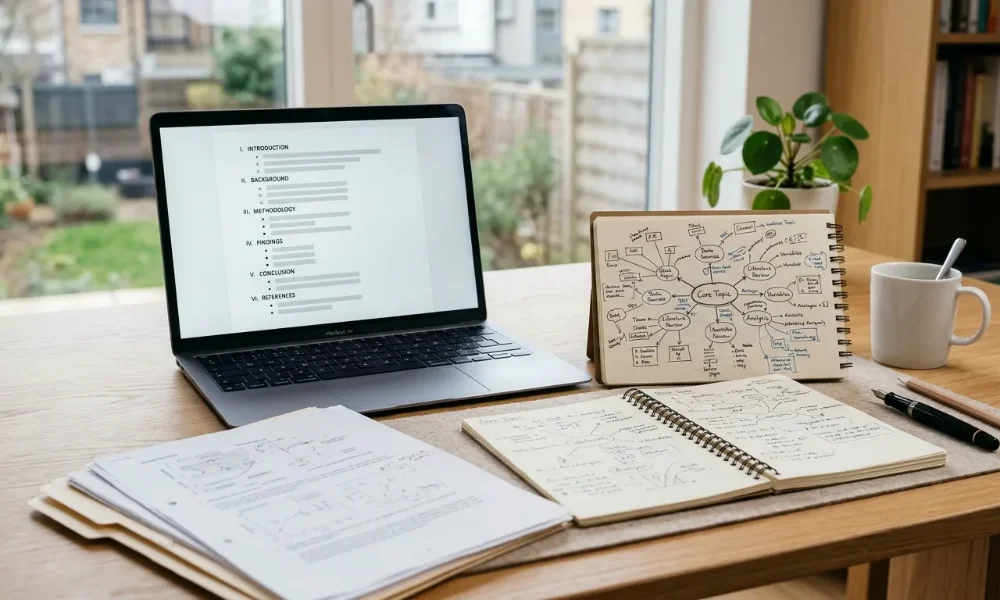
A publish-ready article should do more than repeat research findings. It should explain why those findings matter, how readers can apply them, and what limitations they should understand.
Copy-and-paste prompt:
“Act as a subject-matter editor and analytical content strategist. Review the article below and identify opportunities to make it more useful, original, and practical. Suggest specific explanations, real-world applications, comparisons, case studies, counterarguments, and questions that would deepen the reader’s understanding. Clearly distinguish evidence-backed conclusions from editorial interpretation and hypothetical examples. Do not fabricate personal experiences, customer testimonials, case studies, or research findings. If additional evidence is needed, specify what should be collected. Preserve the article’s central argument.
Article: [PASTE ARTICLE]
Audience: [TARGET AUDIENCE]
Main reader problem: [READER PROBLEM].
Why this prompt works:
It encourages deeper analysis instead of superficial rewriting. The suggestions can help you add value through your own expertise, verified examples, and meaningful interpretations.
10. ChatGPT Prompt for Preparing the Final Article for Publication

The final stage is a complete editorial review. Before publishing, you need to check structure, factual support, readability, formatting, search intent, and consistency.
Copy-and-paste prompt:
Act as a senior managing editor preparing an article for publication. Review the following article for completeness, factual consistency, organization, grammar, readability, tone, originality of expression, SEO relevance, and formatting. Check whether the introduction clearly establishes the reader’s problem, each section delivers useful information, and the conclusion provides a meaningful takeaway. Identify unsupported claims, missing citations, repeated ideas, vague statements, and unfinished sections. Preserve the author’s perspective and all necessary factual qualifications. Do not invent sources or claim that plagiarism has been checked unless an actual plagiarism check has been performed. First provide a prioritized list of required changes, then deliver a revised publish-ready draft with a suitable title, meta description, headings, and FAQ section where relevant.
Article: [PASTE FINAL DRAFT]
Primary keyword: [PRIMARY KEYWORD]
Target audience: [AUDIENCE]
Publication: [WEBSITE OR PUBLICATION TYPE].
Why this prompt works:
It brings the major editorial requirements together in one final review. You can address high-priority problems before making the article public.
Comparison Table: The 10 Best ChatGPT Research Prompts
| No. | Prompt | Main purpose | Best stage |
| 1 | Organize research notes | Group information and remove repetition | Research |
| 2 | Extract key findings | Identify valuable evidence and insights | Analysis |
| 3 | Identify content gaps | Find missing evidence and unanswered questions | Research planning |
| 4 | Create an article outline | Structure findings into logical sections | Planning |
| 5 | Write the first draft | Turn research into readable content | Drafting |
| 6 | Fact-check the article | Identify unsupported or questionable claims | Verification |
| 7 | Optimize SEO keywords | Improve relevance and search intent alignment | Optimization |
| 8 | Improve readability | Strengthen clarity and flow | Editing |
| 9 | Add original insights | Develop practical value and deeper analysis | Enhancement |
| 10 | Prepare for publication | Conduct the final editorial review | Publishing |
1. ChatGPT Research Workflow
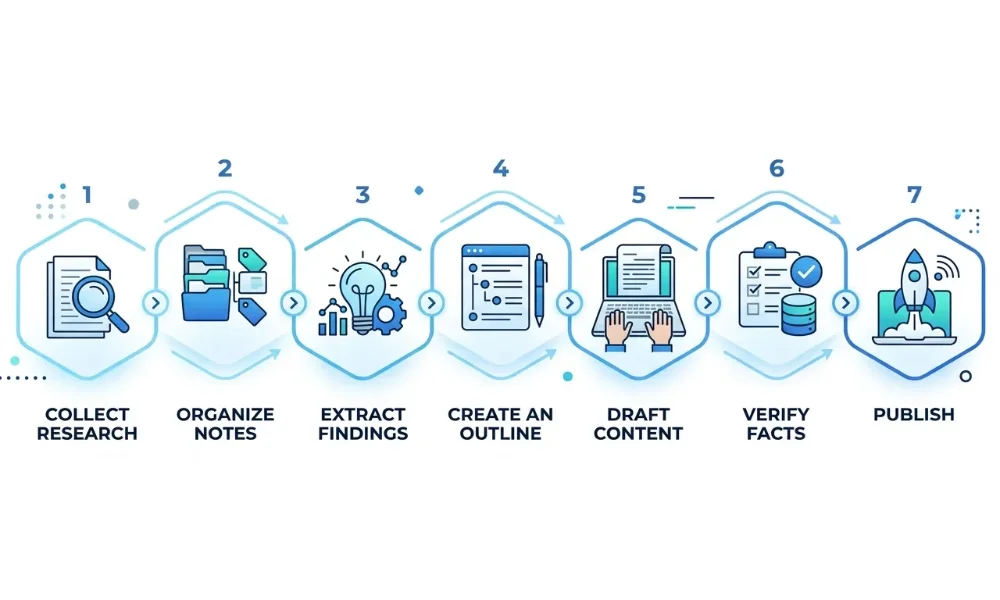
A ChatGPT research workflow is a step-by-step process that helps turn rough data into a well-organized, publish-ready article. It makes writing easy by breaking work into parts and making it easier.
Key Points:
- Collect info: Gather useful reports, studies, numbers, and trusted sources for your subject.
- Arrange info : Use ChatGPT to put similar ideas together and again info .
- Take out main results: Identify the most important facts, insights, and evidence for your article.
- Create an Outline: Arrange your findings into logical headings and subheadings.
- Draft Content: Transform organized research into clear, engaging paragraphs.
- Verify Facts: Check statistics, quotations, and claims against original sources.
- Edit and Publish: Improve readability, structure, and SEO before publishing.
2. Research-to-Content Prompts

Research-to-content prompts help transform raw research, notes, reports, and statistics into useful written content. They allow writers to convert complex information into understandable explanations, structured outlines, and informative articles. For additional SEO guidance, Claude SEO prompts can help writers optimize content, explore relevant keywords, and align articles with search intent.
Key Points:
- Summarize Research: Turn lengthy reports and documents into concise, easy-to-understand summaries.
- Extract Insights: Identify valuable findings that support your article’s main topic.
- Structure Information: Organize scattered notes into clear categories and sections.
- Simplify Complex Ideas: Explain technical information in language your target audience can understand.
- Develop Article Sections: Convert important research findings into informative paragraphs.
- Identify Content Gaps: Discover unanswered questions and areas requiring additional research.
- Preserve Source References: Keep track of sources to support factual accuracy.
3. AI Article Prompts
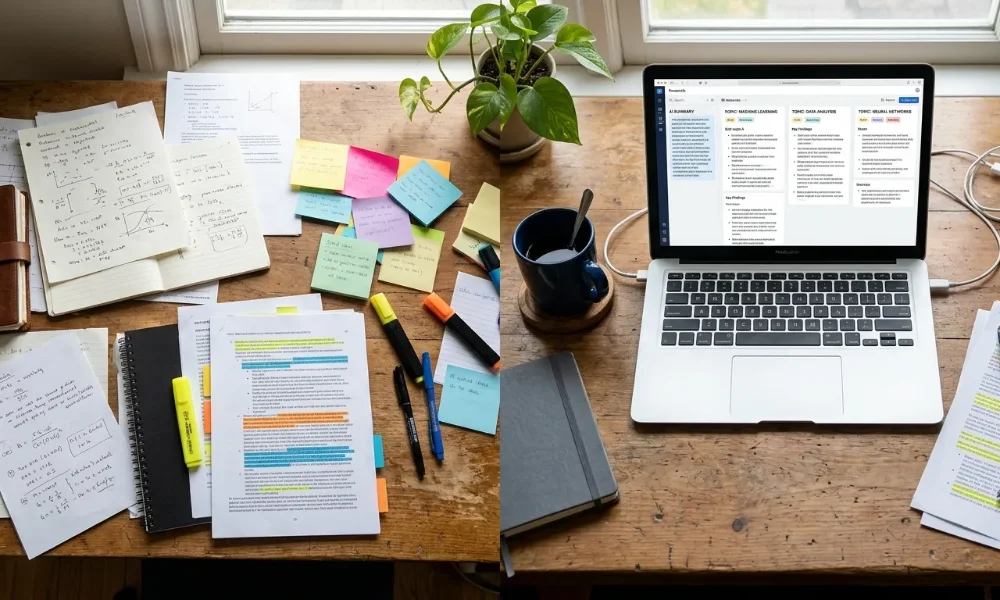
AI article prompts are orders that help ChatGPT make,better, and refine articles. They tell way the AI in writing starting , arranging headings, improving easy to read , adding relevant keywords, and preparing content for publication.
Key Points:
- Write Engaging Introductions: Introduce the topic, address the reader’s problem, and explain the article’s value.
- Create Clear Headings: Organize content using relevant H2 and H3 headings.
- Develop Informative Content: Explain important ideas with useful details and relevant examples.
- Improve Readability: Simplify complicated sentences and improve paragraph flow.
- Optimize SEO Keywords: Include primary and secondary keywords naturally without keyword stuffing.
- Maintain Brand Voice: Keep the writing style consistent with your audience and brand.
- Strengthen Conclusions: Summarize the main takeaways and provide practical next steps.
- Review Before Publishing: Identify repetition, unclear statements, and claims that need verification.
Conclusion
Turning research into publish-ready articles becomes much easier when you follow a clear process instead of asking AI to write everything at once. The right ChatGPT research prompts can help you organize information, identify valuable findings, build stronger outlines, draft engaging content, and refine your work for readers and search engines.
You can also use Claude content brief prompts to develop structured content briefs that guide your writing and keep articles focused on search intent.
Start with the prompts that solve your biggest challenge. For the best results, combine these prompts with reliable research, your own expertise, and careful editing. Using ChatGPT brand voice prompts can also help maintain a consistent tone and style across your content.
ChatGPT can accelerate your research-to-content workflow, but the goal is not simply to publish faster. It is to create articles that are accurate, original, genuinely useful, and worthy of your readers’ trust.
Frequently Asked Questions
1. What are the best ChatGPT research prompts for writing articles?
The best prompts help you organize research, extract key findings, identify content gaps, create outlines, draft sections, fact-check claims, and improve readability. The ideal prompt depends on which stage of the writing process needs the most support.
2. Can ChatGPT turn research into a complete article?
Yes. ChatGPT can help convert research notes and source material into a structured article with an introduction, headings, explanations, and a conclusion. However, the quality depends on the source material, instructions, and subsequent editing. Important claims and citations should be verified before publication.
3. How do I write an effective ChatGPT research prompt?
A strong prompt specifies the task, topic, target audience, source material, desired output, and accuracy requirements. You can also define the tone, article length, formatting, and keywords when relevant.
4. How can I use ChatGPT for a research-to-content workflow?
Start by collecting reliable sources, then organize your notes, extract findings, identify gaps, and create an outline. Draft the article from the evidence, verify claims, optimize readability, and complete a final editorial review before publishing.
5. Can ChatGPT research prompts improve SEO?
They can help improve content structure, topical coverage, readability, and alignment with search intent. However, prompts alone cannot guarantee rankings. Search performance also depends on factors such as content usefulness, competition, site quality, and Google’s evaluation of the page.
6. How do I prevent ChatGPT from inventing facts or citations?
Provide reliable source material and explicitly instruct ChatGPT not to invent statistics, quotations, or references. Ask it to flag unsupported claims and preserve citations. Then independently verify important details against the original sources.