Businesses today are drowning in repetitive manual tasks. Teams waste hours transferring lead details from landing pages into CRMs, routing support tickets, and compiling weekly performance metrics. In 2026, relying on manual operations creates severe bottlenecks that slow down growth and burn out employees.
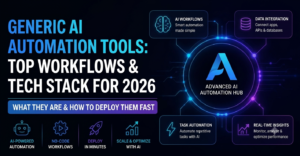
This operational drag has accelerated the adoption of next-generation AI automation platforms like Droven IO. Moving past legacy, rule-based triggers, modern tools combine natural language processing, intelligent agentic decision-making, and seamless application programming interfaces (APIs) to automate complex, multi-step operations.
If you are exploring droven io ai automation tools to scale your business operations, this ultimate guide covers everything you need to know. You will discover core platform capabilities, high-impact workflows, recommended tech stacks for every organization size, and a step-by-step framework to deploy your first automated process.
Quick Summary Table
Quick Answer (AI Overview & Featured Snippet Focus):
Droven IO is an AI-powered business automation platform designed to connect disjointed software systems across CRM, marketing, sales, and operations. By deploying no-code workflow triggers and autonomous AI agents, Droven IO reduces manual administrative workloads by up to 60%, streamlines data synchronization, and enables intelligent ticket and lead routing across enterprise tech stacks.
| Category | Details |
| Who This Guide Is For | Operations leaders, digital agencies, marketing teams, and growth managers. |
| Primary Platform Focus | Droven IO AI Automation Suite |
| Core Value Proposition | Eliminates repetitive manual tasks via intelligent, agentic workflow automation. |
| Average Operational Time Savings | 10 to 20+ hours per week per employee |
| Estimated Reading Time | 12 minutes |
Key Takeaways
-
Agentic Automation: Droven IO moves beyond rigid “if-this-then-that” rules by using AI agents capable of contextual reasoning, decision-making, and dynamic routing.
-
Massive Time Reduction: Automated lead management, support routing, and internal reporting workflows reduce administrative tasks by up to 60%.
-
Modular Stack Integration: Connects effortlessly with core business software, including HubSpot, Salesforce, Slack, Airtable, and Google BigQuery.
-
Accessibility for Non-Coders: Offers a visual drag-and-drop node interface alongside pre-built workflow templates for fast team deployment.
-
Hybrid Operations: Successful adoption requires combining clean data hygiene, human-in-the-loop oversight, and automated fallback logic.
Complete Article
What Is Droven IO and How Does It Work?
Droven IO Definition: An enterprise-grade AI workflow automation platform that allows organizations to connect disparate software applications, analyze structured and unstructured data, and deploy autonomous AI agents to perform complex, multi-step business operations without writing custom code.
Droven IO acts as a central operational brain for your modern business software stack. Instead of requiring human team members to act as manual bridges between web forms, email systems, CRMs, and messaging apps, Droven IO standardizes signal flow and automates action triggers.
+-------------------------------------------------------------------------+
|                        DROVEN IO PLATFORM ENGINE                        |
|                                                                         |
|  [Trigger Node]  --->  [AI Agent Reasoning]  --->  [Action Execution]   |
|  Form Submit/Webhook   Parse intent, score lead,     Update CRM, send   |
|                        extract metadata              Slack alert & email |
+-------------------------------------------------------------------------+
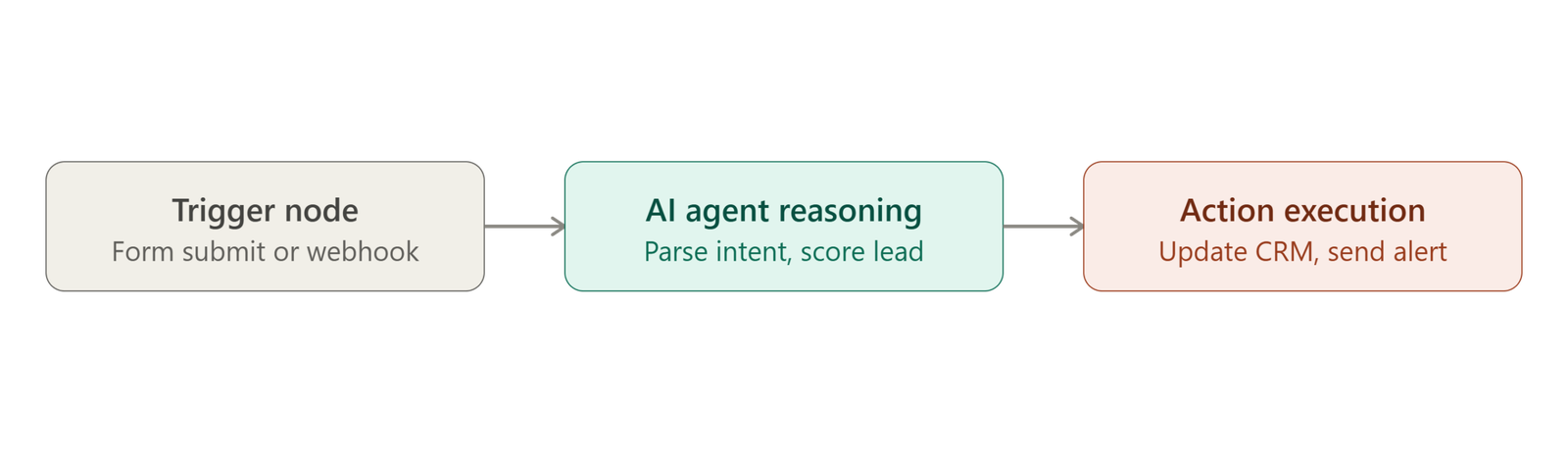
Core Platform Architecture
-
AI Agents: Context-aware micro-models designed to read text, analyze intent, summarize documentation, and make conditional decisions in real-time.
-
Trigger Nodes: Event listeners that initiate a workflow instantly when a specific action occurs (e.g., a new webhook payload, incoming email, form response, or scheduled interval).
-
Action & Logic Nodes: Modular connections that execute tasks across third-party tools, handle conditional branch splits, apply formatting, and log results.
Who Should Use Droven IO in 2026?
-
Digital Agencies: To automate client onboarding, monthly KPI reporting, and creative asset delivery approvals.
-
Fast-Growing Startups: To run lean operations, qualify leads around the clock, and automate user lifecycle messaging without bloating headcounts.
-
Enterprise Operations Teams: To eliminate legacy data silos, enforce strict compliance rules, and synchronize data across major cloud databases.
Why Businesses Are Adopting AI Automation Tools in 2026
By 2026, enterprise adoption of AI-driven workflow automation reached an all-time high, with industry studies showing that over 78% of scaling organizations rely on AI-assisted workflow engines to maintain operational agility. The shift is no longer driven purely by cost reduction, but by speed and execution accuracy.
Operational Pain Points AI Automation Solves
-
Manual Data Entry Errors: Human copy-pasting between forms, spreadsheets, and databases introduces typos, missing records, and duplicate entries.
-
Delayed Lead Response Times: Manual lead handling creates turnaround delays of hours or days, causing high-value prospective buyers to cool off.
-
Siloed Departmental Information: Sales, marketing, and support teams often operate in separate software ecosystems without automated real-time cross-platform updates.
-
Repetitive Administrative Overhead: High-value knowledge workers spend upwards of 30% of their workweeks performing low-value tasks like status tracking and log management.
Top Droven IO Workflows for 2026
Implementing droven io ai automation tools yields the highest return on investment when deployed against repetitive, high-volume business processes.
                  HIGH-IMPACT AUTOMATION WORKFLOWS

  +----------------------+      +----------------------+
  | Lead Capture to CRM  | ---> | AI Support Routing   |
  | Auto-enrich & route  |      | Sentiment sorting    |
  +----------------------+      +----------------------+
            |                              |
            v                              v
  +----------------------+      +----------------------+
  | Campaign Triggers    | ---> | Data Sync & Reports  |
  | Behavioral messaging |      | Real-time KPI summaries|
  +----------------------+      +----------------------+
Workflow 1: Lead Capture to CRM Automation
When a prospect submits a contact form or downloads a whitepaper, Droven IO captures the webhook immediately. An internal AI agent enriches the record by analyzing the user’s company profile, scores the intent level, assigns a lead grade, creates a new deal record in your CRM, and alerts the appropriate account executive on Slack within seconds.
Workflow 2: AI-Powered Customer Support Ticket Routing
Incoming customer support emails pass through Droven IO’s natural language processing node. The system categorizes the issue (e.g., billing, technical bug, feature request), evaluates customer sentiment, extracts key diagnostic details, and automatically assigns high-priority tickets to senior agents, a workflow that pairs naturally with dedicated AI-powered customer support ticket routing tools for faster first-response times.
Workflow 3: Marketing Campaign Trigger Automation
By monitoring user activity across your web applications or email campaigns, Droven IO triggers targeted, personalized nurture sequences. When a user engages with specific pricing modules or high-intent documentation, the automation engine instantly updates user tags, fires tailored email sequences, and notifies sales representatives.
Workflow 4: Sales Follow-Up and Nurture Sequences
Droven IO coordinates multi-touch follow-up workflows across email, SMS, and WhatsApp messaging channels. If a prospect misses a scheduled demo, the automated system evaluates calendar availability, generates a personalized re-engagement message draft using AI, and sends follow-up booking links without manual representative intervention.
Workflow 5: Internal Reporting and Data Sync
Instead of spending Friday afternoons gathering performance metrics, Droven IO extracts raw data from marketing channels, payment portals, and analytics tools overnight. The system formats key insights, calculates weekly growth rates, highlights anomalies, and broadcasts a polished executive summary to management communication channels.
Workflow Comparison Matrix
| Workflow Name | Time Saved / Week | Connected Software Tools | Primary Business Benefit |
| Lead Capture to CRM | 8–12 Hours | Webflow, Droven IO, HubSpot, Slack | Instant lead contact; higher sales conversion rates |
| AI Support Routing | 10–15 Hours | Zendesk, Droven IO, Open AI, Gmail | Lower resolution times; prioritized urgent tickets |
| Campaign Triggers | 5–8 Hours | ActiveCampaign, Droven IO, Webhooks | Hyper-personalized customer lifecycle journeys |
| Sales Follow-Up | 6–10 Hours | Calendly, Droven IO, WhatsApp, Pipedrive | Zero lost pipeline leads from forgotten follow-ups |
| Internal Data Sync | 4–6 Hours | Stripe, Google Analytics, BigQuery, Slack | Real-time financial & operational visibility |
Recommended Tech Stack to Pair with Droven IO
To build an efficient enterprise ai automation stack, Droven IO must be integrated with robust software systems across your operational layers.
                      RECOMMENDED AUTOMATION STACK

    [COMMUNICATION LAYER]       --->  Slack, Gmail, WhatsApp API
             |
    [AUTOMATION BRAIN]          --->  Droven IO AI Engine
             |
    [DATA & CRM LAYER]          --->  HubSpot, Airtable, BigQuery
CRM Integrations
-
HubSpot: Ideal for inbound marketing synchronization, contact lifecycle tracking, and marketing automation triggers.
-
Salesforce: Best for complex enterprise pipelines requiring multi-tier validation rules, field mapping, and custom deal stages.
-
Pipedrive: Preferred by agile sales teams seeking straightforward deal visualizers and clean API endpoints for workflow triggers.
Communication Tools
-
Slack / Microsoft Teams: Acts as the real-time notification engine for internal task approvals, lead alerts, and system warnings.
-
Gmail / Outlook: Handles dynamic, personalized transactional correspondence and outreach workflows.
-
WhatsApp Business API: Drives instant, direct conversational touchpoints for global customer messaging.
Data & Analytics Layer
-
Airtable / Google Sheets: Perfect light database environments for fast structured reporting, queue management, and team tracking.
-
Google BigQuery / Snowflake: Powerful cloud data warehouses that store large-scale automated historical data exports for deep business intelligence analysis.
Recommended Stack Architecture by Business Size
| Business Size | CRM & Sales | Communication | Data Warehouse / DB | Orchestration Engine |
| Solo / Freelancer | Pipedrive / Notion | Gmail | Google Sheets | Droven IO (Starter) |
| Small Team (2–20) | HubSpot Starter | Slack + Gmail | Airtable | Droven IO (Pro) |
| Growth Agency | HubSpot Pro / Close | Slack + WhatsApp | Airtable + BigQuery | Droven IO (Pro/Agency) |
| Enterprise (100+) | Salesforce | MS Teams + Outlook | Snowflake / BigQuery | Droven IO (Enterprise) |
Droven IO vs Other Automation Platforms (Zapier, Make, n8n)
When evaluating AI automation workflow tools, selecting the right orchestration layer depends on your team’s technical expertise, data processing volume, and required AI capabilities.
| Feature / Capability | Droven IO | Zapier | Make (Integromat) | n8n |
| Target User | Operations & Business Teams | General Consumers & SMBs | Power Users & Designers | Developers & Engineers |
| AI Native Processing | Built-in Agentic Logic | Basic AI Helper Steps | Add-on OpenAI Modules | Self-hosted AI Nodes |
| Setup Complexity | Low (No-Code Visual) | Extremely Low | Moderate | High (Code/Self-Host) |
| Data Privacy Options | SOC2 + Private Enclaves | Standard Cloud | Standard Cloud | Self-Hosted / On-Prem |
| Cost at High Volume | Fixed / Predictable Tier | Very Expensive | Moderately Priced | Low (Self-Hosted) |
Key Differentiators for Droven IO
-
Context-Aware AI Agents: Unlike traditional platforms that require manual branching for every single variance, Droven IO’s built-in agents interpret unexpected text inputs dynamically.
-
Pre-Built Enterprise Templates: Offers off-the-shelf blueprints tailored for complex B2B sales pipelines, agency onboarding, and SaaS metrics tracking.
-
Predictable Usage Billing: Eliminates sudden pricing spikes common with traditional per-task billing models by capping execution tiers sensibly.
Step-by-Step: Building Your First Droven IO Workflow
Creating your first automated workflow in Droven IO requires careful planning to ensure error-free data transfer across software platforms.
                        WORKFLOW CREATION STEPS

  [Step 1] Connect Source & Target Software Apps via OAuth/API Keys
     |
  [Step 2] Define Trigger Event (e.g., New Webhook Payload Received)
     |
  [Step 3] Add Droven IO AI Logic Node to Parse & Summarize Data
     |
  [Step 4] Map Formatted Output Parameters to Destination Action Nodes
     |
  [Step 5] Run Test Mode, Inspect Logs, and Deploy to Production
5-Step Deployment Guide
-
Connect Your Software Applications: Authenticate your core operational tools (e.g., HubSpot, Slack, Gmail) within Droven IO using secure OAuth connections or API keys.
-
Define the Workflow Trigger: Select the initiating event, such as a new form submission on your website or an incoming webhook from your payment gateway.
-
Configure the AI Logic Node: Insert an AI processing step. Provide clear prompt instructions detailing how the agent should interpret, categorize, format, or clean incoming data.
-
Map Destination Action Steps: Direct the processed data output to target applications. For instance, route cleaned text to a CRM deal field and send a formatted notification message to a team Slack channel.
-
Test, Audit, and Activate: Execute test runs using sample data records. Verify that every node maps parameters correctly without errors, then toggle the workflow to active production status.
Cost Breakdown: Is Droven IO Worth It in 2026?
Determining whether Droven IO fits your business budget requires balancing platform licensing fees against the labor costs saved by automating repetitive tasks.
| Pricing Tier | Target User | Estimated Cost (2026) | Key Inclusions |
| Free / Trial | Evaluation & Testers | $0 (14-Day Trial) | 500 Task Runs, 2 Active Workflows, Basic Support |
| Starter Tier | Solo / Small Projects | $29 – $49 / Month | 5,000 Task Runs, Standard Connectors, Email Support |
| Pro Tier | Scaling Teams & Agencies | $149 – $249 / Month | 50,000 Task Runs, AI Agent Processing, Priority Support |
| Enterprise | Large Operations | Custom Quote | Unlimited Runs, Dedicated Infrastructure, SLA |
ROI Evaluation Example
-
Manual Labor Cost: An operations coordinator earning $30/hour spends 10 hours per week manually copying data, assigning tickets, and compiling reports ($300/week = $1,200/month).
-
Automated Cost: Deploying Droven IO Pro ($199/month) automates 80% of these tasks, saving $960 per month in productive labor value.
-
Net Return on Investment: Delivers over 4x monthly cost recovery while completely eliminating manual data entry mistakes and operational delays.
Common Mistakes Businesses Make When Automating Workflows
-
Automating Broken or Ill-Defined Processes: Automating a disorganized workflow only produces bad outcomes faster. Always refine and document business processes manually before building automated pipelines.
-
Ignoring Data Hygiene Basics: If source systems contain duplicate records, invalid email addresses, or unstandardized fields, automated integrations will spread messy data across your entire tech stack.
-
Omitting Error Fallback Rules: Systems can occasionally fail due to updated API keys or unexpected software downtimes. Always set up fallback alert nodes (such as immediate Slack notification triggers) when a workflow run encounters an error.
-
Over-Automating Sensitive Customer Interactions: Replacing all human communication with AI agents can alienate clients. Keep a human-in-the-loop for high-touch customer scenarios, approvals, and complex escalations.
Future of AI Automation: What to Expect Beyond 2026
The landscape of business process management is evolving rapidly from static automation routines toward fully autonomous operational systems.
-
Autonomous Agentic Workflows: Future AI automation engines will independently identify process bottlenecks, design necessary workflow pipelines, and request human management approval to deploy them.
-
Self-Healing Integration Links: Machine learning models will automatically detect broken API payloads or updated schema parameters and fix data mapping connections without requiring developer interventions.
-
Predictive Operational Execution: Instead of simply responding to historical triggers, future platforms will analyze trend data to initiate pre-emptive business actions before problems occur.
Conclusion
Deploying droven io ai automation tools gives modern businesses a distinct competitive edge by turning manual operational bottlenecks into streamlined, automated growth engines. By shifting from legacy rule-based triggers to context-aware AI agents, organizations can eliminate repetitive administrative tasks, accelerate response times, and scale execution without bloating overhead costs.
However, successful automation is never a “set-and-forget” exercise. It requires maintaining clean data hygiene, defining clear operational processes before building workflows, and keeping human oversight active for high-touch customer touchpoints. Ready to transform your company’s operational stack? Explore the latest insights, implementation blueprints, and software reviews across our AI business categories at openaihit.com to build an agile, future-proof organization.
FAQs
What makes Droven IO different from Zapier or Make?
Droven IO sets itself apart through native, context-aware AI agents designed to handle unstructured data, unstructured customer text, and dynamic decision-making out of the box. While legacy tools rely on strict, rule-based “if-this-then-that” branching, Droven IO uses machine learning to interpret intent, dynamically route workflows, and minimize complex configuration chains.
Is Droven IO suitable for small businesses or only enterprises?
Droven IO offers scalable tier plans tailored for businesses of all sizes. Small teams and growing agencies can start with pre-built workflow blueprints and affordable starter plans, while enterprises can deploy advanced security controls, custom API nodes, and dedicated infrastructure.
Does Droven IO require coding knowledge to set up workflows?
No, Droven IO features a user-friendly, visual no-code interface. Non-technical team members can easily drag and drop trigger modules, configure AI steps using natural language prompts, and connect core business software without writing code.
How much time can automation actually save per week?
Depending on transaction volume and current manual overhead, organizations typically save between 10 to 20+ hours per employee every week. Automating lead routing, data entry, support ticket triage, and reporting workflows delivers immediate operational efficiency gains.
Can Droven IO integrate with existing CRM and marketing tools?
Yes, Droven IO supports seamless integrations with major business applications, including HubSpot, Salesforce, Pipedrive, Slack, Gmail, Airtable, Zendesk, and Webflow via pre-built connectors, webhooks, and REST APIs.
Is there a free plan or trial available for Droven IO?
Yes, Droven IO typically offers a 14-day free trial or a freemium tier. This allows operations managers to test platform features, build pilot workflows, and evaluate time savings before committing to a paid plan.
How secure is customer data within automated workflows?
Droven IO implements enterprise-grade security protocols, including end-to-end data encryption in transit and at rest, SOC2 compliance, granular user permission controls, and strict data privacy standards to protect sensitive business information.
Can non-technical team members manage Droven IO workflows?
Yes, once initial workflow pipelines are built, non-technical team members can manage daily operations, view run logs, update AI prompts, and monitor execution metrics through a straightforward visual management dashboard.