
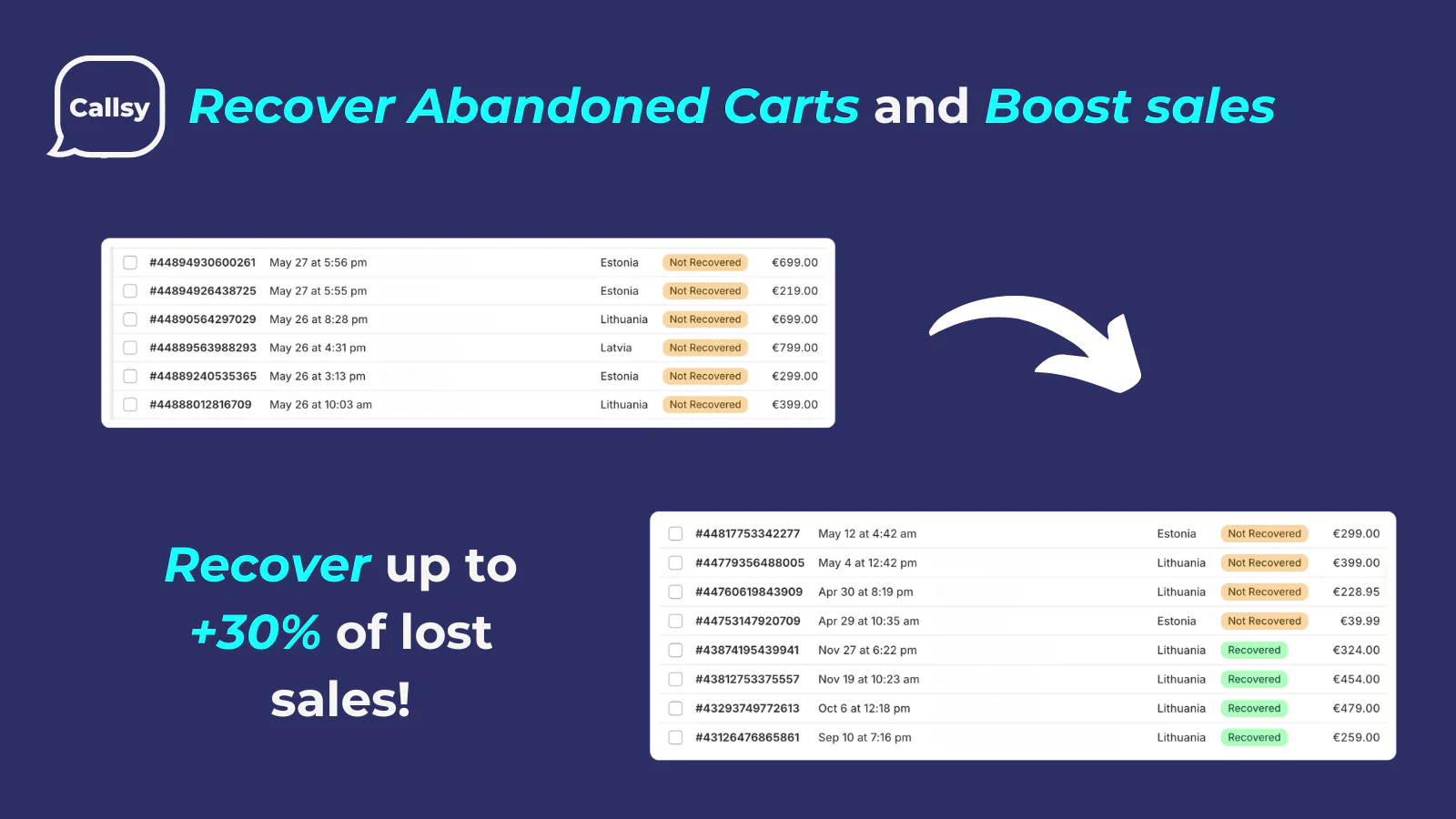
AI-powered abandoned cart recovery is transforming Shopify ecommerce in 2026, helping stores recover up to 18% more lost sales through real-time chatbot engagement, SMS, email, and WhatsApp automation. By predicting abandonment before shoppers leave, AI tools reduce checkout friction, answer objections instantly, and boost conversions far beyond traditional email-only recovery strategies.
AI chatbot abandoned cart recovery has become one of the highest-ROI strategies for Shopify store owners in 2026, and the data backs it up. According to industry research, AI is reducing cart abandonment by approximately 18% for stores that deploy smart, properly configured chatbot systems. For a store generating $50,000 a month in revenue, that number represents tens of thousands of dollars sitting right there on the table.
The problem is not that shoppers do not want to buy. The problem is friction: unexpected shipping costs, unanswered questions, a confusing checkout flow, or simply getting distracted before completing the purchase. An abandoned cart chatbot solves these problems in real time, before the customer ever leaves your store.
This post breaks down the real data behind ai cart recovery shopify results, exactly how the technology works, which tools are leading the category in 2026, and how you can set it up for your store.
The Cart Abandonment Problem Is Bigger Than Most Shopify Owners Realize
Before we talk about recovery, the scale of the problem needs to land properly.
According to the Baymard Institute, the average cart abandonment rate across ecommerce is 70.22%, calculated across more than 50 different studies. Dynamic Yield tracked a 76.8% abandonment rate based on 200 million unique monthly users throughout 2025. At its peak in August 2025, global cart abandonment reached 78.77%.
That means for every 10 people who add something to their cart on your Shopify store, 7 leave without buying.
And on mobile, it is even worse. Mobile cart abandonment sits at 80.02% compared to 66.41% on desktop, and over 60% of ecommerce traffic now comes from mobile devices.
Why Shoppers Abandon Carts
Understanding the why is where shopify cart abandonment ai 2026 strategies have a real edge over older tools. Baymard Institute research identifies the top reasons shoppers leave:
- Unexpected costs at checkout (shipping, taxes, fees) — approximately 47 to 48% of abandoners
- Being forced to create an account before purchasing — 24 to 26%
- Complex or lengthy checkout process — 18%
- Lack of trust or security concerns at checkout — 17%
- Unanswered questions about the product, sizing, or shipping
Each of these friction points is something an AI chatbot can directly address in real time. That is the core advantage.
How AI Chatbot Abandoned Cart Recovery Actually Works
Traditional cart recovery relied on email. You abandoned a cart, you got an email an hour later. Maybe you opened it, maybe you did not.
The ai chatbot abandoned cart recovery model is fundamentally different because it intervenes before the abandonment happens, not after.
Stage 1: Behavioral Prediction
Modern AI chatbots do not wait for a shopper to leave. They analyze behavioral signals in real time: mouse velocity, scroll depth, time spent on the checkout page, tab switching, cart inactivity, and cursor movement toward the browser close button.
Stage 2: Real-Time Engagement
When the AI detects high-probability abandonment, it engages the shopper with a contextual message. Not a generic popup. A targeted response based on what is in the cart, what the shopper has already viewed, and what the most likely objection is.
That single moment of friction removal can be the difference between a completed purchase and a lost sale.
Stage 3: Post-Abandonment Follow-Up
SMS messages have a 98% open rate and get read within 90 seconds on average. SMS recovery campaigns convert at 15 to 20%, compared to email which averages around 10.7%. AI tools like TxtCart take this further by conducting genuine two-way SMS conversations, not static template messages, allowing the bot to handle objections, answer product questions, and offer dynamic discounts in real time.

Recovery Rate Comparison by Channel
| Recovery Channel | Estimated Recovery Rate | Key Advantage |
|---|---|---|
| Email only | 5 to 12% | Low cost, easy to set up |
| SMS follow-up | 15 to 20% | 98% open rate, fast read time |
| AI chatbot (on-site) | 15 to 35% | Real-time, pre-abandonment |
| AI conversational SMS (e.g. TxtCart) | 20 to 40% | Two-way, objection handling |
| Omnichannel AI (chat + email + SMS) | Up to 40%+ | Widest reach, most touchpoints |
Real Store Data: What Shopify Merchants Are Seeing
The numbers get more concrete when you look at specific merchant outcomes rather than broad industry averages.
Tatcha, a premium skincare brand, attributes 11.4% of total site revenue to AI, with a 3x conversion rate lift, a 38% increase in average order value, and measurable reductions in cart abandonment.
Victoria Beckham’s brand saw a 20% increase in average order value after implementing an AI shopping assistant.
These are not outliers. According to broad ecommerce data, shoppers who engage with an AI assistant are 40% more likely to click through and 25% more likely to complete a purchase. E-commerce brands implementing effective chatbots see 7 to 25% annual sales lift, with shoppers who engage via chat converting at 12.3% versus 3.1% for non-chatters, a nearly 4x higher conversion rate.
Top AI Cart Recovery Tools for Shopify in 2026
Choosing the right tool is where the actual performance gap between stores gets created. Here is how the leading platforms stack up.
Top Tools at a Glance
| Tool | Primary Channel | Best For | Standout Feature |
|---|---|---|---|
| TxtCart | SMS | North American stores | Two-way AI SMS conversations |
| Tidio (Lyro AI) | On-site chat + email | Complex product stores | Prevention-first, real-time engagement |
| Coco | Global / MENA / LATAM stores | 98% WhatsApp open rates | |
| Klaviyo | Email + SMS | Established stores ($50K+/mo) | Advanced segmentation and predictive AI |
| Omnisend | Email + SMS + push | Mid-size stores | Multi-channel, 4.8 stars on Shopify App Store |
| Markopolo AI | Multi-channel | High-traffic stores | Individual AI agents per visitor |
| Alhena AI | On-site chat | Skincare, fashion, lifestyle | Revenue attribution, 48-hour setup |
TxtCart takes a fundamentally different approach to cart recovery. Instead of sending static template messages, its AI agent conducts genuine two-way SMS conversations with customers who abandon checkout. It responds in real time, handles objections, answers product questions, and offers dynamic discounts, all via text message.
Tidio combines live chat, AI chatbot (Lyro), and email marketing in one platform. Its approach is prevention-first: instead of recovering carts after abandonment, Tidio intervenes in real time while shoppers are still on your site, answering questions and removing purchase barriers before they lead to abandonment.
Coco is a WhatsApp-focused cart recovery platform that uses AI-powered conversational agents to engage abandoners through the world’s most popular messaging app. With 98% open rates on WhatsApp versus roughly 45% on email, Coco targets the channel where shoppers are most responsive, making it particularly effective for brands serving customers in India, Brazil, the Middle East, or Southern Europe.
How to Set Up AI Cart Recovery on Your Shopify Store
The barrier to getting started is lower than most Shopify store owners assume.
Step 1: Audit Your Current Abandonment Rate
Go to Shopify Analytics and find your checkout abandonment rate. If you are above 65%, that is your baseline. You need to know this number before you can measure improvement.
Step 2: Choose the Right Tool for Your Store
Match your tool to your traffic profile, product type, and primary customer geography:
- Selling to North American customers? Start with TxtCart or Klaviyo for SMS.
- Selling globally or to MENA and LATAM? Add Coco for WhatsApp.
- Selling complex products (electronics, fashion with sizing, beauty)? Use Tidio for real-time on-site intervention.
- Scaling past $50K/month? Klaviyo gives you the deepest segmentation and data control.
Step 3: Train Your AI on Your Store Data
The quality of your AI’s training directly determines the quality of its conversations. Upload your full FAQ, shipping policies, return terms, size guides, and any product-specific information that customers commonly ask about.
Step 4: Configure Behavioral Triggers
Set up triggers that activate the chatbot at critical moments: exit intent detection, idle time on the checkout page, cart inactivity thresholds, and return visitor recognition.
Step 5: Measure the Right Metrics
Track these numbers from day one to prove ROI and identify what to optimize:
- Cart abandonment rate (before vs. after)
- Cart recovery rate per channel
- Average order value of recovered carts
- Chatbot-assisted conversion rate vs. non-assisted
- Revenue attributed to chatbot interactions
Why the Gap Between AI-Powered Stores and Everyone Else Is Growing
The recover sales with ai bot advantage is compounding. Stores that deploy AI cart recovery get data, that data trains the AI to perform better, and better performance generates more revenue and more data.
Stores still relying on a single abandoned cart email sequence are falling further behind every month. The gap between stores that reduce cart abandonment with an AI chatbot and those that do not is wider in 2026 than it has ever been.
Conclusion
AI chatbot abandoned cart recovery is not a future trend. It is the current standard for Shopify stores that take revenue optimization seriously.
The data is consistent across sources: AI reduces cart abandonment by approximately 18% for stores using properly configured systems, with best-in-class omnichannel deployments recovering up to 35 to 40% of abandoned carts. Compared to email-only strategies that average 5 to 12% recovery, the performance advantage of a well-deployed abandoned cart chatbot is not marginal. It is transformational.
The shopify cart abandonment ai 2026 landscape gives store owners more options, better tools, and faster setup than ever before. Whether you start with SMS, on-site chat, WhatsApp, or a full omnichannel stack, the most important step is the first one.
For more data-driven breakdowns on AI tools, ecommerce strategy, and how technology is reshaping how businesses grow online, visit openaihit.com — your go-to resource for practical AI insights that actually drive results.
Frequently Asked Questions (FAQs)
Q1: What is AI chatbot abandoned cart recovery?
It is the use of AI-powered conversational tools to detect when a shopper is about to leave checkout, engage them in real time to remove friction, and follow up across channels like SMS, email, or WhatsApp to bring them back and complete the sale.
Q2: What recovery rate can I realistically expect from an AI chatbot on Shopify?
Industry data suggests well-configured AI chatbots recover between 15% and 35% of abandoned carts depending on the tool, the channel, and how early the intervention happens. A realistic benchmark for most stores using a single-channel AI bot is around 15 to 20%. Omnichannel deployments push recovery higher.
Q3: How does AI cart recovery compare to abandoned cart emails?
AI chatbots significantly outperform email. Abandoned cart emails average a 5 to 12% recovery rate and only work after the customer has already left. AI chatbots engage shoppers in real time, before and during abandonment, and consistently achieve 2 to 3 times higher recovery rates.
Q4: Which is the best AI cart recovery tool for Shopify in 2026?
It depends on your store’s geography, size, and product type. TxtCart leads for SMS-based recovery in North America. Tidio is best for on-site, prevention-first engagement. Coco dominates for WhatsApp in global markets. Klaviyo is the strongest choice for stores doing $50K or more per month in revenue.
Q5: How quickly can I set up an AI cart recovery chatbot on Shopify?
Most platforms integrate with Shopify in under an hour using the App Store or an embed code. Training the AI on your store data and configuring behavioral triggers typically takes one to two days. Most merchants see measurable results within the first two weeks of going live.