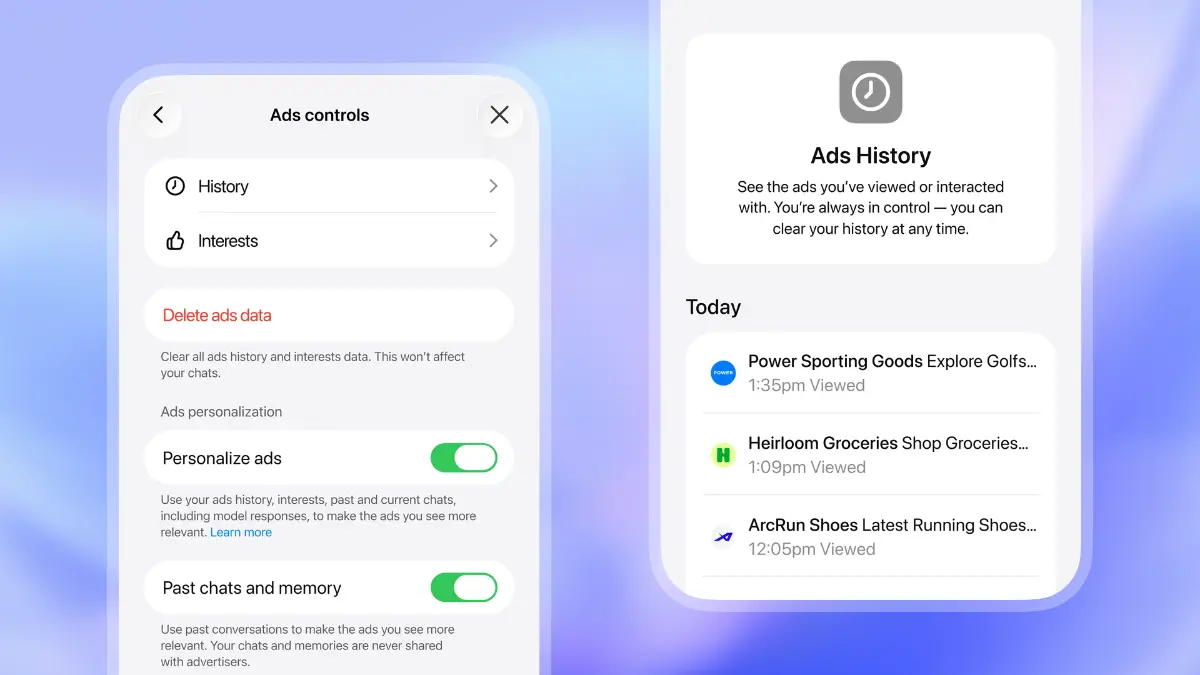
The era of ad-free AI is officially shifting. As of April 21, 2026, OpenAI has moved beyond pilot testing and is now actively rolling out ChatGPT ads 2026 to a global audience. If you use the Free or the newly introduced “Go” tiers, you may have already noticed Sponsored suggestions appearing at the tail end of your conversations.
This move marks a massive turning point for OpenAI advertising ChatGPT. For years, the platform remained a clean, subscription-driven interface. Now, facing projected infrastructure costs and a desire to reach a $2.4 billion revenue target for 2026, OpenAI is opening the gates to advertisers.
What is ChatGPT Advertising and How Does it Look?
Unlike the clunky banner ads of the 2000s, ChatGPT monetization is designed to feel native to the conversation. Based on the latest updates from April 2026, OpenAI has introduced a Cost-Per-Click (CPC) model that allows brands to bid on context hints rather than just traditional keywords.
Where you will see ads:
-
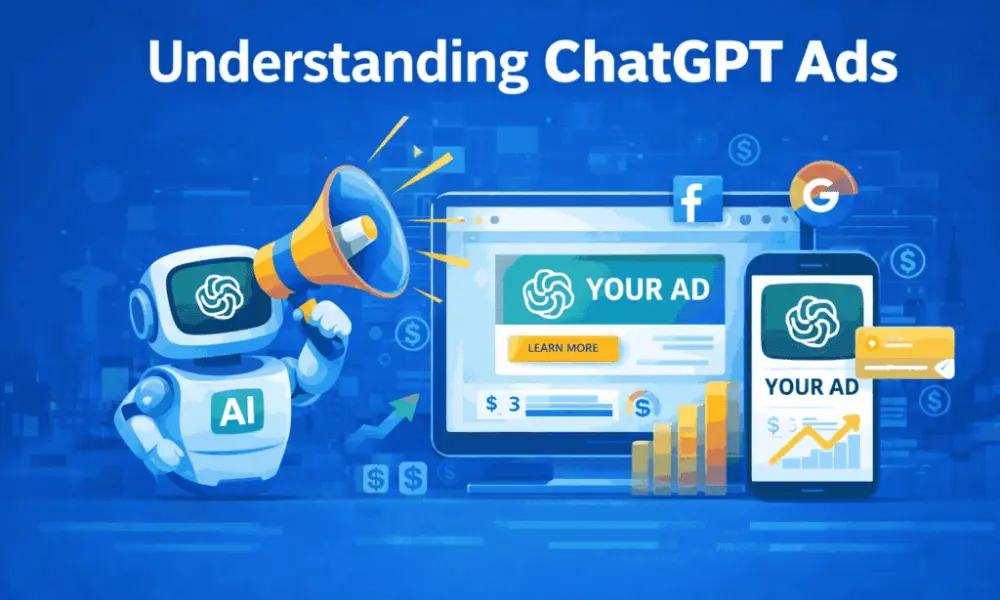
The Tinted Box Format: Ads appear in visually distinct, clearly labeled tinted boxes below the AI’s response.
-
Post-Response Placement: Ads do not interrupt the AI while it is “thinking” or writing. They appear only once the answer is complete.
-
The Go and Free Plans: If you are a Plus ($20/mo), Pro ($100-$200/mo), or Team subscriber, your experience remains completely ad-free.
OpenAI News April 2026: The Global Rollout
The rollout has been aggressive. Following the initial US launch on February 9, 2026, OpenAI expanded its ad inventory to Australia, New Zealand, and Canada on April 16, 2026.
Is ChatGPT showing ads to everyone? Not yet. OpenAI is using a controlled release strategy. They prioritize logged-in adult users on non-premium plans. Furthermore, OpenAI strictly prohibits ads in sensitive categories you won’t see sponsored content when discussing health, mental health, or political topics.
Why the ChatGPT Ads 2026 Shift Matters for Marketers
For businesses, this is the Blue Ocean of the decade. Traditional search ads rely on a single query, but OpenAI advertising ChatGPT relies on a dialogue.
1. Conversational Intent vs. Keywords
In Google Search, a user might type best CRM. In ChatGPT, a user might spend 10 minutes describing their 5-person consulting team and their struggle with lead tracking. OpenAI’s new ads manager allows advertisers to target that specific intent rather than just the phrase “CRM.”
2. High-Quality Lead Generation
Users are often in a deep research phase when using ChatGPT. Because of this, Sponsored links often see higher engagement rates than traditional display ads. OpenAI is also testing Action-Based campaigns where a user can download an app or book a demo directly from the interface.
3. The New Ads Manager Dashboard
As of April 2026, OpenAI has quietly launched an early version of its Ads Manager. It allows marketers to:
-
Optimize campaigns for either Views or Clicks.
-
Set maximum bids per click (CPC).
-
Provide “Context Hints” to help the AI understand when a product is a relevant solution.
The Technical Architecture of ChatGPT Ads 2026
To understand OpenAI advertising ChatGPT, we must look at the underlying Ad-Injection engine. Unlike Google, which scans a single search query, OpenAI’s 2026 model analyzes the entire conversation thread. This is a massive shift in how we think about digital marketing.
How the Context Engine Decides Which Ad to Show
The system uses a three-tier validation process before showing an ad:
-
Semantic Match: Does the user’s intent align with the advertiser’s goal?
-
Conversation Stage: Is the user in Discovery Mode or Decision Mode? (Ads are suppressed during purely creative or emotional prompts).
-
Safety Guardrails: Does the ad violate any of the strict April 2026 ethical guidelines?
The April Update Self-Serve Dashboard
In mid-April 2026, OpenAI launched a limited-access dashboard for small and medium businesses. This tool allows you to upload Brand Context Documents. Instead of just bidding on keywords like running shoes, you upload your product catalog, and the AI determines when your shoes are the perfect answer to a user’s specific problem like I need shoes for a rainy marathon in London.
Comparing the 2026 Ad Landscape
Many marketers wonder if they should move their budget from Google to AI. The following table breaks down the current landscape based on early 2026 data:
2026 Advertising Platform Comparison
| Feature | Google Search Ads | Meta (FB/IG) | ChatGPT Ads 2026 |
| Primary Trigger | Keywords | User Interest | Conversational Intent |
| Ad Format | Text/Shopping Tiles | Visual Feed/Reels | Tinted Sponsored Boxes |
| Average CPM | $25 – $40 | $12 – $25 | $55 – $70 (Premium) |
| Conversion Rate | Moderate (3-5%) | High Lifestyle (5-8%) | Very High Utility (10%+) |
| Target Audience | General Searchers | Passive Browsers | Active Problem Solvers |
How to Prepare Your Content for an AI-First World
Whether you plan to pay for ChatGPT ads 2026 or just want to rank organically, your SEO strategy must evolve. This is often called Generative Engine Optimization (GEO).
-
Use Modular Content: AI models prefer extractable information. Use bullet points and clear headers to make it easy for ChatGPT to cite your brand.
-
Focus on FAQ Schema: Structured data tells the AI exactly what questions your content answers.
-
Build Topical Authority: OpenAI favors sources that show deep Expertise (E). Instead of writing 100 thin articles, write 10 pillar guides that cover a topic from every angle.
Conclusion: A New Chapter for AI
The introduction of ChatGPT ads 2026 signals that the AI industry is maturing. While some users may miss the ad-free days of 2023, this monetization allows OpenAI to scale its technology to billions of people.
For users, it means more relevant product suggestions when they are actually looking for them. For marketers, it’s a chance to reach customers at the exact moment they are making a decision. As the OpenAI news April 2026 cycle continues, expect more integrated Action-Based features to arrive by the end of the year.
Frequently Asked Questions
Is ChatGPT showing ads in the mobile app?
Yes. The April 2026 update fully integrated ads into both the iOS and Android apps. On mobile, ads usually appear as a small sponsored card at the bottom of the screen after the AI finishes its response.
How does OpenAI advertising ChatGPT protect my privacy?
OpenAI uses a “Differential Privacy” model. Advertisers never see your specific chat history or your name. They only see that their ad was shown to a “User interested in [Topic].” Your personal data remains encrypted and is not shared with the companies paying for the ads.
Can I block ChatGPT ads with an ad-blocker?
Standard browser ad-blockers currently struggle with ChatGPT ads because the ads are injected directly into the chat stream. The most effective way to block ads is to upgrade to a Plus, Pro, or Business account, which remains 100% ad-free.
Why did OpenAI start ChatGPT monetization now?
The primary reason is the massive cost of running high-intensity models like GPT-5 and Sora. By introducing ChatGPT ads 2026, OpenAI can keep a high-powered “Free” tier available for students and researchers who cannot afford the monthly subscription fees.
What are the April 2026 guidelines for advertisers?
OpenAI has banned Aggressive Selling. Advertisers cannot use all-caps, clickbait, or false claims. Every ad must provide Direct Utility. If users report an ad as unhelpful, OpenAI automatically pauses the campaign to protect platform integrity.