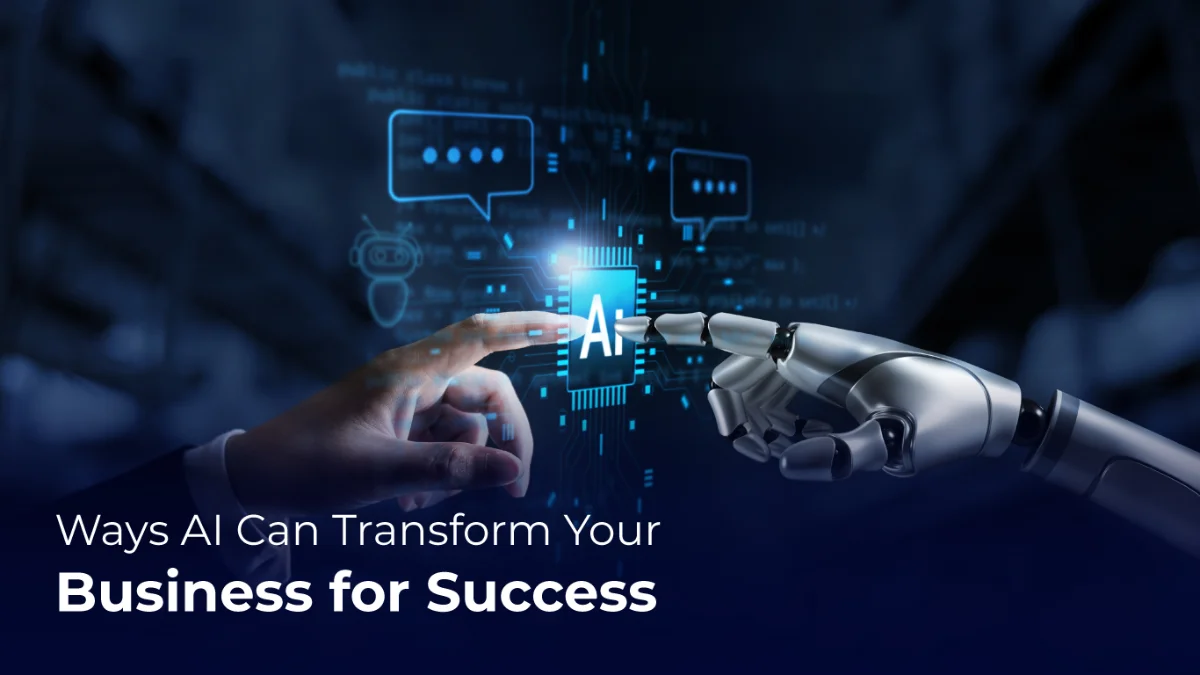
AI in business USA is no longer a future concept; it is already reshaping how companies operate, compete, and grow. Many organizations are using artificial intelligence to automate workflows, analyze data, and improve customer experiences.
At the same time, artificial intelligence in business 2026 is accelerating faster than expected. From startups to global corporations, companies are investing heavily in AI because it drives efficiency, smarter decisions, and measurable growth.
What Is AI in Business USA?
AI in business USA refers to the use of artificial intelligence technologies that help companies automate tasks, analyze data, and improve business decisions.
Today, businesses generate huge amounts of data every day. Because analyzing this information manually takes time, companies increasingly rely on AI systems that can process large datasets within seconds. As a result, organizations can identify trends, predict outcomes, and optimize operations more efficiently.
Key technologies driving AI adoption
Several technologies power modern AI systems in business environments:
-
Machine learning algorithms that detect patterns in data
-
Natural language processing used in chatbots and assistants
-
Predictive analytics for forecasting demand and trends
-
Computer vision used in manufacturing and retail
Because these technologies work together, companies can turn complex data into actionable insights much faster than traditional methods.
AI Adoption in US Companies Is Growing Rapidly
Over the past few years, ai adoption in us companies has increased significantly. Initially, many organizations experimented with AI in small projects. Now, businesses are implementing AI across multiple departments.

In many cases, companies adopt AI because it allows them to automate repetitive tasks while improving accuracy. At the same time, AI tools provide real-time insights, which helps leaders make faster and more informed decisions.
Because of these advantages, AI is becoming a critical part of modern business strategies.
AI adoption statistics in US companies
| Business Function | AI Usage Rate |
|---|---|
| Customer service automation | 56% |
| Cybersecurity and fraud detection | 51% |
| Marketing personalization | 46% |
| Predictive analytics | 40% |
These numbers clearly show that artificial intelligence is moving beyond experimentation and becoming a core operational tool.
AI Business Transformation Across Industries
Artificial intelligence is not just improving efficiency; it is driving ai business transformation across entire industries. In the past, companies relied heavily on manual analysis and historical reports. Today, AI systems analyze real-time data and generate insights instantly. Because of this capability, businesses can respond faster to market changes and customer behavior.
At the same time, automation powered by AI allows companies to streamline complex workflows. As a result, businesses can reduce costs while improving productivity.
Industries experiencing major AI transformation
| Industry | AI Impact |
|---|---|
| Retail | personalized product recommendations |
| Finance | fraud detection and risk analysis |
| Healthcare | diagnostic assistance |
| Manufacturing | predictive maintenance |
Because these industries depend on data-driven decisions, AI is quickly becoming a competitive necessity.
AI Use Cases for Companies
Across the United States, businesses are discovering practical ai use cases for companies that improve daily operations.
1. AI in marketing and personalization
Marketing teams use AI to analyze customer behavior and predict buying patterns. For example, AI-powered recommendation engines suggest products that customers are most likely to purchase. Because of these capabilities, companies can deliver personalized experiences that increase engagement and sales.
2. AI in financial forecasting
Finance departments rely on AI tools to analyze large financial datasets. As a result, companies can detect risks earlier and forecast revenue trends more accurately. Banks and financial institutions, in particular, use AI to monitor transactions and identify suspicious activities.
3. AI in customer support
Customer service is another area where AI is making a significant impact. Many companies now deploy chatbots that respond instantly to customer questions. Because these systems operate 24/7, businesses can improve response times while reducing support costs.
4. AI in supply chain management
Supply chain teams use AI to forecast product demand and optimize inventory levels. As a result, companies can avoid both shortages and overstocking. In addition, predictive analytics helps businesses identify potential disruptions before they affect operations.
Real-World Examples of AI in Business USA
Many major companies already demonstrate how powerful ai business transformation can be.
Examples of AI-driven companies
-
Amazon
AI analyzes browsing behavior and purchase history to recommend products to customers. -
Netflix
Machine learning algorithms personalize movie and TV show recommendations for millions of users. -
Walmart
AI predicts demand and helps manage supply chain operations across thousands of stores. -
Bank of America
Its AI assistant helps customers manage finances and receive instant support.
Because these organizations process massive amounts of data, AI enables them to deliver better services at scale.
AI Tools Businesses Are Using Today
Companies across industries are adopting AI-powered tools to automate workflows and improve productivity.
Popular AI tools used in businesses
| AI Tool Category | Business Application |
|---|---|
| Marketing AI | campaign optimization |
| Customer service AI | chatbots and virtual assistants |
| Analytics AI | data analysis and forecasting |
| Productivity AI | workflow automation |
These tools allow businesses to scale operations efficiently while maintaining high performance.
How Small Businesses Are Using AI in Business 2026
While large corporations adopted AI first, smaller companies are quickly catching up. Because many AI platforms now offer affordable pricing, small businesses can implement advanced technologies without large budgets.
Common small business AI applications
-
automated marketing campaigns
-
AI customer support chatbots
-
sales forecasting tools
-
data analytics dashboards
As a result, small businesses can compete more effectively with larger organizations.
Challenges of AI Adoption in US Companies
Although ai adoption in us companies continues to grow, businesses still face several challenges.
-
High implementation costs
-
Data privacy concerns
-
Lack of skilled AI professionals
-
Integration with existing systems
Even so, many companies continue investing in AI infrastructure because the long-term benefits outweigh the initial challenges.
Future of Artificial Intelligence in Business 2026
Looking ahead, artificial intelligence in business 2026 will likely reshape how companies innovate and operate.
Several trends are already emerging. For instance, generative AI tools are helping companies create marketing content, analyze customer feedback, and automate complex tasks.
At the same time, predictive analytics systems are becoming more advanced. Because these systems analyze real-time data, businesses can forecast demand and adjust strategies faster than ever.
Emerging AI trends
-
generative AI for content creation
-
AI-powered decision systems
-
intelligent automation of operations
-
predictive analytics for strategic planning
Because of these developments, AI will continue driving innovation across industries.
Key Benefits of AI Business Transformation
Organizations that invest in AI often see significant improvements in performance.
-
faster data analysis
-
improved operational efficiency
-
enhanced customer experiences
-
smarter decision-making
-
reduced operational costs
Because these benefits directly impact productivity and profitability, many business leaders view AI as a strategic investment rather than just a technological upgrade.
Conclusion
AI in business USA is reshaping how organizations operate, compete, and innovate. As companies adopt artificial intelligence across marketing, finance, and operations, they gain the ability to analyze data faster and automate complex workflows.
Looking ahead, artificial intelligence in business 2026 will continue driving ai business transformation across industries. Businesses that embrace AI early will not only improve efficiency but also unlock new opportunities for growth and innovation.
FAQs
What is AI in business and how do companies use it?
AI in business helps companies analyze data and automate tasks. For example, it’s used in marketing, customer support, and predictive analytics to improve efficiency.
Why is AI adoption increasing in US companies?
AI adoption is rising because tools are more affordable and easier to use. At the same time, businesses gain faster insights and better automation.
What are the most common AI use cases for companies?
Companies use AI for chatbots, marketing automation, financial forecasting, and supply chain optimization. These applications boost efficiency and accuracy.
How is artificial intelligence transforming businesses in 2026?
AI in 2026 helps companies automate workflows, analyze data in real time, and make smarter decisions, driving faster growth and innovation.
What are the biggest benefits of AI business transformation?
AI improves efficiency, enhances decision-making, and boosts customer engagement, helping businesses grow and stay competitive.