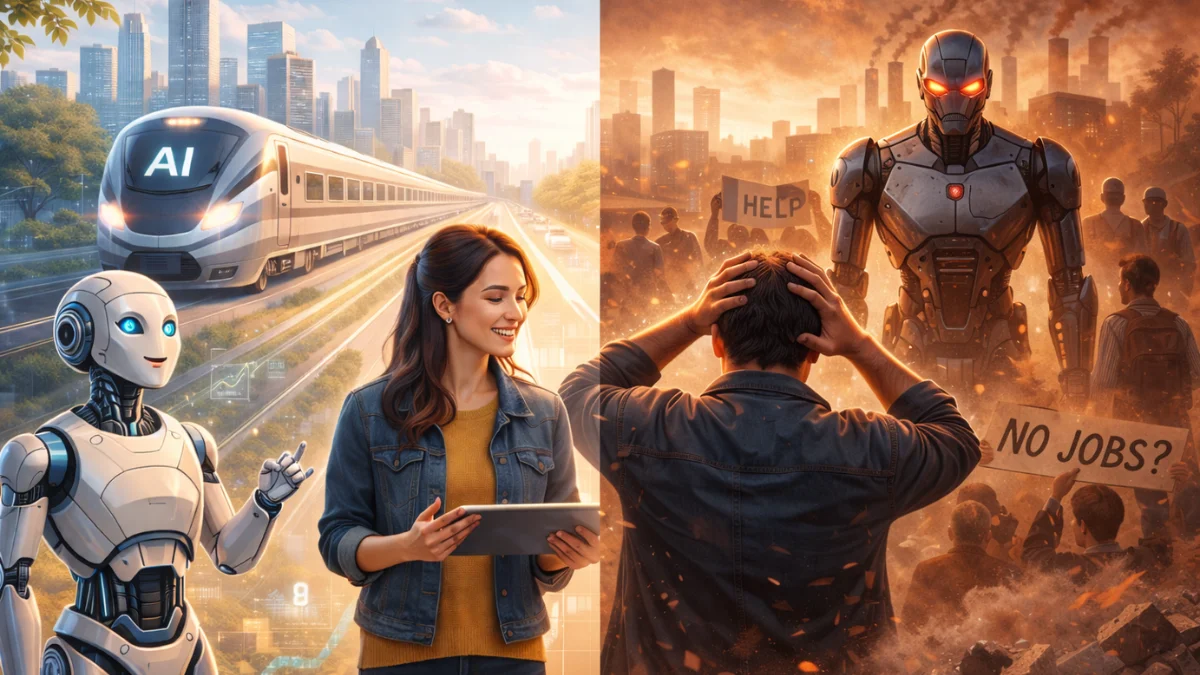
AI jobs at risk that phrase is no longer a distant prediction; it’s a reality reshaping the workforce. As artificial intelligence becomes part of everyday business tools, routine tasks in offices, customer service teams, and data operations are increasingly automated.
So, understanding where AI replacing jobs is happening first can help workers see how the AI impact on jobs USA could influence careers in the years ahead.
The key idea most people miss: AI replaces tasks first, not whole careers
When people hear about ai replacing jobs, it often sounds like entire careers will disappear overnight. In reality, that’s rarely how change unfolds. Most of the time, AI starts by taking over specific tasks inside a role rather than eliminating the whole position.
For example, many workplaces now use AI tools for:
-
Drafting emails and short reports
-
Summarizing documents or meetings
-
Handling common customer questions
-
Organizing or tagging business data
Because of that shift, the real question behind what jobs will AI replace in the future is about which roles contain the highest number of repetitive tasks. If a job mainly involves routine digital work, automation becomes much easier.
Which jobs are most at risk from AI in 2026
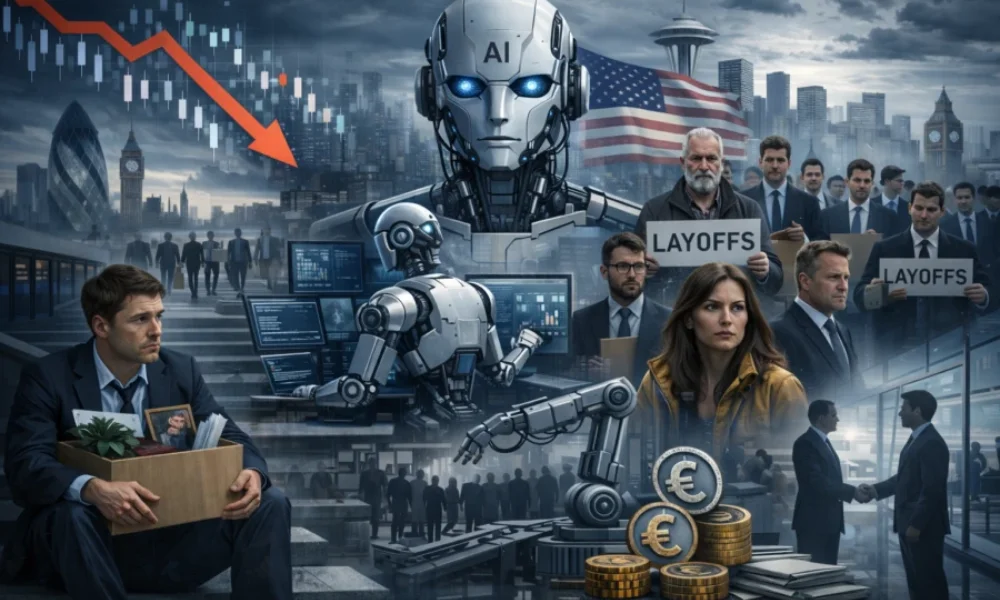
Many professionals are already asking which jobs are most at risk from AI in 2026, especially as companies experiment with automation across everyday workflows. While the timeline varies by industry, several roles are more exposed because of how their tasks are structured.
1) Administrative and office support
Administrative jobs often involve scheduling meetings, organizing documents, or managing communication. Since many of these tasks follow predictable patterns, AI tools can complete them quickly. As a result, office support roles are frequently mentioned when discussing jobs most likely to be replaced by AI.
2) Customer service and call-center support
Customer service teams handle thousands of routine questions every day. Because many requests follow the same format, AI chatbots and virtual assistants can resolve basic issues instantly. While human agents are still needed for complex conversations, simple inquiries are increasingly automated another example of ai replacing jobs in routine workflows.
3) Data entry and back-office operations
Data entry has long been considered one of the most automatable jobs. AI tools can now scan documents, extract information, and update systems automatically. For that reason, this field often appears in discussions about jobs lost to ai and the broader ai impact on jobs usa.
4) Basic content production
AI can already generate outlines, summaries, and first drafts of simple articles or marketing copy. Still, creative thinking and editorial judgment remain human strengths. So, while some production work may shrink, content roles are more likely to evolve rather than disappear entirely.
Jobs most likely to be replaced by AI
To identify jobs most likely to be replaced by AI, it helps to look for a few common patterns.
Jobs at higher risk usually involve:
-
Routine and repetitive tasks
-
Standardized outputs or templates
-
Limited decision-making requirements
-
Minimal face-to-face interaction
With that in mind, several roles frequently appear in automation discussions, including telemarketing, basic bookkeeping support, simple market research reporting, and document processing.
Even so, when people ask what jobs will AI replace in the future, the answer rarely points to entire professions disappearing. Instead, the more realistic outcome is that these jobs will gradually change as AI tools take over repetitive work.
AI impact on jobs USA: who feels it first
The ai impact on jobs usa tends to show up fastest in places with:
-
High volume operations (support centers, billing, logistics admin)
-
Tight cost pressure (retail, SMBs, agencies)
-
Heavy documentation (legal ops, HR ops, compliance support)
At the same time, the U.S. story isn’t only about cuts. Some teams are hiring differently—fewer juniors doing repetitive work, more roles that mix domain knowledge with AI tools. So you may see fewer “assistant” openings, while “specialist + AI” roles grow. That’s a major shift in future jobs ai.
Which jobs are safe from AI in the future
People want a clean list of which jobs are safe from AI in the future, but “safe” is really “harder to automate fully.” These roles usually involve real-world complexity, human trust, or hands-on work.
Safer categories
-
Skilled trades (electricians, plumbers, HVAC techs)
-
Healthcare with hands-on care (nurses, physical therapists, medical techs)
-
Education and coaching (especially high-touch learning)
-
Leadership and people management (conflict resolution, culture, decision tradeoffs)
-
High-stakes professionals (where accountability and judgment matter)
In other words, which jobs are safe from AI in the future often depends on whether the work requires presence, trust, and nuanced decisions. AI can support these roles, but it rarely replaces the core of the work.
How AI will affect jobs in the next 10 years
Understanding how AI will affect jobs in the next 10 years requires looking at gradual change rather than sudden disruption.
2026–2027: Workflow automation expands
This is when many companies standardize AI in admin, support, basic analysis, and content pipelines. It’s also when which jobs are most at risk from AI in 2026 becomes a very practical question, especially for entry-level roles.
2028–2030: Hybrid roles become common
Over time, many employees begin working alongside AI systems. Professionals learn to guide AI tools, review outputs, and focus on strategic thinking. As a result, job descriptions evolve instead of disappearing.
2031–2036: Deeper integration across industries
Eventually, AI becomes part of decision-making systems in sectors such as healthcare, finance, and logistics. Workers who combine expertise with AI skills become increasingly valuable. Overall, this timeline helps explain how AI will affect jobs in the next 10 years through steady adaptation rather than sudden replacement.
Future jobs AI
Although discussions often highlight jobs lost to ai, technology is also creating new opportunities. As organizations adopt AI systems, they need professionals who can manage, interpret, and apply those tools effectively.
Growing roles include:
-
AI workflow specialists
-
Data quality and governance experts
-
Cybersecurity professionals
-
Product analysts and operations specialists
These emerging opportunities illustrate how future jobs ai may reshape the job market. Instead of eliminating work entirely, AI often shifts demand toward new skill sets.
Quick “stay employable” checklist
If concerns about ai replacing jobs feel overwhelming, a simple approach can help professionals stay adaptable.
-
Break your job into weekly tasks
-
Identify which tasks could be automated
-
Strengthen the parts requiring judgment and creativity
-
Learn to use AI tools regularly in daily work
-
Track how AI improves productivity
By following these steps, workers can stay ahead of changes in the ai impact on jobs usa and position themselves well for evolving careers.
Conclusion
The reality of AI jobs at risk isn’t about fear it’s about preparation. As automation reshapes the workplace, some roles will fade while others evolve into smarter, AI-assisted careers. The people who stay curious, learn new tools, and adapt their skills will be the ones who thrive in the future jobs AI economy.
At OpenAIHit, we explore how technology is transforming work so readers can stay informed and ready for what comes next. Keep learning, stay adaptable, and take the first step toward building an AI-ready career today.
FAQs
Which jobs are most at risk from AI in 2026?
In 2026, jobs with repetitive digital tasks like data entry, administrative support, and basic customer service are among the most exposed to AI automation.
What jobs will AI replace in the future?
AI will mainly replace routine, rule-based work; meanwhile, roles requiring creativity, strategy, and human interaction will continue evolving.
How will AI affect jobs in the next 10 years?
Over the next decade, AI will automate many routine tasks first, while new hybrid careers combining human skills with AI tools will grow.
Which jobs are safe from AI in the future?
Jobs involving physical work, human care, and complex decision-making like healthcare, skilled trades, and education are generally safer from automation.
Is AI replacing jobs in the USA right now?
Yes, AI is already automating some routine office and support tasks; still, it’s also creating new opportunities in AI-driven and tech-assisted roles.
What industries will AI impact the most?
Industries like customer service, finance operations, marketing, and administrative work are seeing the fastest AI-driven workflow changes.
Will AI create new jobs in the future?
Yes, while some jobs lost to ai will occur, new roles in AI management, data analysis, and AI-assisted operations are already emerging.