
Artificial Intelligence (AI) is no longer a futuristic concept it shapes industries, education, healthcare, and daily life. But understanding what is the main problem with AI? is critical for responsible adoption. While AI enhances efficiency, it also introduces ethical, technical, and societal challenges.
Without proper oversight, these challenges can have serious consequences for businesses, governments, and individuals.Ethical concerns top the list. Many AI systems operate as “black boxes,” making decisions without transparent reasoning. For example, an AI system might misdiagnose a medical condition or reject a job applicant unfairly. Determining accountability in such cases becomes difficult.
Moreover, AI relies heavily on personal and sensitive data. Mismanagement or breaches of this data can compromise privacy and trust.Interestingly, even unrelated examples like planning a trip to Hamburg places to visit highlight the importance of preparation. Just as travelers need reliable guidance, society needs clear frameworks to navigate AI responsibly.
What is the Main Problem with AI? Technical Limitations
Beyond ethics, technical limitations are a major factor in what is the main problem with AI? AI excels at recognizing patterns but struggles with understanding context, nuance, and ambiguity. It lacks true reasoning and common sense, making it prone to errors when faced with situations outside its training data.
AI systems need large datasets and significant computational power to work effectively. Without enough quality data or processing capability, outputs can be biased, incomplete, or inaccurate. For instance, language models may produce convincing text yet sometimes give misleading or incorrect information.
Additionally, AI cannot adapt like humans and struggles with emotions or value-based decisions. This makes it unsuitable for tasks needing empathy or ethical reasoning. Just as tourists research Hamburg places to visit, developers must carefully design and monitor AI to ensure safety and reliability.
Technical Limits Highlight the Main Problem with AI
AI systems, despite their rapid advancement, face significant technical limitations that highlight what is the main problem with AI. These limitations prevent AI from fully replicating human understanding and decision-making.
-
Lack of true reasoning: AI can identify patterns but cannot comprehend context or common sense.
-
Dependency on large datasets: AI requires vast amounts of high-quality data to function effectively.
-
High computational costs: Running complex AI models demands substantial processing power and resources.
-
Limited adaptability: AI struggles with unfamiliar scenarios outside its training data, leading to errors.
-
Risk of inaccurate outputs: Without proper oversight, AI may produce misleading or unsafe results.
Understanding these technical limitations is crucial for developers and organizations to ensure AI is reliable, safe, and ethically deployed.
AI Bias and Fairness: What is the Main Problem with AI?
Bias is one of the most pressing concerns in AI and a key answer to what is the main problem with AI? AI models learn from historical data, and if that data reflects social inequalities, the AI may unintentionally reinforce them. This makes bias a critical challenge in AI development and deployment.
AI bias appears in many ways: recruitment tools may favor certain genders or ethnicities, healthcare AI may underperform for some groups, and financial systems can misjudge creditworthiness. Over time, these biases can reinforce societal inequalities. Such outcomes also erode public trust in AI technology.
To mitigate bias, developers must prioritize diversity in data collection, perform continuous auditing, and include inclusive teams in AI development. Addressing these challenges ensures AI contributes to fairness rather than reinforcing existing social disparities.
Technical Limits of the Main Problem with AI
Security challenges also define what is the main problem with AI? AI introduces vulnerabilities that traditional software rarely faces. Cyberattacks can manipulate AI outputs, steal sensitive data, or disrupt critical infrastructure.
Adversarial attacks can trick AI systems into misclassifying images, misinterpreting data, or generating harmful outputs. AI-generated deepfakes can spread misinformation or be used for fraud. Automated AI tools can scale hacking attempts rapidly, creating risks that are difficult to contain.
Critical infrastructures like power grids, transportation, and communication networks increasingly rely on AI. A successful cyberattack could have far-reaching consequences, emphasizing the need for strong AI security. Organizations must combine cybersecurity expertise with AI-specific monitoring to effectively mitigate these risks.
Economic Impact and Job Displacement
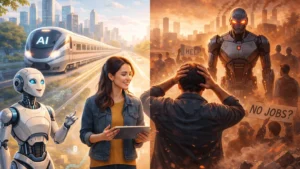
Another major answer to what is the main problem with AI? involves its effect on employment and the global economy. Automation allows AI to handle repetitive and routine tasks, improving efficiency but displacing workers.
This displacement has economic, social, and psychological consequences. Workers in administrative roles, manufacturing, and customer service may lose jobs or face uncertainty. The shift demands new skill sets and lifelong learning, creating challenges for education systems and labor policies.
-
Jobs requiring creativity, emotional intelligence, or critical thinking remain largely human-driven.
-
Societal support and retraining programs are essential for displaced workers.
-
Thoughtful integration of AI into workplaces can minimize disruption.
Just as travelers carefully plan visits to Hamburg places to visit to maximize enjoyment and avoid problems, societies must plan AI adoption strategically to balance technological progress with human well-being.
Legal and Regulatory Challenges
AI evolves faster than laws, which is a key aspect of what is the main problem with AI? Liability, accountability, and data protection often remain unclear, especially when AI systems operate across borders. This legal uncertainty makes regulation a critical challenge for AI deployment.
Legal issues arise when AI generates content, creates intellectual property, or makes decisions affecting human lives. Without clear regulations, organizations face uncertainty, and consumers risk unfair treatment. Policymakers must establish forward-looking rules that protect society while allowing innovation.
International collaboration and ethical standards are crucial since AI crosses borders and affects global systems. Without them, legal and ethical risks multiply. Addressing these challenges ensures AI development stays safe, fair, and trustworthy worldwide.
AI in Healthcare: Opportunities and Risks
Healthcare is one of AI’s most promising applications, but it also reveals what is the main problem with AI? Misinterpretation of medical data, over-reliance on algorithms, and privacy concerns can compromise patient safety.
AI can assist with diagnostics, predict patient outcomes, and optimize treatment plans, but it cannot replace human judgment. Doctors and AI must collaborate to achieve the best outcomes.
-
Validation of AI medical tools is critical to prevent errors.
-
Patient data protection and consent must be maintained.
-
Transparent AI decision-making increases trust.
Responsible healthcare AI ensures improved patient outcomes without compromising safety or ethics.
AI and Creativity: What is the Main Problem with AI?
AI can boost creativity by generating music, art, or writing, but overreliance carries risks. Understanding what is the main problem with AI? involves recognizing its limits in originality and intellectual property. Human oversight remains essential to maintain authenticity and legal clarity.
AI can produce impressive outputs, but human creativity drives cultural value. Without proper oversight, AI-generated content may blur authorship or create legal disputes. Combining human judgment with AI assistance preserves authenticity while harnessing technological efficiency.
Social Impact of AI: Ethical Considerations
Finally, AI’s societal influence highlights what is the main problem with AI? Algorithms shape communication, public opinion, and access to information. Recommendation systems may create echo chambers, and social media AI may prioritize engagement over accuracy, spreading misinformation.
Privacy is another concern. Surveillance and facial recognition AI can intrude on civil liberties if not regulated. Transparent policies, human oversight, and ethical development practices are necessary to ensure AI benefits society without unintended harm.
Even simple choices, such as selecting Hamburg places to visit, show that preparation improves outcomes. Likewise, responsible AI adoption requires careful planning, clear regulations, and strategic implementation. Thoughtful guidance ensures safe and effective use of AI systems.
Conclusion:What is the main problem with AI?
Understanding what is the main problem with AI is crucial for leveraging its benefits while minimizing risks. Ethical dilemmas, bias, security threats, technical limitations, economic displacement, and societal impacts all require thoughtful intervention and for a deeper look at how to choose the right AI platform, check out our guide on which is the best AI right now.
Just as travelers research Hamburg places to visit to maximize enjoyment and avoid pitfalls, developers, policymakers, and users must navigate AI responsibly. Transparency, ethical practices, and regulation are key to ensuring AI serves society without causing unintended harm. By staying informed about the latest developments in the AI industry, we can fully embrace AI’s potential while safeguarding human values and trust.