
In today’s digital era, AI tools are transforming the way businesses operate, helping companies optimize processes and even enhance personal experiences such as identifying Hamburg places to visit for business travelers. Artificial intelligence is no longer an optional technology but a critical driver of competitiveness. Companies leverage AI to streamline workflows, improve decision-making, and enhance customer experiences, all while increasing revenue.
From small startups to multinational corporations, AI-driven solutions make tasks faster, more accurate, and cost-efficient. Implementing AI allows teams to focus on strategy and creativity rather than repetitive manual work. By analyzing large datasets and predicting market trends, AI also helps organizations mitigate risks effectively.
How AI Tools Enhance Business Efficiency

AI tools improve business efficiency beyond traditional methods, providing faster and more accurate solutions. Automation, predictive analytics, and natural language processing enable organizations to manage large volumes of data effectively. For example, AI-powered chatbots handle customer queries 24/7, allowing support teams to focus on complex issues.
AI-driven analytics deliver actionable insights that support data-driven decisions and strategic planning. Additionally, AI tools enhance resource allocation, inventory management, and personalized marketing by analyzing consumer behavior patterns. Integrating AI into daily operations reduces costs, accelerates growth, and ensures both short-term efficiency and long-term success.
Popular AI Tools Businesses Can Leverage
Businesses can leverage a variety of AI tools to meet diverse operational needs. Virtual assistants and AI chatbots improve customer service with real-time support and personalized interactions. Predictive analytics, marketing automation, and content generation platforms help forecast trends, optimize strategies, and produce high-quality materials efficiently.
Data analytics software transforms raw information into actionable insights, helping organizations monitor performance and respond quickly to market changes. By leveraging these tools, businesses can reduce manual workloads, enhance accuracy, and create a more productive environment. The versatility of AI ensures solutions are available for organizations of all sizes and industries.
Benefits of AI Tools in Business Operations
AI tools offer multiple benefits that directly impact business growth and sustainability. They increase productivity by automating repetitive tasks, allowing employees to focus on strategic and creative responsibilities. AI enhances decision-making by providing insights derived from large datasets, enabling smarter and faster business choices.
AI reduces costs by minimizing errors and streamlining operations. It also enables personalized customer experiences by analyzing behavior patterns, boosting engagement and loyalty. Additionally, AI allows businesses to scale efficiently without proportional increases in cost or workforce, making it essential for modern success.
Integrating AI Tools into Small and Medium Businesses

Small and medium businesses (SMBs) benefit significantly from AI tools, even with limited resources. Unlike larger enterprises, SMBs need cost-effective solutions that maximize output with minimal investment. AI automates tasks such as accounting, customer support, and social media management, freeing teams to focus on strategic growth initiatives.
Additionally, AI helps SMBs gain insights into customer behavior, monitor competitors, and forecast sales trends. By leveraging these insights, SMBs can make informed decisions that boost efficiency and profitability. Early adoption of AI also allows smaller businesses to remain agile, adaptable, and competitive with larger market players.
Overcoming Challenges in AI Adoption
Despite its advantages, businesses often face challenges when implementing AI. Lack of expertise, data privacy concerns, cybersecurity risks, and initial investment costs can slow adoption. These issues can be overcome by training staff, choosing scalable AI solutions, and implementing strong security measures.
Starting with small AI initiatives lets businesses monitor results, refine strategies, and expand usage gradually. A strategic approach to AI adoption helps organizations maximize benefits while reducing risks. It also builds internal expertise and confidence in using AI effectively. This ensures sustainable growth and long-term success.
AI Tools for Marketing and Customer Engagement
AI tools have transformed marketing and customer engagement, allowing businesses to personalize campaigns and predict consumer behavior. AI-powered platforms can identify potential churn, recommend products, and optimize engagement strategies based on real-time data.
Chatbots enhance customer service by providing instant, accurate responses, while social media analytics help optimize content and posting schedules. Predictive insights allow marketing teams to make faster, data-driven decisions that improve campaign performance and ROI. Integrating AI into marketing operations ensures greater efficiency, measurable results, and higher customer satisfaction.
Key AI Marketing Tools
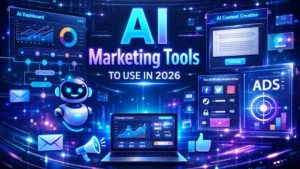
AI-driven email marketing platforms, social media analytics tools, CRM integrations, predictive lead scoring software, and dynamic website personalization tools all exemplify how AI enhances marketing performance. These tools allow businesses to automate repetitive tasks while focusing on creative and strategic campaign elements.
AI in Financial Management and Risk Analysis

AI tools have a significant impact on financial management and risk assessment. Platforms that analyze financial data can detect anomalies, identify patterns, and improve forecasting accuracy. Automation streamlines accounting, reduces human error, and provides timely insights into financial performance.
Predictive analytics helps businesses anticipate market changes, optimize investments, and make confident strategic decisions. Integrating AI into financial operations improves efficiency and risk management, and solopreneurs can benefit from AI tools for smarter decision-making to enhance financial health.
Future Trends of AI Tools in Business
The future of AI in business promises continued innovation and growth. Advanced machine learning, intelligent automation, and real-time analytics will further enhance operational efficiency and decision-making. Businesses can expect smarter automation for complex tasks, improved personalization in customer interactions, and seamless integration with cloud and IoT platforms.
Ethical AI frameworks will play a critical role in maintaining transparency, trust, and responsible implementation. Organizations that adopt these trends early will position themselves as industry leaders capable of leveraging AI for long-term competitiveness and innovation.
AI Tools and Travel Planning: Connecting Business and Leisure
AI tools extend beyond business and can significantly improve personal experiences, such as travel planning. For example, a business traveler in Hamburg can use AI to identify Hamburg places to visit. Additionally, AI helps optimize itineraries while efficiently discovering local attractions. As a result, these tools save time and ensure a more enjoyable travel experience.
AI recommendations consider time, preferences, and budget, saving travelers effort while maximizing their experience. This shows AI’s versatility in enhancing both professional efficiency and personal convenience. Professionals can leverage similar technology, as highlighted in our guide to AI tools for real estate.
FAQ Section
Q1: Are AI tools expensive for small businesses?
AI tools range from free solutions to enterprise-grade software. Small businesses can start with cost-effective or freemium options to gain benefits without heavy investment.
Q2: Can AI tools replace human employees?
AI complements human work rather than replacing it. It handles repetitive tasks, allowing employees to focus on strategy, creativity, and problem-solving.
Q3: How can AI improve customer engagement?
AI analyzes behavior patterns, predicts preferences, and personalizes interactions, enhancing customer satisfaction and loyalty.
Conclusion: Embracing AI Tools for Sustainable Growth
AI tools are no longer optional; they are essential for efficiency, accuracy, and innovation in modern business. Moreover, from marketing to financial management, AI enables smarter, more effective practices. As a result, automating tasks lets businesses focus on growth while achieving long-term success.
Even small businesses can leverage AI for growth, scalability, and improved customer satisfaction. Organizations adopting AI today will lead in innovation, operational performance, and overall competitiveness while also enriching personal experiences, such as discovering Hamburg places to visit during business trips.