Key Takeways
- AI Overviews provide quick, static answers directly in search results
- AI Mode enables conversational, multi-step research with follow-up questions
- AI Overviews rely mainly on indexed web content; AI Mode uses deeper reasoning and live data
- Overviews drive more zero-click searches, reducing raw website traffic
- AI Mode generates fewer but higher-intent, better-converting visitors
- SEO success now requires both concise structured answers and deep topical authority
The New Reality of Google Search
The way we search for information online has completely transformed. If you have typed a query into Google recently, you have likely noticed that the traditional list of blue links is no longer the main event. Google has introduced two distinct ways to surface information: AI Mode and AI Overviews.
Understanding the distinction between AI Mode vs AI Overviews is now critical for both regular web users and digital marketers. While both features utilize Google’s Gemini large language models, they serve entirely different user intents, operate on separate interfaces, and impact web traffic in completely different ways. This guide from Openaihit breaks down the core structural, technical, and strategic differences between these two powerful search surfaces.
AI Overview
Google AI Overviews and AI Mode both use Gemini but serve different purposes. AI Overviews provide quick, static summaries directly in search results, often leading to zero-click searches. AI Mode offers a conversational, multi-turn research experience with deeper reasoning and real-time data. For brands, success requires optimizing both concise, structured content for Overviews and comprehensive, authoritative content for AI Mode citations.
What Is Google AI Overview?
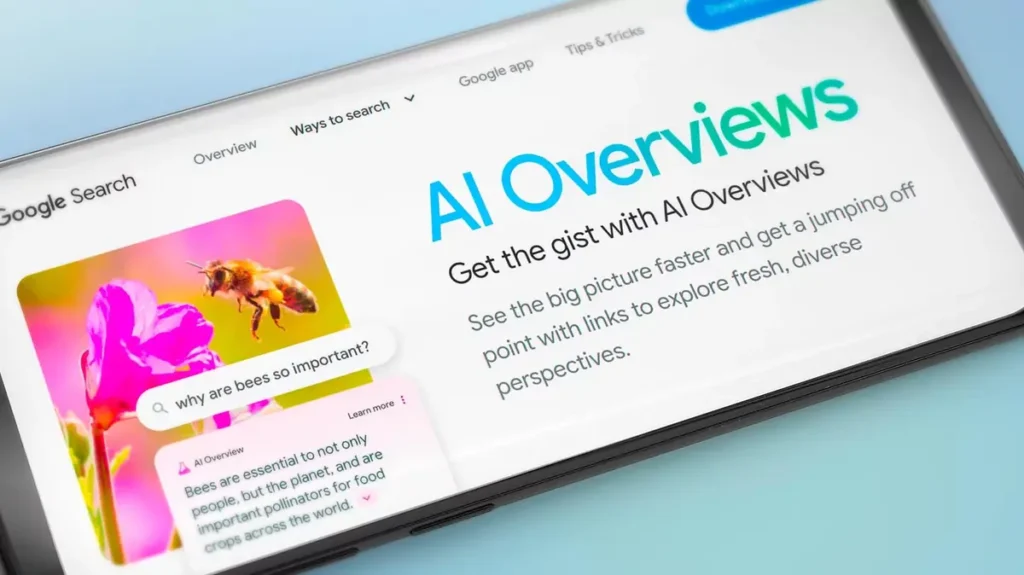
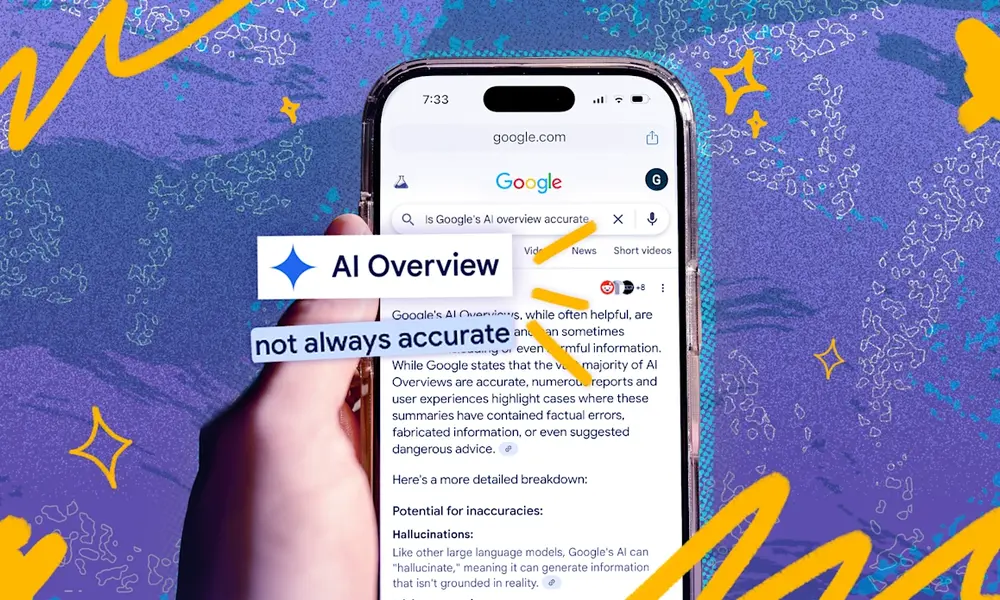
An AI Overview is a quick, synthesized summary that appears directly at the very top of the traditional Search Engine Results Page (SERP). It is designed to immediately satisfy informational queries without requiring the user to click through to any external website. When you type a common question, Google automatically generates this box to summarize information from multiple high-quality web sources in a single response.
Core Traits of AI Overviews
- Automatic Triggers: They appear passively based on standard informational or how-to queries without any action required from the user.
- One-Shot Answer: Delivers a quick snapshot to satisfy user intent instantly. No follow-up, no dialogue — a single static response.
- Static Nature: There is no conversational back-and-forth. It is a single-query response with no context retention between searches.
- Massive Scale: Integrated natively into the standard global SERP interface, reaching hundreds of millions of daily search queries.
What Is Google AI Mode?
Google AI Mode is a dedicated, interactive search workspace designed to change how you research entirely. Accessible via a specific tab next to “Images” or “News,” or through an AI-powered search box, it transforms searching into an ongoing dialogue. Powered by advanced reasoning models like Gemini 3.5 Flash, it allows users to execute multi-turn research, ask complex follow-up questions, and utilize multi-modal inputs including images, files, and video transcripts.
Core Traits of AI Mode
- Active Engagement: Requires the user to intentionally enter a dedicated conversational interface rather than appearing automatically.
- Query Fan-Out: Uses advanced reasoning to break complex problems into multiple subtopics and searches them all simultaneously.
- Context Retention: Remembers previous questions within a session, allowing users to refine their research progressively over time.
- Agentic Capabilities: Supports background search agents that continuously monitor the web for real-time updates relevant to your queries.
Google AI Mode vs Overviews: The 5 Core Differences
When analyzing Google AI Mode vs Overviews, the differences go far deeper than just the length of the response. They represent two entirely different strategies for handling web data, user intent, and information retrieval.
| Feature | AI Overviews | AI Mode |
| Primary Purpose | Quick, static summary on the SERP | Conversational, deep exploration |
| User Interaction | Passive (Read only) | Active (Dialogue & follow-ups) |
| Data Retrieval | Pre-indexed crawl snapshots | Real-time feeds & reasoning data |
| Technology Layer | Gemini Generative Synthesis | Advanced Gemini Reasoning Models |
| Traffic Generation | High risk of zero-click searches | Qualified, intent-driven clicks |
1. User Interface and Intent
The first major AI overview difference lies in user friction. AI Overviews live inside the standard results page to give users immediate value without moving them anywhere. AI Mode creates an immersive, chat-first experience built for users with deep research intent, planning a complex travel itinerary, analyzing market trends, or comparing technical products, rather than those seeking a quick factual answer.
2. The Underlying Technology
While both features rely on Gemini, the computing layer differs significantly. AI Overviews lean on generative synthesis, grouping existing top-ranking web results into a short paragraph. AI Mode leverages deep conceptual reasoning, allowing the system to process multi-modal files, respond to live user parameters, and build continuous semantic context across dozens of separate prompts.
3. Source Citation and Links
Data tracked by search professionals reveals that the websites cited in an AI Overview are often not the same ones that appear in AI Mode’s conversational answers. AI Overviews prioritize high-ranking, factually direct pages that are easy to parse and extract. AI Mode instead seeks “semantic saturation”, content that covers a niche so comprehensively it can sustain an interactive, multi-turn research conversation without running out of depth.
4. Real-Time Data Awareness
AI Overviews rely primarily on pre-indexed web data to maintain fast loading speeds on the main SERP. AI Mode actively pulls live, dynamic signals from Google’s Shopping Graph, real-time financial markets, and active flight and pricing data. This makes AI Mode vastly superior for transactional queries, product comparisons, and time-sensitive research where freshness of information matters critically.
5. Scale and Availability
AI Overviews are deeply embedded worldwide, appearing for hundreds of millions of daily queries entirely automatically. AI Mode is a more deliberate surface, requiring users to explicitly click into the feature or opt into specific Search Labs experiments. This means Overviews have a dramatically wider reach, while AI Mode commands a more engaged, high-intent, and commercially valuable audience.
Why the Difference Matters for SEO and Brands
The emergence of these two distinct gemini search surfaces fundamentally alters how online businesses must approach organic visibility. The February 2026 Google Core Update emphasized explicitly that content must be uniquely helpful, highly trustworthy, and genuinely human-authored to survive in an AI-driven search index.
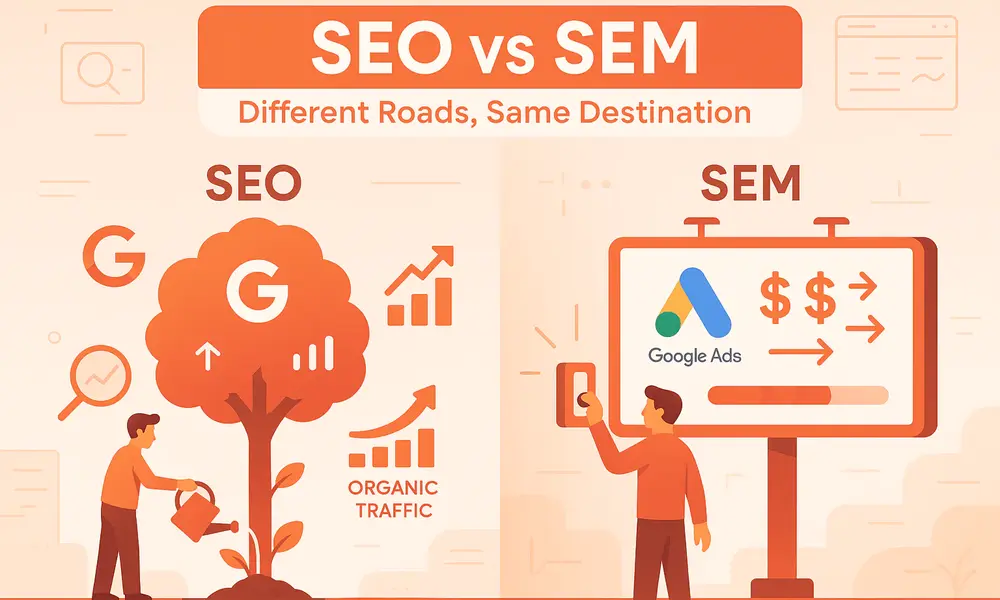
For a long time, standard SEO was about matching keywords and ranking from position one to ten. In the new era shaped by these gemini search surfaces, your entire strategy must now adjust based on which specific AI surface you want to appear within, and they require fundamentally different types of content to achieve visibility.
Optimizing for AI Overviews
Because AI Overviews compress the research phase and summarize facts quickly, they frequently lead to zero-click searches on informational queries. To ensure your brand name appears inside the overview box rather than being invisible on the SERP, focus on structured clarity above all else.
- Implement precise FAQ and Product schema markup.
- Write direct, definition-style sentences at the top of your articles.
- Build authoritative bullet points that answer high-volume informational questions.
Optimizing for AI Mode
To build lasting authority within AI Mode, brands must move well past surface-level content. Because AI Mode uses query fan-out to divide a topic into smaller semantic pieces, it consistently rewards deep, comprehensive topic coverage that can sustain a full research conversation.
For AI Overviews
- Implement precise FAQ and Product schema markup on every key page
- Write direct, definition-style answers at the very top of your articles
- Build authoritative bullet points answering high-volume informational queries
- Keep answers under 60 words for maximum snippet eligibility
- Use structured headings that mirror exact user query phrasing
For AI Mode
- Create comprehensive pillar content hubs that map out all subtopics exhaustively
- Embed high-quality original images with descriptive alt text for vision model reading
- Add detailed video transcripts that AI reasoning models can extract context from
- Build brand mentions and entity authority consistently across the broader web
- Interlink related content tightly so the AI agent recognizes topical completeness
- Create massive pillar content hubs that thoroughly map out subtopics.
- Optimize for visual search by embedding high-quality original images and detailed video transcripts that vision models can read.
- Prioritize brand mentions and entity authority across the web so the AI agent recognizes your business as an industry leader.
The Future of Search: Clicks vs. Citations
As Google continues experimenting with routing standard browser queries directly into AI Mode threads, the concept of click-through rate is shifting permanently. Informational web traffic to surface-level content will continue to face steep declines, this trajectory is already visible in 2026 analytics data across major publishing verticals.
However, this change is not entirely negative. While AI Overviews reduce total raw clicks on simple queries, the users who navigate through a complex, multi-turn conversation in AI Mode are deeply qualified buyers and decision-makers. When they finally click on a citation link to purchase a product or engage a service provider, their conversion intent is extraordinarily high.
The ultimate goal for platforms like Openaihit is no longer simply ranking at the top of a page. It is about building enough topical authority to become a persistent citation in the AI’s ongoing reasoning process, across both surfaces, across every relevant query your brand should own.
Conclusion
The dynamic between AI Mode vs AI Overviews marks a permanent and accelerating shift in how information is indexed and consumed online. AI Overviews act as Google’s quick notes — summarizing the web instantly for users on the go. AI Mode acts as an advanced research partner, executing multi-modal queries and retaining deep contextual dialogue across an entire session.
For content creators, SEO strategists, and digital businesses, adapting to these separate gemini search surfaces is no longer optional. By balancing structured data for quick Overviews with deep, authoritative topical coverage for conversational AI Mode, you can successfully protect and grow your organic visibility in an AI-first search world. The brands that understand this distinction in 2026 will be the ones that thrive in the decade ahead.
Frequently Asked Questions
How is AI Mode different from AI Overviews?
AI Overviews are static, one-shot summaries that automatically appear on the main search results page to answer simple questions. AI Mode is a separate, conversational workspace that allows you to ask follow-up questions and conduct multi-turn research without resetting your search context.
Do they cite the same sources?
Not always. Based on available data, the source overlap between the two features is surprisingly low. AI Overviews prioritize fast, pre-indexed summaries of top-ranking SERP pages, while AI Mode looks for deep, detailed content capable of sustaining complex reasoning and conversational follow-ups.
Which appears more often?
AI Overviews appear significantly more often because they are built directly into the standard global search results page. AI Mode requires the user to actively tap the AI Mode tab, use the intelligent search box, or opt into experimental features via Search Labs.
Which sends more traffic?
AI Overviews reach a massive audience but are highly prone to causing zero-click searches for simple informational queries. AI Mode generally serves fewer users, but because it handles complex, multi-step buying journeys, it is estimated to send highly qualified traffic with a much higher intent to convert.