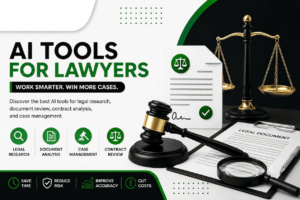
Next-generation ai tools for lawyers are transforming modern legal practice by eliminating manual document discovery and streamlining statutory analysis. In 2026, market leaders like Harvey AI, CoCounsel, Spellbook, Lexis+ AI, and LegalOn utilize ai for legal research and ai contract review to inspect complex agreements, extract hidden risk clauses, and draft court-ready memos in minutes. These specialized legal ai software solutions reduce contract processing times by up to 80% while upholding zero-data retention and attorney-client privilege. By automating routine documentation, ai for law firms allows legal practitioners to spend more time on high-stakes strategy and courtroom advocacy.
Introduction
The legal sector has reached a defining milestone. Heavy stacks of printed discovery files, late-night statutory searches, and tedious line-by-line contract reviews are quickly becoming relics of the past. Today’s legal environment demands speed, absolute factual precision, and strict client confidentiality.
Deploying specialized ai tools for lawyers enables modern practices to draft rock-solid agreements faster, surface controlling case precedents without risk of hallucination, and run comprehensive M&A due diligence in a fraction of the time.
Whether your practice needs advanced ai for legal research to validate court opinions, automated ai contract review extensions inside Microsoft Word, or firm-wide legal ai software to scale paralegal output, this complete review breaks down the premier platforms built specifically for legal professionals.
Modern Legal Workflows: Before vs. After AI
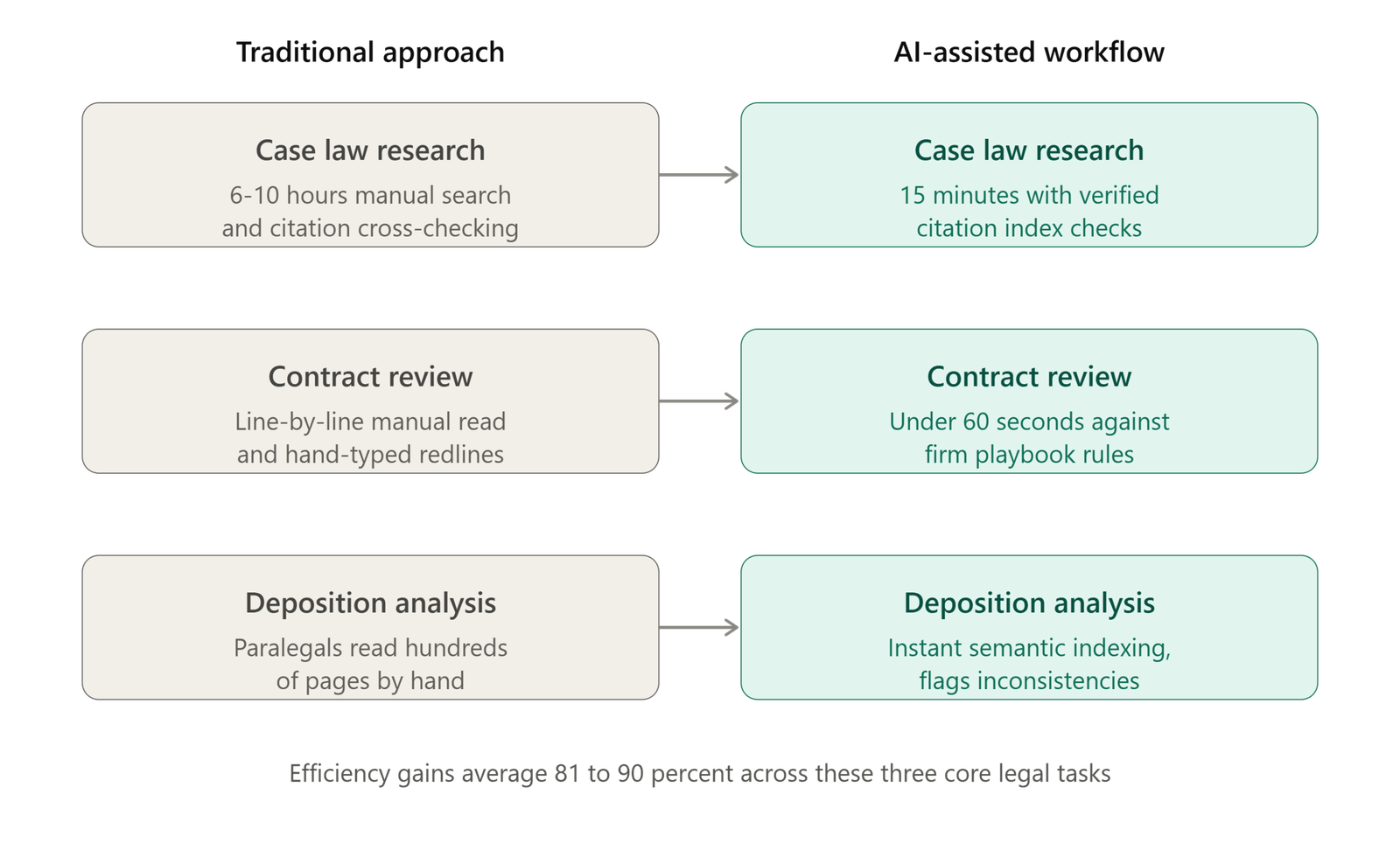
To understand why top practices are adopting ai for law firms, consider how core legal tasks have shifted across daily operations:
1. Case Law & Precedent Research
-
Traditional Approach: Spending 6 to 10 hours searching legal databases, manually cross-referencing citations, and summarizing precedents into a legal research memo.
-
AI-Assisted Workflow: Natural language engines pull primary statutory authorities, verify validity against live citation indexes (like KeyCite or Shepard’s), and draft a cited research outline in 15 minutes.
2. Third-Party Contract Review & Redlining
-
Traditional Approach: Reading a 40-page vendor agreement line-by-line, manually identifying non-standard liability terms, and typing out custom redlines.
-
AI-Assisted Workflow: In-word AI co-pilots scan the agreement against your firm’s internal playbook, highlight risky indemnification clauses, and generate inline redlines in under 60 seconds.
3. Deposition Transcript & Discovery Analysis
-
Traditional Approach: Paralegals manually reading hundreds of deposition pages to highlight conflicting witness statements.
-
AI-Assisted Workflow: Automated semantic indexing highlights inconsistencies, creates cross-examination outlines, and links directly to page/line citations instantly.
Firm-Size & Practice Fit Matrix
Different legal environments require distinct software capabilities. Here is how leading legal AI platforms align with specific practice structures:
Solo Practitioners & Small Firms
-
Primary Needs: Low setup overhead, quick contract redlining, and reliable litigation research without huge enterprise commitments.
-
Recommended Software: Spellbook (for in-Word contract drafting) and CoCounsel (for fast, primary-source research).
Mid-Sized Litigation & Corporate Practices
-
Primary Needs: Playbook enforcement, standardized team drafting, and rapid deposition transcript processing.
-
Recommended Software: LegalOn (for automated contract playbooks) and Lexis+ AI (for comprehensive authority drafting).
Enterprise AM Law 100 & Large In-House Teams
-
Primary Needs: Virtual data room bulk analysis, multi-jurisdictional M&A due diligence, custom private models, and strict SOC 2 Type II compliance.
-
Recommended Software: Harvey AI (for enterprise data extraction) and vLex Vincent AI (for international law comparisons).
In-Depth Platform Analysis: Best Legal AI Tools
A. Deep Litigation & Verified Statutory Research
1. Harvey AI: The Enterprise Intelligence Engine
Harvey AI is purpose-built for elite law firms and enterprise legal departments handling high-stakes corporate transactions and regulatory matters.
-
Key Strengths: Handles multi-document data room reviews during corporate acquisitions, generates structured risk matrices, and builds bespoke AI models trained on a firm’s private document archives.
-
Security Profile: Private cloud deployment with dedicated single-tenant infrastructure and strict zero-data retention policies.
-
Best Practical Application: M&A due diligence, complex regulatory risk audits, and firm-wide knowledge management.
2. CoCounsel (Thomson Reuters): Primary Source Authority Engine
Built on top of Westlaw’s authoritative legal database, CoCounsel provides litigators with a trusted research assistant that eliminates invented citations.
-
Key Strengths: Answers complex legal questions linked directly to controlling judicial opinions, analyzes uploaded deposition transcripts to extract inconsistencies, and drafts formal research memos.
-
Why It Leads: Direct integration with KeyCite ensures every case citation is current and valid.
-
Best Practical Application: Motion prep, deposition preparation, and authoritative legal research.
B. Transactional Law & Automated Contract Redlining
3. Spellbook: Real-Time Microsoft Word Co-Pilot
Spellbook integrates seamlessly directly into Microsoft Word, allowing transactional lawyers to analyze and draft contracts right where they work.
-
Key Strengths: Scans entire agreements instantly, suggests balanced redlines based on deal context, drafts missing protective provisions, and flags unusual terms.
-
Why It Leads: No software switching required attorneys accept or reject AI-generated redlines directly inside native
.docxfiles. -
Best Practical Application: Drafting commercial contracts, reviewing non-disclosure agreements, and updating client templates.
4. LegalOn: Automated In-House Playbook Enforcement
LegalOn empowers in-house corporate legal teams to enforce company contract standards consistently across all incoming business agreements.
-
Key Strengths: Compares third-party vendor contracts against corporate playbooks, flags non-compliant liability or termination terms, and provides clear explanation notes for non-legal stakeholders.
-
Why It Leads: Combines AI speed with attorney-vetted guidance notes that explain why a clause poses a risk.
-
Best Practical Application: Corporate procurement, sales contract review, and vendor compliance.
Quantitative Impact: Efficiency & ROI Breakdown
Implementing ai for law firms yields quantifiable time savings across primary legal tasks:
| Legal Workstream | Manual Execution Time | AI-Assisted Execution Time | Average Efficiency Gain | Primary Business Impact |
| NDAs & Standard Commercial Contracts | 2.5 Hours | 20 Minutes | 86% Reduction | Faster deal closures & reduced backlogs |
| Complex M&A Due Diligence (100+ Docs) | 40 Hours | 6 Hours | 85% Reduction | Rapid risk detection in virtual data rooms |
| Case Law Research & Memo Drafting | 8 Hours | 1.5 Hours | 81% Reduction | Lower client billable friction on research |
| Deposition Transcript Summaries | 5 Hours | 30 Minutes | 90% Reduction | Faster witness cross-examination prep |
| Corporate Playbook Alignment | 3 Hours | 25 Minutes | 86% Reduction | Standardized risk exposure across teams |
Essential Buyer’s Guide: How to Select the Right Legal AI Tool
Before investing in legal ai software, evaluate solutions using these five legal-grade criteria:
-
Source Citation Transparency: Does the platform link directly to verified statutory databases (e.g., Westlaw, LexisNexis, or official gazettes), or does it rely on general web scraping?
-
Workflow Integration: Does the tool operate inside Microsoft Word and Outlook where your attorneys already draft, or does it force them into a separate browser portal?
-
Custom Playbook Support: Can the software learn your firm’s specific clause preferences, risk thresholds, and standard redline language?
-
Data Privacy & LLM Isolation: Does the vendor explicitly guarantee in writing that your client data and prompt inputs will never train public foundation models?
-
Jurisdictional Accuracy: Is the underlying AI engine trained on the specific state, federal, or international laws relevant to your practice areas?
Critical Pitfalls & Mistakes Law Firms Must Avoid
While adopting ai tools for lawyers offers massive advantages, missteps can create severe legal liability and professional risk:
-
Filing Unverified Case Citations: Submitting court briefs without manually opening and reading every cited opinion can lead to sanctions if the tool hallucinates non-existent precedents.
-
Using Consumer-Grade AI Chatbots: Entering confidential client details into free or public AI models violates attorney-client privilege and attorney ethics rules (such as ABA Model Rule 1.6).
-
Over-Relying on Generic Redlines: Accepting automated contract edits without reviewing deal-specific context can leave clients exposed to unintended liabilities.
-
Ignoring Staff Training & Onboarding: Buying enterprise legal AI without structured team training results in low adoption rates and wasted software budgets.
Step-by-Step AI Implementation Roadmap for Legal Teams
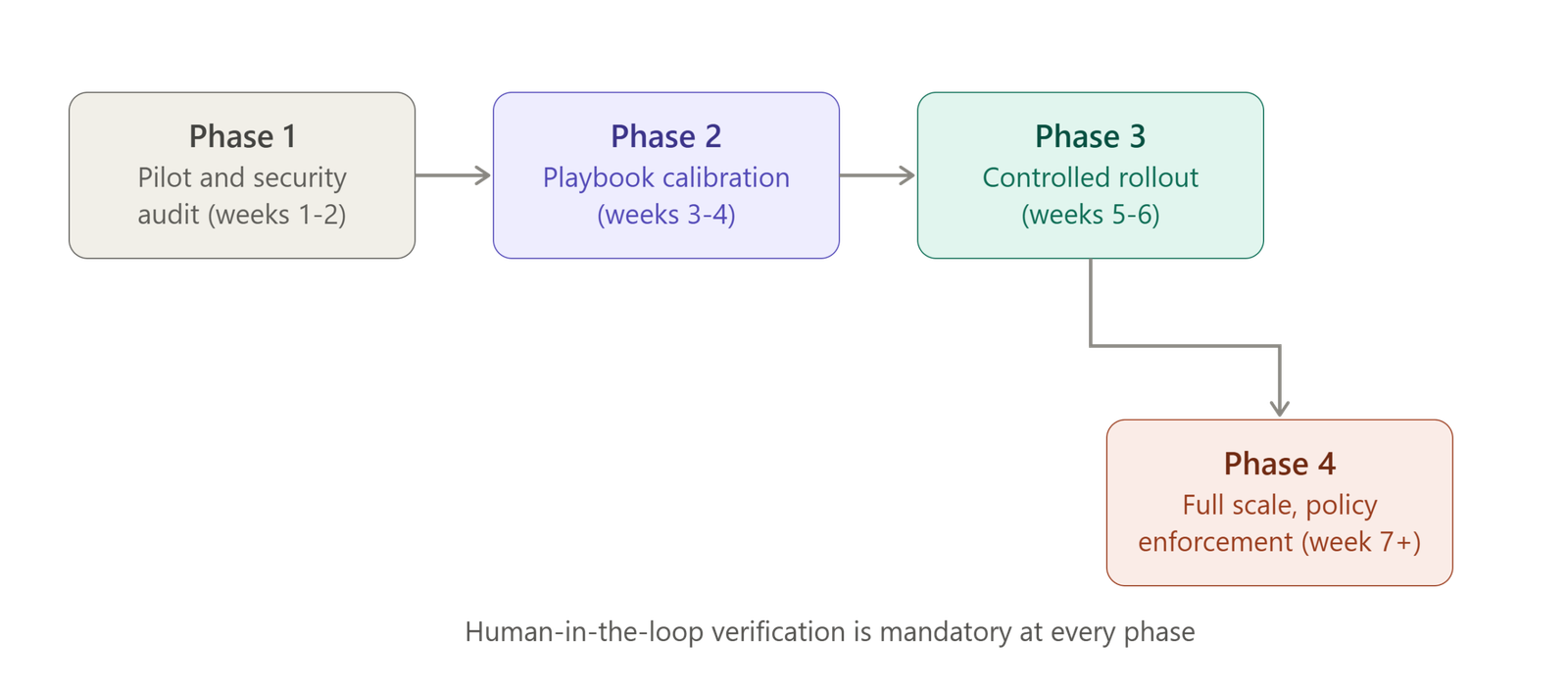
To safely deploy ai for law firms without disrupting active client deliverables, follow this phased rollout model:
  Phase 1: Pilot & Security Audit (Weeks 1-2)
  ├── Conduct SOC 2 & Zero-Data Retention audit
  └── Select a small pilot group (2-3 tech-savvy attorneys)

  Phase 2: Playbook & Template Calibration (Weeks 3-4)
  ├── Upload standard firm templates & approved clauses
  └── Benchmark AI redlines against historical attorney reviews

  Phase 3: Controlled Workflow Rollout (Weeks 5-6)
  ├── Mandate "Human-in-the-Loop" verification for all AI outputs
  └── Deploy tools for low-risk tasks (NDAs, initial research outlines)

  Phase 4: Full Practice Scale & Policy Enforcement (Weeks 7+)
  ├── Establish firm-wide AI usage policies & client disclosure terms
  └── Integrate AI into primary practice areas & client onboarding
Essential Security & Ethics Protocol for Law Firms
Deploying AI inside a legal practice carries strict ethical and regulatory responsibilities. Every firm must establish these three core security guardrails before onboarding software:
1. Mandatory Zero-Data Retention (ZDR)
Ensure your contract explicitly states that client uploads and prompt queries will never be used to train public foundation models or shared with third parties.
2. Maintaining Confidentiality (ABA Rule 1.6 Alignment)
Attorneys must verify that document parsing occurs within encrypted, SOC 2 certified environments to prevent unauthorized disclosure of client confidences.
3. The “Human-in-the-Loop” Verification Mandate
AI tools serve as drafting assistants, not licensed practitioners. Every output especially case citations, statutory references, and court filings must undergo human attorney review prior to submission.
Final Thoughts
Integrating specialized ai tools for lawyers is a strategic necessity for practices aiming to stay competitive in 2026. From CoCounsel’s verified case law research to Spellbook’s native Microsoft Word contract redlining and Harvey AI’s enterprise due diligence, modern software removes administrative friction while enhancing work quality.
By pairing these powerful AI solutions with rigorous human attorney oversight, legal teams can deliver faster, higher-value representation while maintaining the highest standards of professional ethics.
For more deep-dive software reviews, enterprise AI frameworks, and legal tech analyses, visit OpenAIHit.
Frequently Asked Questions
Can AI tools for lawyers generate false case citations?
General-purpose AI chatbots can hallucinate citations. However, specialized legal ai software like CoCounsel and Lexis+ AI connect directly to verified legal databases (Westlaw and LexisNexis), drastically reducing hallucination risks by validating every citation against real statutes.
How does AI contract review software handle custom agreement terms?
Platforms like Spellbook and LegalOn allow attorneys to upload their firm’s or client’s specific “playbook.” The AI then compares incoming contract clauses against these customized standards, highlighting deviations and suggesting approved alternate wording.
Will implementing AI lower billable hours for law firms?
While AI speeds up routine research and drafting, forward-thinking law firms utilize the time saved to offer fixed-fee value packages, take on higher case volumes, and focus on strategic counsel, ultimately boosting firm profitability and client satisfaction.
Is specialized legal AI software expensive for solo attorneys?
Many modern platforms offer modular pricing tiers. Tools like Spellbook offer per-user monthly subscriptions that make advanced contract automation affordable for solo practitioners without requiring large enterprise commitments.