This 2026 guide shows how Shopify Flow v4 uses AI to automate tasks without coding. With Sidekick, merchants can build workflows via chat—handling reviews, inventory, and fraud instantly. Compared to Zapier, it’s faster, cheaper, and natively integrated for smarter e-commerce automation.
By mid-2026, the e-commerce automation landscape has undergone a radical transformation. The era of paying for expensive, multi-step “Zaps” just to tag a customer or move a row in a spreadsheet is officially over. With the release of Shopify Flow v4, Shopify has integrated deep, conversational AI directly into its native automation engine.
This shopify flow v4 tutorial will show you how to leverage the new “Sidekick” integration to build ai workflow shopify systems that handle everything from sentiment analysis on reviews to autonomous inventory reordering—all without a single line of code.
At openaihit.com, we’ve tested Flow v4 against traditional tools, and the results are clear: for 90% of common e-commerce tasks, Zapier is no longer a necessity.
1. Why Shopify Flow v4 is the “Zapier Killer” of 2026
For years, merchants used Zapier or Make.com to bridge the gap between their store and their logic. In 2026, Shopify Flow vs Zapier 2026 is the primary debate in merchant communities. Here is why Flow v4 is winning:
-
Native Intelligence: Flow v4 doesn’t just pass data; it “thinks.” It includes native LLM actions that can summarize, categorize, and predict outcomes based on your store’s historical data.
-
Zero Latency: Because it lives inside the Shopify Core, triggers happen in milliseconds. No more waiting for a 15-minute polling interval to sync an order.
-
Cost Efficiency: While Zapier charges per task, Shopify Flow is included for free in Shopify Basic, Shopify, Advanced, and Plus plans.
-
Conversational Building: The new conversational shopify flow interface allows you to describe your automation in plain English. You don’t build blocks; you have a conversation.
2. The 3-Minute Tutorial: Building Your First AI Workflow
Let’s build a high-impact shopify flow ai workflow that automatically detects negative review sentiment and creates a “High-Priority Support” ticket in your helpdesk while tagging the customer for a win-back discount.
Step 1: Access the Conversational Builder (0:00 – 0:45)
Open your Shopify Admin and go to Apps > Flow. Click Create Workflow. Instead of the blank canvas, select the Sidekick AI Assistant icon.
The Prompt: “When a new product review is submitted, analyze the sentiment. If it is negative, tag the order as ‘Priority Support’, create a Slack notification for the team, and generate a personalized apology draft in the customer’s notes.”
Step 2: Validate the AI-Generated Logic (0:45 – 2:00)
Within seconds, Sidekick will populate the visual builder with three distinct nodes:
-
Trigger: Product Review Created.
-
AI Action: “Analyze Sentiment” (this is the new v4 LLM node).
-
Conditions: If Sentiment = Negative.
-
Actions: Add Order Tag, Send Slack Message, and Update Customer Note.
Step 3: Connect and Activate (2:00 – 3:00)
Click the Slack node to authorize your channel and hit Turn on Workflow. You have just built a sophisticated, AI-driven customer service funnel in under three minutes.
3. Top 5 AI Workflows to Build in 2026
The power of ai workflow shopify extends far beyond simple tagging. Here are the top configurations currently dominating the 2026 market.
A. Autonomous Inventory Management
-
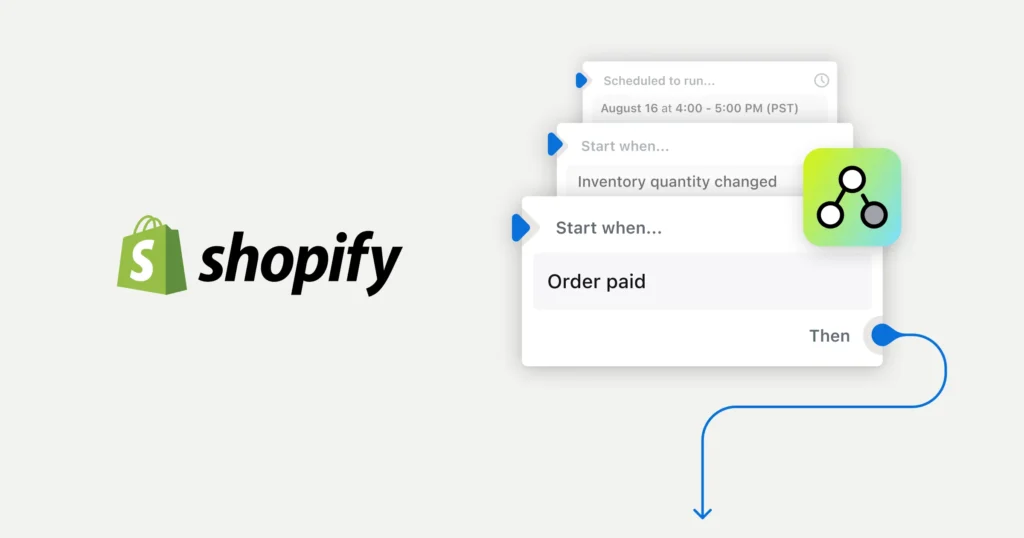
Trigger: Inventory quantity changed.
-
AI Logic: Analyze seasonal trends and current velocity.
-
Action: If stock will deplete in < 14 days, send a Purchase Order draft to the supplier via email.
B. High-Risk Fraud Prediction
-
Trigger: Order placed.
-
AI Logic: Compare shipping address vs. IP geolocation and check against “Global Fraud Knowledge Base” (v4 feature).
-
Action: Put order on hold and email the merchant with a “Risk Summary” score.
C. Conversational VIP Onboarding
-
Trigger: Customer created.
-
AI Logic: Use the “Summarize Customer History” node to see if they were a high-value customer on a different platform (imported data).
-
Action: Send a personalized “Welcome Back” SMS via the integrated WhatsApp/SMS channel.
D. Automated Content Repurposing
-
Trigger: New Blog Post published.
-
AI Logic: Extract 5 key bullet points.
-
Action: Send a Slack notification to the social media manager with ready-to-use captions for Instagram and TikTok.
E. Refund Sentiment Recovery
-
Trigger: Refund created.
-
AI Logic: Categorize the reason from the refund note (e.g., “too small” vs “bad quality”).
-
Action: If “bad quality,” escalate to the Product Dev team; if “size issue,” send a 15% discount code for their next purchase.
4. Shopify Flow vs Zapier 2026: A Side-by-Side Comparison
| Feature | Shopify Flow v4 | Zapier (2026 Professional) |
| Setup Speed | ~3 mins (AI-assisted) | ~15-20 mins (Manual) |
| Price | Free (Included in plan) | Starts at $29/mo + Task fees |
| AI Capabilities | Native LLM (GPT-4o equivalent) | Requires “Zapier Central” (Paid) |
| Integration | Deep native (Metafields, B2B) | Requires API keys & Auth |
| Language | Conversational (Natural Language) | Logic-based (If/Then) |
5. Advanced Tips for Flow v4 Mastery
To truly master the shopify flow v4 tutorial level of automation, you need to understand the new Data Fetching capabilities.
Using External AI Connectors
While Flow v4 has a built-in LLM, you can also send data out to Google Gemini or OpenAI’s latest models for more complex tasks, such as generating high-quality product descriptions for newly uploaded items.
Scheduled Time Triggers
A “sleeper” feature of v4 is the ability to trigger flows based on Time, not just Events.
-
Example: Every Sunday at 10:00 PM, have the AI analyze the last 7 days of sales and send a “Weekly Performance Briefing” to your phone via Telegram.
Loop Actions
Flow v4 introduced “For Each” loops. This allows you to perform an action on every line item in a large order.
-
Example: If a wholesale order has 50 items, the AI can check the shipping weight for each item and calculate a custom pallet fee automatically.
6. The Verdict: Is Zapier Dead?
Not quite. Zapier still wins for cross-platform non-commerce tasks (like syncing a Google Calendar to a Project Management tool). However, for anything that touches your Shopify Admin, Customers, or Orders, using an external tool is now an unnecessary expense.
By moving your logic into a shopify flow ai workflow, you ensure your data remains secure within the Shopify ecosystem, your costs stay low, and your store responds with the speed of a native application.
Conclusion: Start Automating Today
The barrier to entry for e-commerce automation has never been lower. Whether you are a small brand or a massive enterprise, Shopify Flow v4 gives you the tools to act like a much larger team.
At openaihit.com, we recommend starting with one simple “low-stock” or “VIP tag” flow today. Once you see the conversational shopify flow in action, you’ll never want to go back to manual task management.
FAQs
Q1: Do I need to know Liquid or coding for Flow v4?
No. While Liquid is still supported for advanced users, the AI Sidekick handles all the logic and variable mapping for you in plain English.
Q2: Is Shopify Flow v4 available on all plans?
Yes, Shopify Flow is available on Basic, Shopify, Advanced, and Plus plans. Some advanced AI tokens may be metered on lower-tier plans.
Q3: Can Flow v4 send emails to customers?
Yes, it has a “Send Marketing Email” action, though for complex newsletters, most merchants still use Flow to trigger a sequence in Klaviyo or Omnisend.
Q4: How does the AI analyze sentiment?
Shopify uses its internal LLM (built on the same tech as Shopify Magic) to read text blocks (like reviews or contact forms) and assign a score of Positive, Neutral, or Negative.
Q5: Can I revert a flow if the AI makes a mistake?
Yes. Flow v4 includes a “Run History” where you can see exactly what logic was executed and a “Undo” feature for changes made to the workflow design.