

Artificial Intelligence (AI) has transformed industries and daily life over the past decade, but many are now asking: will AI take off in 2025? Experts predict that the next phase of AI adoption could bring unprecedented growth, reshaping work, creativity, and decision-making.
Just as planning trips to Hamburg places to visit requires careful preparation and foresight, organizations and individuals must strategically approach AI integration to maximize its potential and avoid pitfalls, ensuring long-term success and adaptability.
The Current State of AI and Its Growth Potential
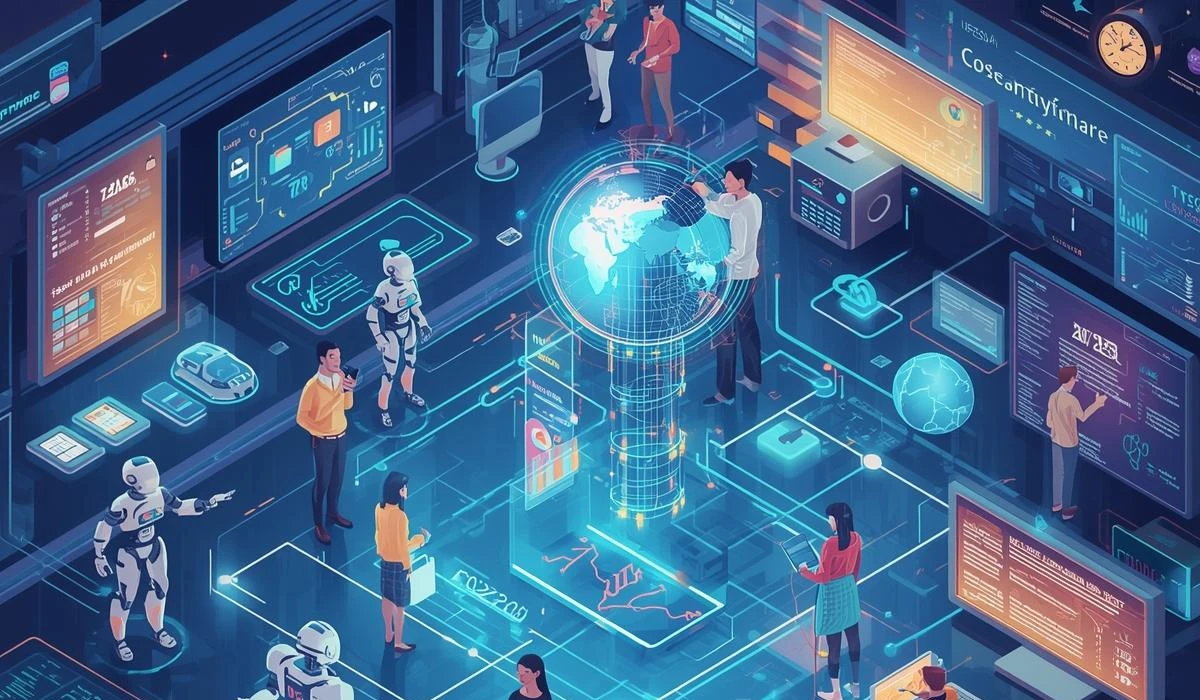
AI today spans a broad spectrum, from generative AI tools like ChatGPT to sophisticated autonomous systems. Its integration into business workflows has streamlined operations, enhanced decision-making, and fostered creativity. Large corporations have invested heavily in AI research, while startups experiment with niche applications ranging from predictive analytics to automated content generation.
One significant driver of AI growth is the expansion of computational power. GPUs and cloud-based systems allow models to process massive datasets efficiently. Coupled with advancements in natural language processing (NLP) and machine learning (ML), these technologies create a fertile environment for AI breakthroughs.
However, adoption is uneven, with some industries fully embracing AI and others cautiously testing its potential. The key challenge for 2025 is not just capability but scalability—how organizations implement AI safely, efficiently, and ethically.
Technological Innovations That Will Fuel AI in 2025
The AI landscape in 2025 is expected to be shaped by several groundbreaking innovations. From neural network efficiency improvements to multimodal AI systems capable of understanding text, images, and audio simultaneously, the next wave of AI could redefine human-computer interaction.
Moreover, research in AI explainability and ethics will likely gain momentum. As AI systems become more autonomous, understanding their decision-making processes is crucial. This is especially true in sensitive areas like healthcare, finance, and law enforcement, where transparency can determine adoption rates.
Emerging trends include:
-
Generative AI expansion: Tools creating text, images, and videos with high realism.
-
Edge AI growth: Processing AI directly on devices, reducing latency and dependency on cloud systems.
-
Human-AI collaboration: AI as an assistant rather than a replacement, augmenting creativity and productivity.
-
AI governance frameworks: New policies ensuring ethical use, privacy, and accountability.
These innovations collectively indicate a promising AI future, yet widespread adoption requires strategic planning and public trust.
Potential Industries That Will Drive AI Adoption
While AI has the potential to influence virtually every sector, indeed, some industries are poised to lead the 2025 adoption surge. Moreover, early adoption not only boosts productivity but also sets a precedent for future growth, therefore encouraging others to follow suit.
-
Healthcare: AI-assisted diagnostics, drug discovery, and personalized treatment plans.
-
Finance: Fraud detection, automated trading, and customer service AI chatbots.
-
Retail: Inventory management, personalized marketing, and virtual shopping assistants.
-
Manufacturing: Predictive maintenance, quality control, and smart robotics.
-
Education: AI tutors, personalized learning platforms, and administrative automation.
These sectors demonstrate how AI can transform workflows while providing measurable economic benefits.
Challenges and Risks That Could Slow AI Growth
Despite its potential, AI adoption faces several obstacles. Technical limitations, ethical concerns, and societal resistance can slow progress. Understanding these challenges is essential for predicting whether AI will truly “take off” in 2025.
AI systems require high-quality, unbiased data to function accurately. Data scarcity, privacy issues, or systemic biases can compromise performance. Additionally, regulatory frameworks are still evolving, with governments debating issues such as AI accountability and safety standards.
Economic and workforce considerations also play a role. Automation may displace certain jobs, leading to resistance from labor sectors. Balancing efficiency gains with societal impact is critical for sustainable AI adoption.
Key risks include:
-
Data privacy and security issues
-
Algorithmic bias and fairness concerns
-
Workforce displacement and societal resistance
-
Regulatory uncertainty and legal hurdles
-
Over-reliance on automation without human oversight
How AI Could Transform Daily Life in 2025

By 2025, AI could profoundly change everyday experiences, not only in how we work but also in how we interact with technology. For instance, smart assistants may manage tasks seamlessly, while AI-driven health monitoring could personalize healthcare like never before. Consequently, these innovations may significantly improve convenience and well-being.
Education may benefit from adaptive learning systems, and smart cities could leverage AI to optimize traffic, reduce energy consumption, and improve public services. The potential is limitless, but its success depends on equitable access and proper governance.
The Role of AI in Creativity and Entertainment
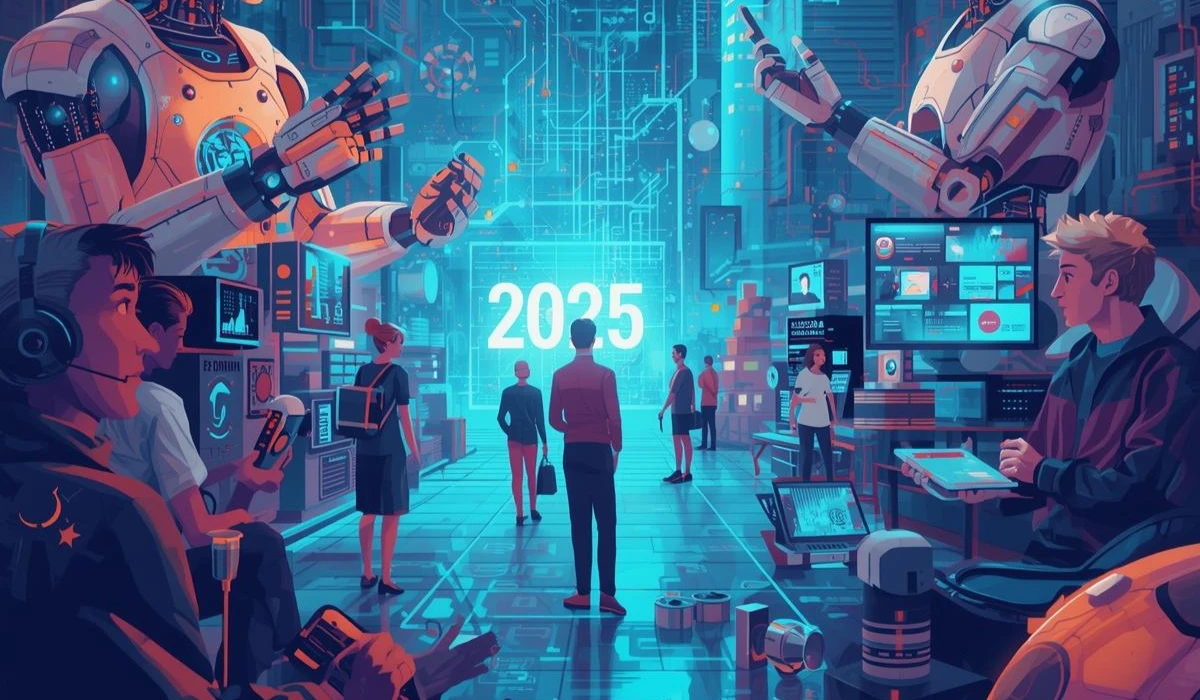
AI’s impact on creativity and entertainment is also growing. Artists, writers, and musicians increasingly rely on AI to generate content, brainstorm ideas, and enhance production efficiency. Gaming companies use AI to create dynamic, responsive environments that evolve with player behavior.
Beyond entertainment, AI can support creative problem-solving in business and science. By analyzing patterns and generating insights, AI expands the boundaries of what humans can achieve. Ethical considerations, however, remain crucial, particularly around intellectual property and originality.
Predictions for AI Adoption in the Corporate World
Businesses are likely to drive AI adoption by integrating it into operational and strategic processes. Early adopters gain competitive advantages, while others risk falling behind. Strategic AI deployment involves balancing automation with human oversight, fostering collaboration rather than replacement.
Key adoption strategies include:
-
Pilot programs to test AI capabilities
-
Employee training for AI collaboration
-
Investment in scalable AI infrastructure
-
Regular auditing for bias and accuracy
-
Leveraging AI for predictive insights and decision-making
These strategies will determine which organizations reap the full benefits of AI by 2025.
Government Policies and Global AI Trends
Government intervention and policy will play a pivotal role in shaping AI’s trajectory. Countries investing in research, infrastructure, and regulation-friendly environments are more likely to lead the AI revolution. Conversely, restrictive policies or inconsistent regulations could slow progress.
Global AI trends include:
-
Increased funding for AI research and startups
-
International collaboration on AI safety and ethics
-
AI-driven public services and smart city initiatives
-
Regulatory sandboxes for safe AI experimentation
Such initiatives indicate a global recognition of AI’s transformative potential, aligning technological development with societal needs.
FAQs
Q1: Will AI replace human jobs by 2025?
AI will automate certain tasks but is unlikely to replace humans entirely. It will augment human capabilities in most sectors.
Q2: Which industries will see the fastest AI adoption?
Healthcare, finance, retail, education, and manufacturing are expected to adopt AI most rapidly.
Q3: How can businesses prepare for AI in 2025?
Businesses should invest in AI infrastructure, train employees, test pilot programs, and ensure ethical implementation.
The Future Outlook: Will AI Take Off in 2025?
In conclusion, AI’s prospects for 2025 are promising but not guaranteed. Technological innovation, adoption, regulations, and public trust will shape its path, with ongoing research signaling continued growth (see AI industry news April 2025).
Moreover, AI advancements are accelerating, enhancing productivity and creativity. Similarly, integrating AI responsibly, like planning visits to Hamburg places to visit, requires foresight. Tools like AI Text Writer can help streamline this process. Those who prepare wisely will benefit, while those who resist may lag.
Furthermore, proactive learning, experimentation, and collaboration clearly play crucial roles in ensuring successful AI adoption. Moreover, careful planning and informed decision-making are essential for navigating this rapidly evolving landscape, thus enabling organizations to stay ahead of challenges.