
Artificial intelligence has slipped into modern life like a quiet stagehand who suddenly learns to sing. Many people still ask What can AI do today?, yet the answer stretches far beyond simple automation. Today’s systems can analyze oceans of information, detect patterns invisible to humans, and generate language, images, and predictions with startling fluency. They support industries that once relied on manual insight, transforming healthcare, logistics, education, research, and creative fields.
Because AI has grown more practical than theoretical, its role now feels less like science fiction and more like a broad utility engine built to help people think, create, and operate with sharper precision. These models are trained on wide datasets, but their true strength emerges only when paired with human judgment.
Together, AI and human expertise amplify skill rather than replace it. Moreover, with structured governance and ethical practices, trust in these systems grows steadily. Ultimately, their value lies in enabling smoother, more informed decisions and workflows, while fostering innovation across tasks.
How AI Shapes Everyday Life

Modern AI thrives on layers of algorithms that digest patterns the way attentive readers absorb meaning from paragraphs. Moreover, neural networks recognize shapes, trends, or linguistic cues and, over time, gradually refine themselves through repeated training cycles, improving accuracy and performance.
Because these systems learn from feedback loops, they can adapt over time, improving accuracy and relevance without constant manual instruction. Additionally, this architecture supports personalization, allowing AI to adjust to an individual’s routines and preferences.
Whether offering suggestions, warnings, or insights, the goal is to reduce cognitive load and free people to focus on thoughtful, high-value tasks. Behind the curtain rests an intricate mix of mathematics and memory, but the user experiences only a polished interface that feels almost conversational.
Modern AI Capabilities Today
A short overview sets the stage before exploring specifics. During the last few years, AI systems have grown versatile enough to assist with tasks ranging from business analytics to creative ideation.
Below are domains where this technology shows consistent strength:
-
Natural language generation for drafting documents, insights, explanations, notes, or summaries.
-
Image and pattern recognition used in quality control, diagnostics, and safety checks.
-
Predictive analytics that help businesses forecast demand, detect risk, and plan more intelligently.
-
Automation of repetitive workflows, including scheduling, tagging, sorting, and data extraction.
-
Decision-support tools that guide professionals with real-time recommendations.
Transforming Workplaces with Artificial Intelligence
Innovation has shifted from novelty to practicality. Developers now focus on reliability, safety, and alignment so systems can serve real needs without creating new risks. Many breakthroughs revolve around accuracy and context awareness. These improvements help AI interpret ambiguous instructions, maintain consistency, and remain grounded in factual reasoning.
Examples of rapidly improving areas include:
-
Multimodal intelligence, where models understand text, voice, and images together.
-
Translation engines capable of interpreting tone and idioms rather than merely substituting words.
-
AI-assisted creativity, supporting design, storytelling, and content planning.
-
Smart research companions that help users sift through complex academic or technical material.
-
Task-specific agents are built to analyze legal documents, medical notes, financial reports, or operational data.
Travel Smarter: AI Guides Your Adventures

Progress also relies on compute efficiency, making it possible to deploy high-performing models on smaller devices. This shift broadens access, bringing powerful tools into classrooms, clinics, and small businesses. Developers aim to reduce hallucinations, improve attribution, and incorporate transparent reasoning steps.
These efforts improve trust and allow experts to verify outputs rather than accept them uncritically. For professionals, the impact feels less like a looming replacement and more like acquiring a fast, tireless partner, enhancing both efficiency and decision-making.
Researchers use AI to explore hypotheses, marketers shape campaigns with data-backed insights, and analysts navigate dense spreadsheets with fewer blind spots. This widening reach illustrates how deeply the technology has embedded itself in knowledge work.
Tools That Enhance Your Travel Experience
The range of AI-enabled tasks continues to stretch across industries and user groups. Although these systems require careful oversight, their utility is undeniable. In fact, they improve speed, reduce human error, and expand creative possibilities, offering new opportunities for innovation.
Because these models respond to natural language, they also make complex tools more accessible for non-experts. Consequently, organizations using AI at scale now report stronger productivity, fewer operational delays, and, in addition, more informed decision cycles, ultimately boosting overall efficiency.
This reinforces a broader trend: AI is shifting from experimental technology to a dependable partner that helps individuals solve everyday challenges. Its influence spreads organically as people discover new ways to integrate it into thinking, planning, and learning.
Revolutionizing Healthcare with AI
AI now plays a concrete role in daily life, answering the question What can AI do today? with tangible applications rather than abstract theories. The following examples represent fields where AI consistently performs well:
-
Customer support assistance, routing queries and offering instant responses.
-
Personal productivity tools, such as calendar organization, email drafting, and priority setting.
-
Language-support applications that help users communicate clearly across borders and platforms.
-
Accessibility tools for speech-to-text, descriptive visuals, and reading assistance.
-
Educational support, offering explanations, practice questions, and study guidance.
Personalized Learning Through AI in Education
In daily routines, AI blends into the background like a quiet co-worker tidying the digital workspace. It supports small but meaningful tasks that lighten human workload. These everyday actions may seem simple, but their cumulative impact reshapes how people manage time.
Common daily contributions include:
-
Generating reminders for bills, appointments, or deadlines.
-
Sorting files or emails to reduce clutter.
-
Answering quick factual questions or clarifying instructions.
-
Helping users outline plans, itineraries, or step-by-step processes.
-
Offering quick translations for travelers or bilingual users.
Smart Cities: AI Improving Urban Living
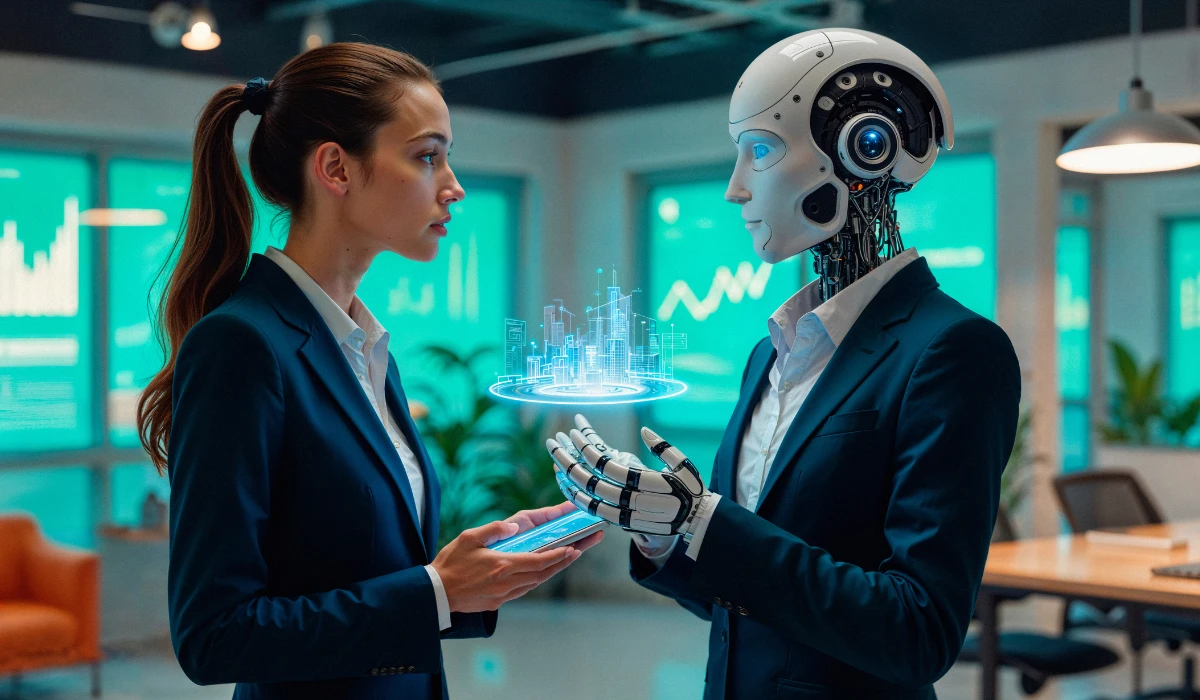
AI excels when patterns, structures, or predictions matter more than improvisation. In addition, in fields that rely heavily on data interpretation, these systems can often illuminate trends that humans might otherwise miss. Consequently, organizations can make more informed decisions, and ultimately, achieve better outcomes.
Its strongest performance areas include financial modeling, medical imaging analysis, logistics optimization, and large-scale customer trend monitoring. Because these domains involve structured datasets, AI can process information rapidly and deliver insights that sharpen decision-making.
AI in Entertainment and Media
Beyond specialized tasks, AI helps ordinary users simplify chores, find information, and manage personal knowledge. Many people rely on voice assistants, recommendation engines, and writing tools without thinking of them as AI at all proof that the technology has already dissolved into the rhythm of life.
As AI evolves, this subtle integration will continue, and moreover, systems will become more intuitive, while also learning personal styles. Consequently, they offer tailored support that, in addition, respects privacy and, ultimately, aligns with user intent.
Challenges and Future of AI Technology
AI’s role continues expanding across creative industries, operational environments, and service-driven fields. These systems collaborate with people rather than replacing them, enhancing problem-solving and accelerating research cycles.
Examples include:
-
Creative project inspiration, from design prompts to narrative outlines.
-
Smart diagnostics, highlighting anomalies or risks.
-
Content planning tools, helping organize long-form work.
-
Resource allocation systems, balancing inventory, staffing, and schedules.
-
Knowledge management, organizing information for easier retrieval.
FAQs
1. Is AI reliable for professional work?
Yes, when guided by experts who verify accuracy and maintain context awareness.
2. Will AI replace human jobs?
It changes tasks more than it removes roles, often creating new types of work.
3. How safe is AI?
Safety continues improving with governance, transparency, and monitoring.
Conclusion
AI has become a versatile partner rather than a distant experiment. It strengthens decision-making, sparks creativity, reduces repetitive tasks, and supports users across professions. Learning who invented AI helps understand its evolution. Organizations refine guardrails and improve reliability, increasing its practical value.
Ultimately, the question What can AI do today? no longer points toward the future.It describes a present where intelligent systems operate alongside people, expanding human capability.To learn more about the most advanced systems, see what is the most advanced AI today.
This shift shows AI as a collaborator, not a replacement. It subtly influences daily tasks while human oversight remains crucial. AI can even suggest the best Hamburg places to visit for tailored sightseeing and experiences, making travel planning easier and more efficient.