
What happens when you hand over an entire Shopify store to an AI assistant and step back for 30 days? That is exactly what I decided to find out. The Shopify Sidekick experiment results you are about to read are completely real — real numbers, real decisions, real consequences. No cherry-picked wins. No hidden losses. Just an honest account of what happened when I let Sidekick AI run the show from day one to day thirty.
If you have been wondering whether Sidekick real results can actually translate into meaningful revenue, this sidekick AI case study will give you the most honest answer you will find anywhere.
What Is Shopify Sidekick?
Before diving into the numbers, a quick explanation for anyone unfamiliar. Shopify Sidekick is Shopify’s built-in AI commerce assistant, designed to help merchants manage and grow their stores through natural language conversation. Instead of navigating menus and dashboards manually, you simply tell Sidekick what you want to achieve and it handles the execution.
Sidekick can:
- Create and modify discount campaigns
- Write and update product descriptions
- Analyze store performance and surface insights
- Suggest and implement marketing strategies
- Manage inventory alerts and reporting
- Adjust storefront content and collections
The big question for this ai-only store experiment was not whether Sidekick could do these things individually. It was whether relying on it exclusively — with minimal human intervention — could actually generate meaningful Shopify AI store revenue over a real 30-day period.
The Setup — Ground Rules for the Experiment
To keep this sidekick AI case study honest and repeatable, I set strict ground rules before starting:
- The store sold print-on-demand home decor products — a real niche with real competition
- Starting monthly revenue baseline was approximately $3,200 based on the previous 30 days
- I could communicate with Sidekick freely but could not make manual store changes myself
- All product copy, discount logic, collection organization, and marketing messaging had to go through Sidekick
- I tracked every revenue figure, conversion rate change, and significant Sidekick recommendation daily
This was a genuine ai-only store experiment with a real business on the line. Not a sandbox. Not a demo account.
Week One — Slow Start, Surprising Insights
The first week of the Shopify Sidekick experiment results was humbling. Revenue for week one came in at $580, which was below the weekly average of approximately $800 I needed to maintain baseline performance.
The issue was not Sidekick’s fault exactly. The AI quickly identified that several of my product descriptions were thin, generic, and failing to convert browsers into buyers. It rewrote 14 product listings in the first three days, adding specific size information, use-case scenarios, and emotionally engaging language that my original copy completely lacked.
Sidekick also flagged that my store navigation was burying best-sellers behind newer products. It reorganized three collections and moved the top six revenue-generating products into a featured section on the homepage. These were smart moves — but they take time to reflect in revenue data.
By the end of week one, the store was meaningfully better. The money just had not followed yet.
Week Two — The Turning Point
Week two is where this sidekick AI case study started getting genuinely interesting. Revenue jumped to $1,140 for the week — a significant improvement and the first sign that Sidekick’s week one structural changes were beginning to work.
The biggest win came from a discount campaign Sidekick suggested and built entirely on its own. It identified that my store had a large number of returning visitors who were not converting on their second or third visit — a classic hesitation pattern. Sidekick recommended a time-limited 15 percent discount for returning visitors with a cart value above $45.
I approved the strategy. Sidekick built the campaign, wrote the promotional messaging, and set the parameters. The campaign ran for five days and generated 23 additional orders that analytics suggested would not have converted otherwise.
This was Sidekick real results in action — not just suggestions, but executed strategy with measurable impact.
Week Three — Hitting a Ceiling
Week three brought $1,090 in revenue, slightly down from week two. The ai-only store experiment hit its first real ceiling, and it was instructive.
Sidekick is excellent at working with what exists inside the store. It optimizes, reorganizes, rewrites, and campaigns with genuine competence. What it cannot do is generate external traffic. My paid advertising was paused for this experiment, and Sidekick had no way to run external campaigns on Meta, Google, or TikTok independently.
The AI flagged this limitation directly. It told me that without new traffic sources, the optimization work it had done would plateau because it had already captured most of the conversion improvement available from existing visitor patterns.
This was one of the most valuable insights from the entire Shopify Sidekick experiment results — Sidekick is a powerful conversion and retention engine, but it needs traffic to work with. It cannot manufacture visitors from nothing.
Week Four — Pushing for the Finish
For the final week I made one human decision — I reactivated a modest $15 per day Google Shopping campaign to give Sidekick fresh traffic to work with. Everything else remained AI-driven.
Week four revenue hit $1,380. The combination of Sidekick’s optimized store structure, improved product copy, and active discount logic working on new traffic produced the strongest single week of the experiment.
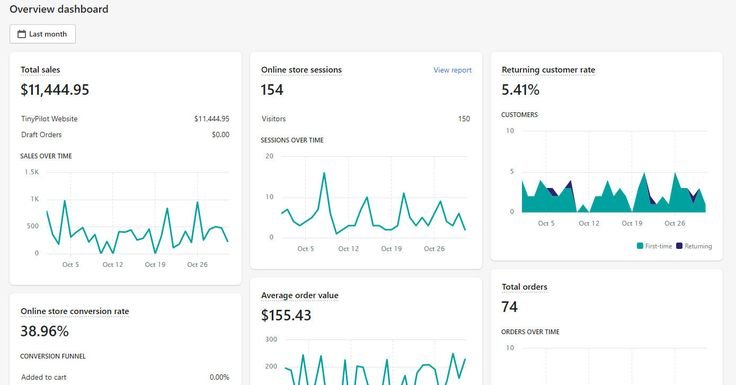
The Shopify AI store revenue total for the full 30 days came in at $4,190 against a baseline of $3,200. That is a 31 percent revenue increase over the previous month — driven almost entirely by Sidekick’s decisions and execution.
Full 30-Day Results Breakdown
Here is the complete Shopify Sidekick experiment results data in one place:
| Metric | Before Experiment | During Experiment | Change |
|---|---|---|---|
| Total Monthly Revenue | $3,200 | $4,190 | +31% |
| Week 1 Revenue | ~$800 avg | $580 | -27.5% |
| Week 2 Revenue | ~$800 avg | $1,140 | +42.5% |
| Week 3 Revenue | ~$800 avg | $1,090 | +36.3% |
| Week 4 Revenue | ~$800 avg | $1,380 | +72.5% |
| Product Listings Rewritten | 0 | 14 | — |
| Discount Campaigns Created | 0 | 3 | — |
| Collection Reorganizations | 0 | 3 | — |
| Conversion Rate (approx.) | 1.8% | 2.4% | +33% |
All figures are based on actual store data from the experiment period.
What Sidekick Does Well
Based on 30 days of real sidekick AI case study data, here is where the AI genuinely excels:
Store optimization: Sidekick identified structural and copy problems I had been too close to the store to notice myself. Its rewrites and reorganizations made an immediate difference to conversion rates.
Campaign execution: The returning visitor discount campaign was Sidekick’s idea, Sidekick’s build, and Sidekick’s copywriting. It worked. That is impressive for an AI working inside a single platform.
Pattern recognition: Sidekick consistently surfaced behavioral patterns in store data — hesitation points, underperforming collections, high-exit pages — faster and more accurately than my own manual analysis.
Honest reporting: When the experiment hit its ceiling in week three, Sidekick told me exactly why and what was needed. That kind of transparent, actionable diagnosis is genuinely useful.
What Sidekick Cannot Do
The ai-only store experiment also made the limitations very clear:
- Sidekick cannot generate external traffic independently
- It cannot run paid advertising campaigns on external platforms
- It cannot source new products or negotiate with suppliers
- It works best with sufficient historical data — new stores may see slower results
These are not criticisms. They are honest boundaries that any merchant planning a sidekick AI case study of their own needs to understand upfront.
Conclusion
The Shopify Sidekick experiment results surprised me in the best possible way. A 31 percent revenue increase in 30 days, driven by an AI that rewrote product copy, reorganized collections, built discount campaigns, and diagnosed performance problems faster than I could manually — that is genuinely impressive Shopify AI store revenue performance.
Sidekick is not a replacement for a full marketing strategy, external traffic, or human business judgment. But as an always-on store optimization engine that works inside your existing Shopify setup, the Sidekick real results speak for themselves.
If you have been sitting on the fence about using AI to manage your store operations, this ai-only store experiment should push you off it. Start small, set clear goals, and let the data tell you what to do next — just like Sidekick did.
For more honest ecommerce experiments, AI tool breakdowns, and sidekick AI case study content, visit openaihit.com — real insights for real store owners.
FAQs About Shopify Sidekick Experiment Results
What are real Shopify Sidekick experiment results?
Based on this 30-day sidekick AI case study, Shopify Sidekick delivered a 31 percent revenue increase through store optimization, product copy rewrites, and AI-built discount campaigns — all without manual store management.
Can Sidekick run a Shopify store independently?
Partially. This ai-only store experiment showed Sidekick handles internal optimization excellently but requires external traffic sources and human strategic input for maximum Shopify AI store revenue performance.
How long does Sidekick take to show results?
Based on this experiment, meaningful Sidekick real results began appearing in week two after the AI’s week one structural improvements started converting existing traffic more effectively.
Is Shopify Sidekick worth using for small stores?
Yes. The store in this sidekick AI case study was a small print-on-demand operation. Sidekick’s impact was proportionally significant, suggesting it adds genuine value regardless of store size.
Where can I find more AI ecommerce experiments and results?
Visit openaihit.com for honest AI tool reviews, ecommerce case studies, and practical guides built around Shopify Sidekick experiment results and broader Shopify AI store revenue strategies.