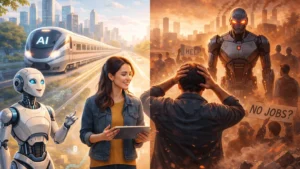

The tech world is changing fast. Artificial intelligence is now part of daily life, from writing emails to driving cars. Among all these changes, one claim created massive discussion: Does Google say 25% of all its code is written by AI? This statement surprised developers, businesses, and even everyday users. If true, it would mean a major shift in how the world’s largest tech company builds software.
However, the reality is more complex than a simple yes or no. While Google uses AI heavily in coding support, testing, and optimization, the idea that one-fourth of its entire codebase is fully written by AI is often misunderstood. This article breaks the truth down clearly, without hype, using verified explanations and expert analysis.
Moreover, this topic is not just about Google. It reflects the future of software development. From machine-generated code to human-AI collaboration, the way software is built is transforming rapidly. Let us explore what is real, what is exaggerated, and what it truly means for developers and businesses.
How the Claim About Google and AI-Written Code Started
The idea that a large portion of Google’s code is created by AI started from interviews and internal discussions about automation. Over time, these statements were shortened, misquoted, and widely shared online. As a result, many people began assuming that machines now replace programmers inside Google.
In reality, Google executives discussed how AI assists engineers during development. They highlighted tools that suggest code, identify errors, and speed up development cycles. However, assistance does not mean full autonomy. There is still a strong human role behind every product.
What Google Actually Says About AI in Software Development

Google has openly shared that AI helps its engineers write better code. However, it has never officially confirmed that 25 per cent of all production code is fully written by AI without human control. What Google did confirm is that AI contributes to parts of the development process.
To make this easier to understand, consider how AI is actually used internally. Engineers still plan the systems, design logic, and approve the final output. AI simply speeds up certain steps.
Now, let us look at how AI is commonly used at Google during development:
- Suggesting code completions in real time
- Auto-generating test cases
- Finding potential security flaws
- Refactoring old code efficiently
- Assisting with bug detection
- Improving documentation readability
These tasks save time. However, they still require validation by human engineers. The final responsibility always remains with the developer.
Is It Technically Possible That 25% of Code Is AI-Generated?
From a technical perspective, yes, AI may contribute to a large share of small functional code blocks. However, this does not mean the entire system is autonomous. Many parts of modern software include repetitive patterns that AI can help generate.
However, there is a serious difference between “AI-assisted” and “AI-created.” AI-assisted code still needs human supervision. The logic, creativity, and product vision remain human-driven.
Now, before using bullet points, it is important to clarify one thing. Measuring “25 percent” itself is difficult. Code varies in complexity. A few automated functions may represent thousands of lines, while one security feature may take months of human design.
AI Can Write Small Modular Code Faster Than Humans
AI systems can generate small, modular pieces of code at impressive speed. For tasks like writing simple functions, scripts, or repetitive components, AI reduces development time significantly. This helps developers move faster during early-stage development and rapid prototyping. However, the speed advantage is mostly visible in well-defined, limited-scope coding tasks.
It Handles Routine Programming Efficiently
Routine programming tasks such as debugging simple errors, refactoring code, writing boilerplate structures, and converting logic between languages are handled very efficiently by AI. These repetitive jobs usually consume a lot of developer time, but AI automates them with accuracy and consistency.
Large System Architecture Still Needs Expert Engineers
Even with advanced AI capabilities, the design of large-scale system architecture still depends heavily on experienced human engineers. Architecture requires a deep understanding of scalability, security, performance, and long-term business goals.
Final Approval Always Stays Human-Controlled
No matter how advanced AI becomes, the final approval of critical software decisions remains in human hands. Developers, architects, and project managers verify logic, security risks, ethical implications, and performance standards before deployment.
The majority of Innovation Is Still Human-Driven
True technology innovation is still largely driven by human creativity, curiosity, and vision. AI assists in execution and optimization, but original ideas, disruptive concepts, and strategic thinking originate from human minds. Engineers, designers, and researchers push boundaries by imagining solutions that AI itself could never independently conceive.
So while AI helps heavily, full automation at scale is still not a reality.
The Role of AI Tools Inside Google Engineering Teams

Google has some of the most advanced internal AI tools in the world. These tools are trained on company-specific development patterns, best practices, and security rules. This allows engineers to get intelligent suggestions instantly.
However, these tools are carefully restricted. They work under strict privacy, security, and code validation policies. That is why AI inside Google operates more safely than many consumer tools.
Another important factor is collaboration. AI never replaces teamwork. Engineers still review each other’s work. Peer reviews, security checks, and testing pipelines are all required before code reaches production.
How AI Is Changing the Future of Software Development
AI is not just changing Google. It is transforming the global software industry. Developers now work faster, smarter, and with fewer routine errors. At the same time, companies can build products at a lower cost.
However, this does not mean developers are becoming less important. Their role is evolving. Instead of writing every single line manually, developers now focus more on system design, problem-solving, and optimization.
Now, let us look at the biggest future impacts clearly:
- Faster product development cycles
- Reduced debugging time
- Better code consistency
- Improved security scanning
- Higher productivity for small teams
- Increased focus on creative problem-solving
So instead of replacing developers, AI is reshaping how development work is done.
Ethical Concerns Around AI-Generated Code
With all progress comes responsibility. AI-generated code raises serious ethical and legal questions. Who owns the code written by AI? Who is responsible if it fails? These questions are now becoming central in technology law.
Google addresses these issues by keeping humans in the loop. This ensures accountability does not shift to machines. Every piece of code still has a responsible engineer assigned to it.
Another concern is training data. AI models learn from large datasets, and companies must ensure that no copyrighted material is misused. Google follows strict internal policies to avoid these risks.
So while AI helps speed things up, companies must move carefully to protect users and creators.
Does Google Say 25% of All Its Code Is Written by AI? Affect Public Trust in Google?

Public trust matters deeply for tech companies. When people hear that machines could control software behind billion-dollar systems, fear naturally arises. However, transparency helps reduce such fear.
Google continues to communicate clearly that AI assists, not replaces, human engineers. That message is critical for maintaining confidence among users, businesses, and developers.
Moreover, trust also comes from results. Google services remain stable, secure, and reliable. This proves that human oversight is still strong.
The Real Meaning Behind Does Google Say 25% of All Its Code Is Written by AI?
The real message behind the discussion is not about numbers. It is about direction. Technology is moving toward collaboration between humans and AI. Google is leading that shift, but in a balanced and controlled way.
Instead of focusing on a percentage, it is better to focus on how safely and responsibly AI is being used. And so far, Google’s approach shows caution, not recklessness.
So when people ask does Google say 25 of all its code is written by AI, the honest answer is this: Google confirms heavy AI assistance, but no official confirmation supports the idea that 25 percent of its entire production codebase is fully autonomous.
Conclusion: Does Google Say 25% of All Its Code Is Written by AI?
The idea that AI writes a massive percentage of Google’s code may sound exciting or alarming, depending on who you ask. However, the truth is far more balanced and practical. AI is a powerful assistant, not an independent developer. It helps with routine tasks, speeds up workflows, and improves accuracy, but it does not replace human judgment.
The conversation about does Google say 25% of all its code is written by AI often overlooks the critical role of human engineers. Every intelligent system at Google still depends on expert planning, testing, and accountability. AI does not innovate on its own. It works under human guidance.
As AI continues to evolve, collaboration will define the future of software, not replacement. The companies that succeed will be those that combine machine efficiency with human creativity and responsibility.