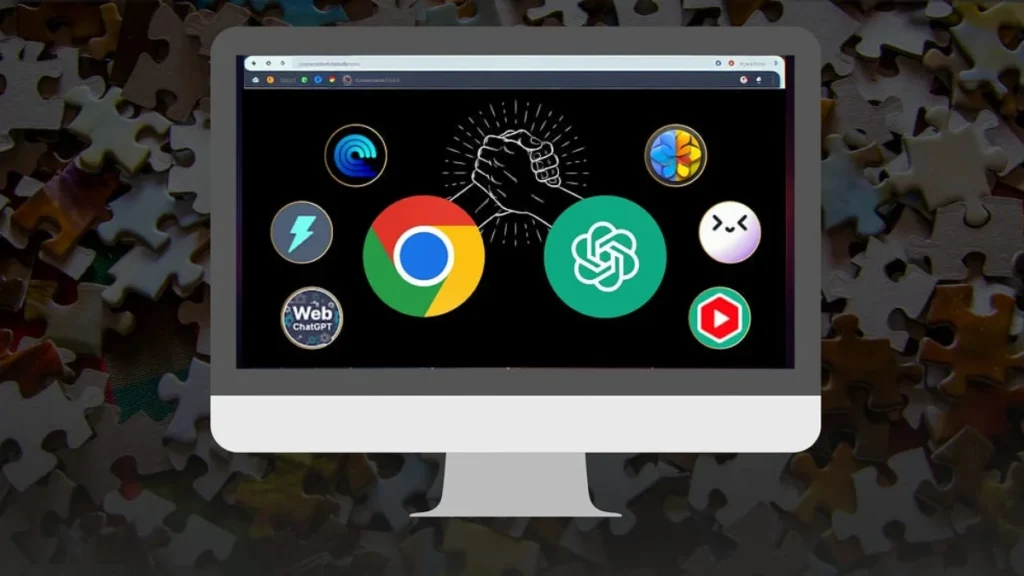
ChatGPT plugins and extensions are turning AI into one of the most powerful productivity tools of 2026. With the right integrations, ChatGPT can automate workflows, perform advanced research, generate marketing strategies, and even help developers write better code.
That’s why professionals are constantly searching for the best ChatGPT extensions that unlock the full potential of AI. From marketing and automation to coding and research, today’s expanding ChatGPT tools list includes powerful integrations designed to save time and increase productivity.
What Are ChatGPT Plugins and Extensions?
ChatGPT plugins and extensions allow AI to connect with external software, APIs, and online platforms. Instead of relying only on built-in knowledge, ChatGPT can interact with real-time tools to retrieve information, automate tasks, or analyze data.

For example:
-
SEO tools analyze search data
-
automation tools trigger workflows
-
coding assistants generate scripts
-
research plugins summarize documents
Because of this flexibility, the modern ChatGPT tools list now includes tools designed for marketing, development, research, productivity, and automation. Businesses in particular rely on ChatGPT plugins for business operations such as customer communication, marketing automation, and analytics reporting.
How to Install ChatGPT Plugins in 2026
Many users still wonder how to install ChatGPT plugins in 2026, but the process is fairly simple. Most tools are installed in one of three ways:
-
Through the ChatGPT integrations or GPT tools menu
-
Via browser extensions from the Chrome Web Store
-
Through API-based integrations or custom GPT tools
Once installed, the plugin connects ChatGPT to external services so the AI can use those tools directly in prompts.
Learning how to install ChatGPT plugins in 2026 is important because these integrations unlock many of the advanced features people expect from AI today.
15 Best ChatGPT Plugins & Extensions in 2026
Below are some of the most useful tools currently included in the modern ChatGPT tools list.
1. Zapier
Zapier is one of the most powerful automation tools available. It connects more than 8,000 applications, including Slack, Gmail, Google Sheets, and CRM systems. A marketing team, for example, can automatically generate a report using ChatGPT when new customer feedback appears in a form.
Because of its automation capabilities, Zapier is widely used among ChatGPT plugins for business and remains one of the best ChatGPT plugins for productivity and automation.
2. GitHub Copilot
GitHub Copilot is widely used by developers as an AI coding assistant. It integrates directly into development environments such as Visual Studio Code. Developers can ask Copilot to generate functions, explain code, or fix errors. Many teams report faster coding workflows when using Copilot, making it one of the most valuable ChatGPT plugins for developers and coding.
3. Wolfram Alpha
Wolfram Alpha adds computational intelligence to ChatGPT. Instead of simply generating answers, the tool performs real calculations and provides structured results. Engineers and analysts use it for mathematical modeling, financial calculations, and scientific research. This makes it one of the strongest ChatGPT plugin examples for data-driven insights.
4. Canva AI
Canva integrates design automation with AI. It allows users to convert ChatGPT-generated ideas into presentations, marketing graphics, and social media visuals. A startup founder, for instance, can generate a marketing plan with ChatGPT and quickly turn it into visual slides using Canva.
Because of its marketing capabilities, Canva is often used alongside ChatGPT plugins for business content creation.
5. WebChatGPT
WebChatGPT is one of the most widely used best ChatGPT extensions for real-time research. It allows ChatGPT to include live web search results inside responses, making it easier to analyze current information instead of relying on outdated data. Writers and analysts frequently use WebChatGPT when gathering sources for articles or reports.
6. AIPRM
AIPRM is a prompt management tool popular among marketers and SEO professionals. It offers prompt templates for tasks like keyword research, blog outlines, and marketing content. Because of its SEO focus, it is commonly included among the best ChatGPT plugins for SEO in 2026.
7. Sider
Sider is an AI sidebar extension that integrates multiple AI models into a single interface. So, users can compare answers from different models quickly, which is helpful for researchers and analysts. A realistic example is a marketer summarizing a landing page, rewriting the headline, translating copy, and checking the same prompt across multiple models in one browser session.
8. HARPA AI
HARPA AI combines ChatGPT with browser automation. For example, users can monitor websites, summarize content, and extract data automatically without switching between multiple tools. In addition, e-commerce businesses often rely on HARPA AI to track competitor pricing or analyze product listings, which helps them respond quickly to market changes.
9. Merlin AI
Merlin is a productivity assistant designed for research and content creation. It can summarize web pages, rewrite text, and generate insights directly in the browser. Freelancers and consultants use Merlin when they need quick summaries during research.
10. Monica AI
Monica is an all-in-one AI assistant that helps with writing, translation, and summarization. Because it integrates multiple AI features into one platform, many teams use Monica to improve daily productivity.
11. ChatGPT for Google
This extension displays ChatGPT responses alongside Google search results. Users can quickly compare AI summaries with traditional search results, making research faster. For instance, a user comparing CRM software can search Google and get a quick AI layer for summarizing what the search results appear to indicate, then click into sources for deeper checking.
12. Compose AI
Compose AI focuses on writing automation. It helps users generate emails, complete sentences, and draft responses automatically. Sales teams and support agents often rely on Compose AI to speed up communication. A genuine example might be a sales representative that uses Compose AI to compose reply emails more quickly while maintaining human and customized final wording.
Although it is not the greatest tool for in-depth study, it is particularly helpful for the “speed layer” of everyday work.
13. Glasp YouTube Summary
Glasp helps summarize long YouTube videos into short written summaries. Content creators and students often use this tool to extract insights from lectures or interviews. A practical example is watching a 40-minute interview with a SaaS founder, extracting the key growth points in minutes, and then using those notes to build a blog or newsletter.
14. Voice Control for ChatGPT
Voice Control allows users to interact with ChatGPT using speech commands. It enables hands-free AI interaction, which is helpful when multitasking. A realistic example is a founder brainstorming while reviewing a spreadsheet or a support manager dictating prompts while documenting tickets.
15. OpenAI Custom GPTs
One major shift in 2026 is the rise of custom AI assistants. When comparing ChatGPT plugins vs custom GPTs 2026, the difference becomes clear. Plugins connect external tools, while custom GPTs allow users to create specialized assistants trained for specific tasks.
Businesses increasingly use custom GPTs for internal support systems, training resources, and automated workflows.
Comparison Table of ChatGPT Tools
| Tool | Use Case | Estimated Pricing | Best For |
|---|---|---|---|
| Zapier | Workflow automation | Free / $29+ monthly | Businesses |
| GitHub Copilot | Code generation | Free / $10 monthly | Developers |
| Wolfram Alpha | Scientific calculations | Free / $5 monthly | Analysts |
| Canva AI | Design automation | Free / $15 monthly | Marketing |
| WebChatGPT | Web research | Free | Writers |
| AIPRM | SEO prompts | Free / Paid | SEO professionals |
| Sider | AI productivity sidebar | Free / Paid | Researchers |
| HARPA AI | Web automation | Free / $12 monthly | Ecommerce |
| Merlin | Research assistant | Free / $19 monthly | Freelancers |
| Monica | AI productivity assistant | Free / Paid | Teams |
| ChatGPT for Google | AI search assistant | Free | Beginners |
| Compose AI | Writing automation | Free / Paid | Sales teams |
| Glasp | Video summaries | Free | Students |
| Voice Control | Voice interaction | Free | Multitasking |
| Custom GPTs | AI workflow assistants | GPT plan required | Businesses |
ChatGPT Plugins vs Custom GPTs 2026
A common question today is the difference between plugins and custom GPTs. Plugins connect ChatGPT to external services such as automation tools or analytics platforms. Custom GPTs allow users to create AI assistants tailored to specific workflows. Many companies now combine both technologies to build powerful AI systems.
Conclusion
ChatGPT plugins and extensions are rapidly changing how professionals work with AI. So, from automation and SEO to coding and research, the right tools from the growing ChatGPT tools list can dramatically improve productivity. As a result, more professionals are integrating these AI tools into their daily workflows to save time and work more efficiently.
As AI continues evolving, staying updated with real ChatGPT plugin examples and practical tools will make a real difference. Platforms like OpenAIHit regularly explore these innovations—so start experimenting with a few of these tools and see how AI can upgrade your workflow.
FAQs
Are ChatGPT plugins free to use?
Some plugins are free, while others offer freemium or paid plans depending on features and integrations.
Do ChatGPT plugins work on mobile devices?
Most extensions work best on desktop browsers, though some AI tools now support mobile apps.
Can businesses create their own ChatGPT plugins?
Yes, companies can build custom integrations or specialized AI assistants using APIs and AI platforms.
What are the most popular ChatGPT plugins in 2026?
For Example, tools like Zapier, GitHub Copilot, WebChatGPT, and automation extensions are widely used across industries.
Are ChatGPT plugins useful for content creators?
Yes, in fact, many tools help with research, SEO analysis, content outlines, and workflow automation. As a result, content creators can produce high-quality work faster while also simplifying their daily workflow.