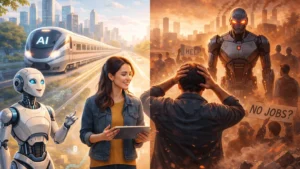
Conversations about artificial intelligence often bring excitement and concern at the same time. Because AI grows faster than any previous technology, many people now ask a difficult question: “are we going to be replaced by AI?” The fear feels real, especially when we see machines writing text, driving vehicles, and analyzing information instantly. Yet, a deeper look reveals a different picture. Instead of removing human value, AI pushes us to evolve, think smarter, and use our strengths more effectively.
AI now shapes daily life. Businesses make predictions with machine learning, hospitals diagnose illnesses with advanced tools, and even travelers receive personalized suggestions when searching for Hamburg places to visit. These examples show how AI supports human decision-making rather than replacing it. Although technology transforms how we work, it still relies on human experience, creativity, and emotional understanding—qualities machines cannot replicate.
How AI Changes Industries Without Replacing Humans

People often ask, “are we going to be replaced by AI?” because the speed of automation feels overwhelming. However, AI rarely removes entire jobs. Instead, it changes how work happens. Companies now use intelligent tools to analyze large amounts of data, detect errors instantly, and streamline communication.
These improvements help workers focus on strategic decisions rather than routine tasks.The shift mirrors past technological revolutions. The digital era created millions of careers in IT, marketing, design, cybersecurity, and remote work.
Today, AI opens new paths in data science, AI ethics, machine learning engineering, automated quality control, and human-AI coordination. Humans remain at the center because technology needs guidance, oversight, and interpretation. Consequently, industries grow as workers adapt, train, and move toward higher-value roles.
Why Human Intelligence Still Outperforms AI in Key Areas
The question “are we going to be replaced by AI?” appears everywhere because people see machines completing tasks faster. However, speed does not equal understanding. Human intelligence comes from emotion, instinct, memory, culture, and lived experience. These elements shape leadership, creativity, empathy, and moral decision-making—areas where AI struggles.
-
Humans read emotions and respond with empathy
-
People understand social contexts and cultural signals
-
Ethical decisions require human judgment
-
Creativity comes from experience and imagination
-
Complex problem-solving depends on intuition
While AI handles data, humans shape meaning. This difference keeps humanity relevant in every field that involves relationships, interpretation, and deep thinking.
Human AI Partnerships Will Define the Future of Work
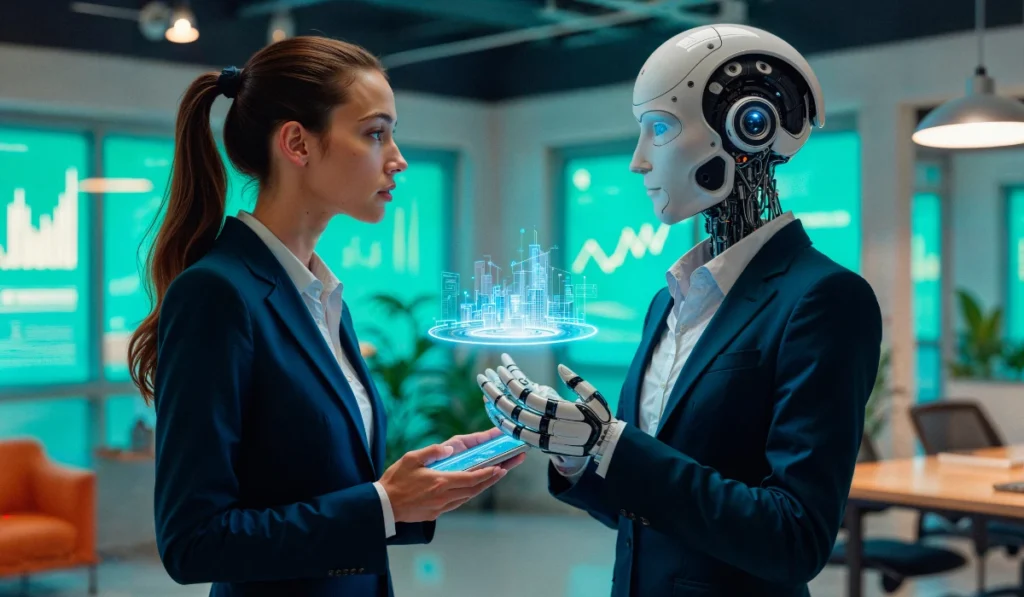
Although many ask whether “are we going to be replaced by AI?”, experts repeatedly highlight partnership as the true direction of progress. When humans team up with intelligent systems, work becomes faster, more accurate, and more creative. Employees gain more time for planning, analysis, leadership, and innovation.
-
Humans manage purpose; AI handles repetitive actions
-
People make final decisions; AI provides suggestions
-
Creativity grows faster with AI tools
-
Ethical choices depend on human values
-
New roles emerge from every advancement in AI
This collaboration strengthens industries and encourages workers to adopt smarter tools without losing their identity or importance.
Economic Impact of AI and New Opportunities

AI influences the global economy by accelerating production, improving accuracy, and creating more efficient workflows. Although some routine tasks shift toward automation, new forms of work appear at the same time. Entrepreneurs use AI to build faster businesses, medical teams work with advanced diagnostic tools, and educators design smarter learning environments.
Travel also benefits from intelligent systems. For instance, when someone searches for Hamburg places to visit, AI analyzes interests, weather, and local events to offer personalized choices. This level of customization shows how technology improves human experiences rather than replacing them. Workers who embrace AI gain early access to new job markets, emerging tools, and global opportunities.
Future Skills That Will Matter in an AI-Driven World
Workers who want long-term success must focus on skills that technology cannot imitate. Emotional intelligence, creativity, communication, and ethical thinking remain essential. At the same time, digital literacy gives workers the ability to use AI tools effectively.
Adaptability also matters. Industries evolve quickly, and those who learn continuously stay ahead. When people combine human strengths with technical knowledge, they create a powerful skill set that keeps them valuable in any environment.
AI and Creativity: Support, Not Replacement
If we ask, “are we going to be replaced by AI?” within creative industries, the answer becomes clear. AI can suggest ideas, organize information, or generate starting points. However, it cannot feel emotions or tell stories from personal experience.
Creativity grows from life, travel, culture, challenge, and memory. Even exploring new cities—such as walking through unique Hamburg places to visit adds emotional texture to creative work. AI lacks this depth, so humans continue to lead the artistic, storytelling, and imaginative world.
-
AI boosts creative speed
-
Humans bring emotional meaning
-
Technology improves workflow
-
Creative ideas come from life experiences
-
Human imagination shapes the final result
AI becomes a helpful partner, not a replacement for human expression.
Will Automation Replace or Transform Jobs?

Many workers fear that automation might eliminate familiar roles. In reality, workplaces shift rather than disappear. Machines assist with predictable tasks, but people stay responsible for communication, strategy, client relationships, quality control, and critical thinking.
Customer service offers a clear example. Chatbots answer simple questions quickly, while trained staff handle complex or emotional situations. Transportation follows a similar pattern: autonomous features support drivers, but humans still manage safety, logistics, and unexpected challenges. Every wave of advancement introduces more specialized and higher-value jobs.
How Workers Can Prepare for an AI-Integrated Future
Preparation starts with awareness. Workers who understand how AI influences their field can adjust early and grow with confidence. Staying flexible and curious helps professionals explore new tools and push their careers forward. Continuous learning plays a major role in success.
-
Strengthen digital and AI literacy
-
Improve emotional and social skills
-
Practice creativity and problem-solving
-
Learn the basics of data-driven tools
-
Follow trends that shape future careers
These steps help workers stay valuable in a world where humans guide technology rather than compete with it.
FAQs
Will AI take every job?
No. AI only removes repetitive tasks, not full professions.
Is AI smarter than humans?
AI works faster with data, but humans lead in emotion, ethics, and creativity.
Which skills remain important?
Creativity, emotional intelligence, problem-solving, and digital literacy.
Should people fear AI?
No. With training and adaptability, AI becomes a tool that expands opportunities.
Conclusion
So, “are we going to be replaced by AI?” After reviewing every major trend, the answer stands strong: No. Humans will not disappear. We will advance, adapt, and take on more meaningful responsibilities. AI improves processes, speeds up tasks, and enhances decision-making in fact, according to a recent analysis, around 30% of code is now being written by AI, yet that doesn’t mean human developers are becoming obsolete. For more on that, see our deep‑dive on how Microsoft views AI’s role in coding.
The future belongs to balanced collaboration, where humans direct the mission and AI provides support. Workers who stay open, learn new skills, and embrace this partnership will thrive in the next era of innovation. For more on how AI is reshaping roles and to explore whether AI can even write code by itself check out our in-depth analysis here.