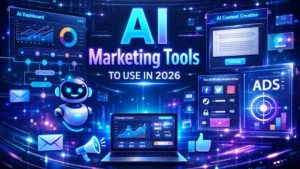

In today’s digital marketplace, companies want intelligent strategies that keep them competitive. This is where AI tools for dynamic pricing become extremely useful. These tools adjust prices automatically using real-time data, market signals, and customer behaviour.
As a result, businesses stay profitable even during fast market changes. Although many brands still use fixed pricing, modern companies now prefer automated, data-driven decisions. This shift is happening because AI understands patterns humans often miss.
Moreover, AI improves pricing accuracy while reducing guesswork. In this guide, you will learn how these tools work, why they matter, and how businesses can use them to maximize revenue without overspending.
How AI Tools Transform Dynamic Pricing Decisions
AI solutions have changed how companies manage commercial pricing. Earlier, pricing teams relied on spreadsheets, manual research, and predictions. But markets now move too quickly. With AI, businesses receive accurate decisions within minutes.
AI models use machine learning to understand customer demand. They also consider competitor pricing, seasonality, inventory levels, and buyer behaviour. As the market shifts, AI adjusts prices instantly. As a result, businesses maintain a balance between profit and customer satisfaction.
This technology is now essential for e-commerce brands, airlines, hotels, and even local retailers.
Key Benefits of Using AI Tools for Dynamic Pricing

As businesses grow, price optimization becomes more complicated. AI helps simplify these challenges while bringing powerful benefits.
First, AI provides precision. Second, it removes emotional decision-making. Third, it improves margins without harming the customer experience. In many industries, companies using AI earn more revenue than competitors relying on old pricing strategies.
Benefits Overview
- Real-time pricing updates during market shifts
- Higher profit margins due to optimized pricing decisions
- Better inventory control during demand fluctuations
- Personalized price recommendations for different customer segments
- Reduced operational cost because automation replaces manual calculations
Types of AI-Powered Pricing Models Used Today
Dynamic pricing uses several models, depending on business strategy. Every model solves a different problem. Because of this, companies often combine multiple approaches.
One type is demand-based pricing, which changes prices according to customer interest. Another type is cost-based pricing, which adjusts rates when supply costs increase or decrease. A third type is competitor-based pricing, where AI continuously tracks market prices. Finally, some companies use personalized pricing, where each customer receives a unique price based on behavior.
These models help businesses maintain competitive advantage. Additionally, they ensure that pricing always aligns with customer expectations.
Common AI Pricing Models
- Demand-driven mode
- Cost-driven model
- Competition-driven model
- Time-based model
- Customer-behavior model
How AI Tools for Dynamic Pricing Work Behind the Scenes

The process starts with data collection. AI tools gather information from multiple sources, including market trends, purchase history, and product performance. After that, machine learning models analyze patterns and detect relationships. These insights help forecast future demand more accurately.
Next, AI tools test multiple price points to identify the most profitable value. They consider competitor moves, product visibility, conversion rates, and seasonal patterns. Then the system updates the price in real time. This is why companies using AI respond faster than those relying on manual strategies.
Moreover, AI tools keep learning. When customers react differently, the system adjusts its predictions. This continuous improvement makes the pricing model smarter every week. Businesses benefit from increasing accuracy over time.
Real-World Industries Using AI for Dynamic Pricing
AI pricing technology is now common across different sectors. Retail companies use it to match online customer expectations. Hospitality brands use it to manage occupancy rates. Additionally, airlines rely on it to adjust ticket prices based on seat availability.
E-commerce platforms also use AI to stay competitive, especially during flash sales. Ride-sharing companies update prices instantly during peak hours. Even small businesses use simple AI tools to manage discounts and promotions. Because the digital economy moves quickly, every industry now requires smarter decision-making.
Industries Relying on AI Pricing
- Online retail and e-commerce
- Airline and travel companies
- Logistics and delivery services
- Hotels and hospitality
- Ride-hailing and transportation apps
Features to Look for in AI Dynamic Pricing Tools

Choosing the right pricing tool is extremely important. Since every platform works differently, businesses must select tools that fit their strategy. Strong pricing tools offer detailed analytics, seamless integration, and reliable forecasting.
Additionally, accuracy matters. Tools with poor data quality can cause financial losses. Therefore, businesses must check for transparent pricing logic, customizable dashboards, and automated rule settings. These features allow brands to take control while still benefiting from automation.
Challenges Businesses Face When Using AI for Pricing
Although AI pricing delivers strong advantages, companies sometimes face challenges. For example, poor data quality affects predictions. Another issue is customer perception. When prices change too frequently, some customers feel uncertain. Because of this, businesses need smart pricing rules that maintain fairness.
Technical integration also takes time. Some companies struggle to connect old systems with AI platforms. Moreover, if employees lack technical knowledge, they may misunderstand the price recommendations. With proper training and clear communication, these challenges become easier to handle.
Best Practices for Implementing AI Dynamic Pricing
When adopting AI pricing, companies should start with small experiments. This helps identify the most effective strategies. After that, they can expand to more products or markets. Regular monitoring is essential because pricing environments change quickly. Companies should also update their data sources frequently.
Furthermore, transparency improves customer trust. Businesses should explain how pricing works, especially during high-demand periods. As a result, customers feel more comfortable with the changing rates. Companies that follow these practices achieve long-term success and stronger revenue stability.
Implementation Tips
- Start with small pilot projects
- Use high-quality, up-to-date data
- Monitor real-time results
- Provide internal training for staff
- Maintain customer transparency
Future of AI Tools for Dynamic Pricing
The future of automated pricing is extremely promising. AI will become even smarter as data availability increases. New algorithms will understand emotions, buying patterns, and purchasing power more accurately. In addition, predictive models will forecast market shifts earlier than ever.
Soon, AI systems will offer deeper personalization. Prices may adjust based on real-time engagement, loyalty history, or browsing behaviour. Furthermore, companies will combine pricing with inventory automation, demand sensing, and personalized promotions. This integrated approach will create a more seamless buying experience for customers.
Dynamic pricing is no longer optional. It is now a core part of modern business strategy.
Conclusion
AI-driven pricing has become one of the most reliable ways for businesses to stay competitive in fast-moving markets. It not only improves decision-making but also reduces the risks that come with manual pricing.
As customers, competitors, and market trends continue to change rapidly, companies need pricing systems that can adapt instantly. AI tools provide that adaptability by analyzing real-time signals, forecasting demand, and recommending the best price at the right moment.
Moreover, the future of pricing will rely even more on automation, predictive analytics, and personalized price models. Businesses that adopt AI early gain stronger revenue growth, improved customer satisfaction, and better operational efficiency.