Carpentry is one of the oldest and most respected trades in the world. The precision, creativity, and dedication involved in crafting wood into functional and beautiful objects make it both an art and a science. To achieve perfection in every cut and joint, it’s vital to know the tools a carpenter uses in daily work.
These tools are not just instruments; they are extensions of the carpenter’s skill and imagination. From traditional hand tools to advanced power equipment, each plays a unique role in shaping, joining, and finishing woodwork with precision and strength.
Let’s explore in detail the essential tools a carpenter uses, their purposes, and how they help achieve top-quality craftsmanship.
Measuring and Marking Tools a Carpenter Uses
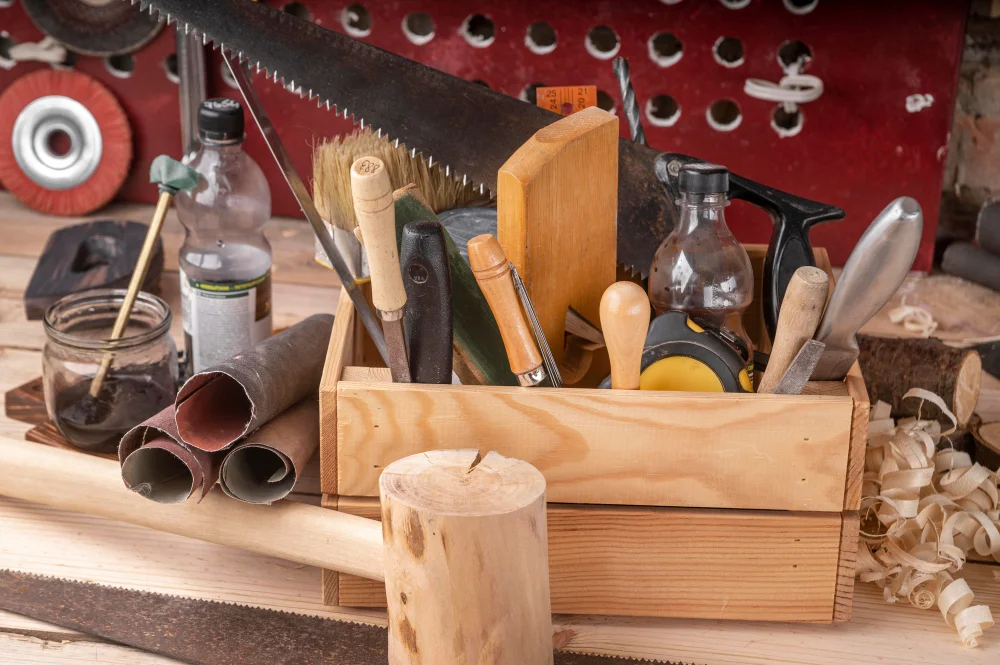
Every masterpiece begins with measurement. Accuracy is the foundation of carpentry, and even a millimetre of error can ruin an entire project. The first step in any task, therefore, involves measuring and marking tools that guide every cut and joint.
A carpenter’s measuring tools ensure precision, consistency, and alignment. Whether building furniture, framing a structure, or crafting cabinets, accurate measurements help maintain structural integrity and visual appeal.
Common Measuring and Marking Tools:
- Tape Measure: A flexible steel or fibreglass tape that helps measure wood length, width, or height with accuracy.
- Combination Square: Used for marking right angles and verifying the accuracy of joints and edges.
- Spirit Level: Ensures surfaces are perfectly horizontal or vertical.
- Marking Gauge: Helps scribe consistent lines parallel to the wood edge for joinery.
- Chalk Line: Perfect for marking long straight lines over large boards or walls.
With these tools, a carpenter lays the foundation for every project. Measuring and marking may seem simple, but in reality, they demand patience and precision, the two hallmarks of expert carpentry.
Hand Tools a Carpenter Uses
Before electricity revolutionized workshops, carpenters relied solely on manual tools. Even today, hand tools remain irreplaceable because they offer unmatched control and finesse.
They help in shaping, trimming, carving, and smoothing wood surfaces where machines might lack sensitivity. For any craftsman, mastering these tools builds a deep connection with the material and brings out the beauty of raw wood.
Hammer
The hammer is one of the most iconic tools a carpenter uses, serving as both a driver and a remover. Whether nailing wooden frames or fitting joints, the claw hammer’s dual-purpose design brings efficiency to every task. Its balanced handle and durable head give carpenters control, strength, and precision during construction.
Chisels
Chisels are essential for shaping, carving, and refining joints in wood. They allow a carpenter to create clean mortises, tenons, and grooves that fit perfectly together. When sharpened well and used with care, chisels deliver the fine craftsmanship that transforms plain timber into beautiful structures.
Hand Saw
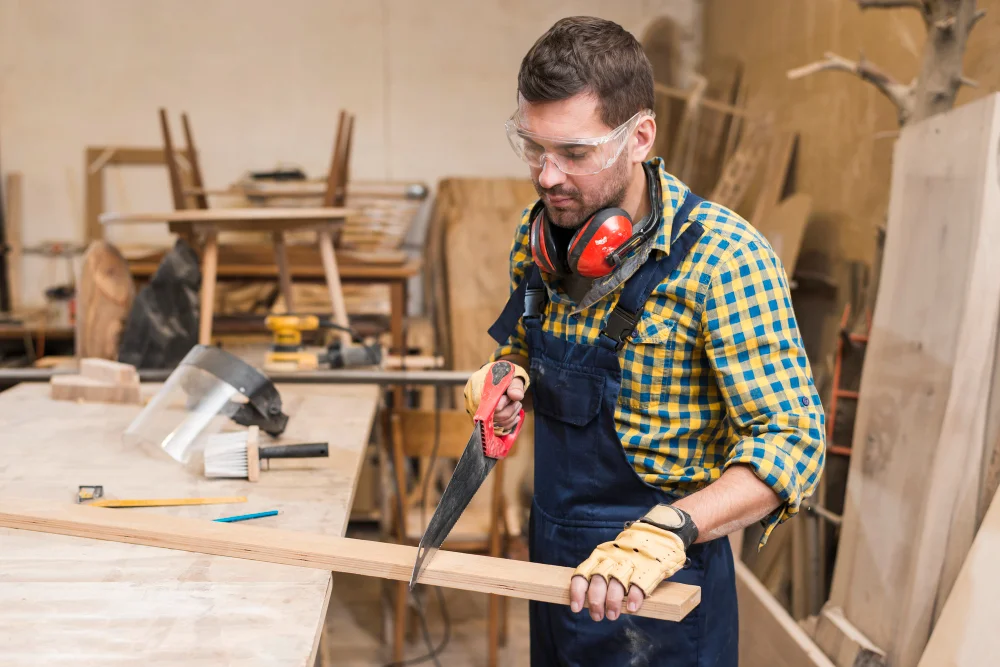
A hand saw offers unmatched control for detailed cutting tasks where machines might be too aggressive. It enables smooth, clean cuts along the grain or across it, depending on the tooth pattern. Carpenters rely on hand saws for trimming, fitting, and delicate finishing that requires precision and feel.
Wood Plane
The wood plane is a timeless tool used to flatten, smooth, and level wooden surfaces. It shaves off thin layers of wood, revealing the natural beauty beneath while ensuring perfect alignment. Carpenters often use it before finishing to achieve a flawless texture and precise thickness.
Mallet
A mallet provides the gentle striking power carpenters need when working with chisels or assembling joints. Its soft wooden or rubber head prevents damage to tool handles and delicate surfaces. By delivering controlled force, it ensures accuracy without leaving marks or dents on the material.
Each hand tool serves a specific purpose. The tactile feel they offer allows a carpenter to sense the grain, resistance, and response of wood, something no machine can replicate.
Power Tools a Carpenter Uses

Modern carpentry blends traditional craftsmanship with advanced technology. Power tools have transformed the way carpenters work, offering speed, accuracy, and consistency that saves hours of manual effort. However, they require skill and care to use correctly.
Power tools enhance productivity, but they must complement, not replace, manual skill. A wise carpenter knows when to use machinery for efficiency and when to rely on hand tools for detail.
Common Power Tools Used by Carpenters:
- Circular Saw: Ideal for making straight, fast cuts on large boards or plywood sheets.
- Mitre Saw: Enables precise angled and bevel cuts for mouldings, frames, and trim work.
- Power Drill and Driver: Used for drilling holes, driving screws, and assembling furniture or frames.
- Router: Shapes edges, creates joints, and adds decorative profiles.
- Table Saw: A versatile tool for ripping, cross-cutting, and beveling lumber with precision.
In professional workshops, power tools are indispensable. They not only speed up the workflow but also ensure uniform quality, especially in large-scale construction or cabinetry.
Finishing and Detailing Tools a Carpenter Uses
A carpenter’s work reaches perfection only when the finishing stage begins. This phase brings smoothness, shine, and protection to wooden surfaces, transforming raw craftsmanship into refined beauty.
Finishing tools such as sanders, brushes, and files help polish the wood, remove imperfections, and prepare it for coatings that enhance durability.
Finishing requires patience, precision, and creativity to achieve the perfect texture and colour. Using the right tools, from orbital sanders and scrapers to clamps and putty knives, ensures each surface is flawless and strong. This final touch not only improves appearance but also protects wood from moisture, scratches, and long-term damage.
Safety and Maintenance Tools a Carpenter Uses

Behind every great craftsman is a careful worker who values safety. Carpentry involves sharp blades, flying debris, and heavy materials, so safety tools are essential. Moreover, maintaining equipment ensures long life and reliable performance.
Neglecting safety can cause serious injuries, while poor maintenance reduces precision and productivity. A professional carpenter treats safety gear and maintenance tools as core parts of the toolkit.
For those looking to enhance their professional efficiency, using smart tools like AI CV builders can also make portfolio creation as seamless as your craftsmanship.
Safety & Maintenance Essentials:
- Safety Glasses: Protect eyes from wood chips and dust.
- Dust Mask or Respirator: Keeps airways safe from fine sawdust particles.
- Ear Protection: Prevents hearing damage from noisy power tools.
- Tool Oil and Sharpening Stones: Maintain blades, saws, and chisels in perfect condition.
- Tool Belt and Storage Box: Keep tools organized, accessible, and safe from damage.
Taking care of tools is as important as knowing how to use them. A well-maintained tool ensures smoother performance and prolongs both its life and the carpenter’s success.
Advanced Tools and Digital Devices in Modern Carpentry
Technology has changed carpentry dramatically. Today’s professionals use digital measuring tools and precision instruments that minimize human error. These modern devices combine traditional craftsmanship with innovative accuracy.
From laser measurement systems to automated saws, new tools have redefined how efficiently a carpenter can plan and execute a project.
Laser Distance Meter
The laser distance meter is one of the most efficient modern tools a carpenter uses, offering quick and highly accurate measurements over long distances. Unlike traditional tape measures, it uses laser technology to calculate dimensions instantly, reducing human error.
Digital Angle Finder
A digital angle finder brings technology and precision together in modern woodworking. It allows carpenters to measure and set exact bevel or mitre angles with ease, displaying readings on a clear digital screen.
CNC Router Machine
The CNC router machine represents the future of professional carpentry. Controlled by computer software, it carves, cuts, and engraves wood with exceptional precision and speed. Carpenters use CNC routers to create intricate designs, decorative patterns, and mass-produced components.
Moisture Meter
A moisture meter is an essential tool that measures the water content in wood before cutting or finishing. By detecting moisture levels it prevents issues like warping, cracking, or shrinking after installation.
These smart devices save time and reduce waste, making carpentry more precise and sustainable. A modern carpenter embraces technology while keeping traditional skills alive.
Speciality Tools for Custom Woodworking
Not all carpentry is structural; some focuses on fine woodworking, cabinetry, and artistic detailing. Speciality tools help create intricate joints, decorative trims, and unique furniture designs.
These tools require advanced skill and patience, as they often serve niche purposes in high-end projects or restoration work.
Examples of speciality tools:
- Biscuit Joiner: For invisible, strong joints in tabletops or cabinets.
- Dovetail Jig: Assists in making decorative yet strong corner joints.
- Spokeshave: Shapes curves and rounded surfaces smoothly.
- Carving Gouges: For decorative carving and wood sculpture detailing.
- Edge Banding Machine: Applies thin veneer strips to hide exposed edges of plywood.
Such tools reflect the artistry behind woodworking and allow carpenters to express creativity beyond structural builds.
Conclusion
The tools a carpenter uses define the quality of their craftsmanship. From precise measuring instruments to reliable hand tools, powerful machinery, and modern digital devices, each plays a vital role in creating perfect results.
Carpentry is not just about cutting wood; it’s about understanding the material, respecting the process, and mastering the tools. Whether you’re an apprentice or a seasoned craftsman, investing in the right tools and learning their proper use ensures that every project you complete stands as a work of art built to last.