Google AI update is rewriting the rules of search overnight. One day your rankings look stable the next, your clicks quietly disappear. Meanwhile, AI-generated answers dominate the top of the page, pushing traditional results further down. So even strong content can lose visibility if it isn’t structured for this new reality.
If traffic feels unpredictable lately, this shift explains what’s happening and what you should do next.
What Is the Google AI Update?
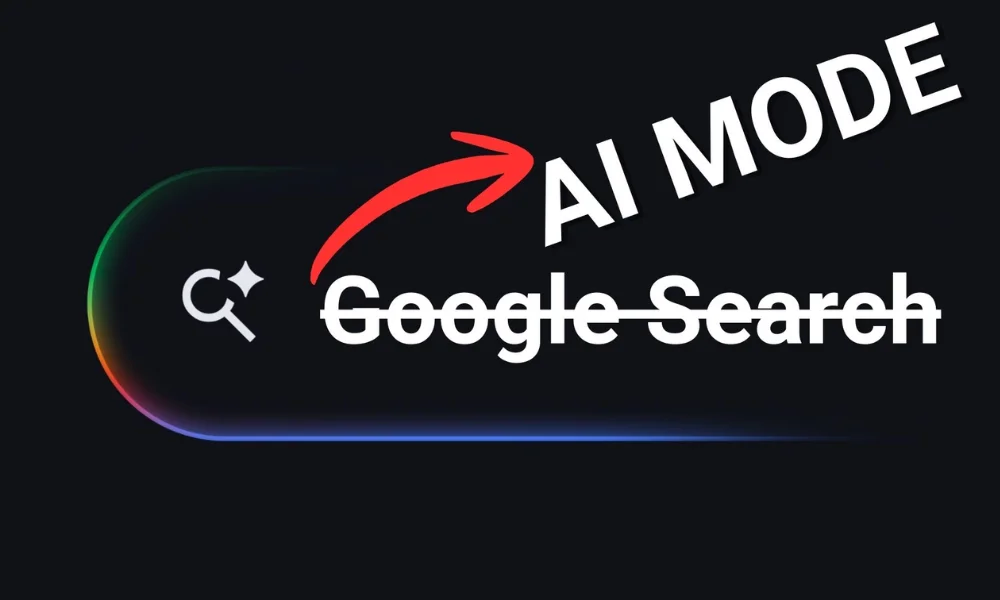
When people mention the Google AI update, they’re often referring to several changes at once. In most cases, it includes AI Overviews at the top of results, AI Mode for conversational search, and deeper AI integration inside Google’s ranking systems.
At the same time, Google’s algorithm has become more context-aware. Because of expanded google algorithm AI use, search no longer focuses only on keywords. Instead, it evaluates meaning, relationships between topics, and overall expertise.
So while rankings still matter, presentation and extraction now matter just as much.
Differences Between Google Core Update and Google AI Update Explained
Many site owners confuse these two updates, which leads to unnecessary changes. So let’s simplify it clearly. Below is a structured breakdown of the differences between Google core update and Google AI update explained in a practical way:
| Factor | Google Core Update | Google AI Update |
|---|---|---|
| Primary Purpose | Adjusts ranking algorithms and evaluation signals | Enhances search experience using AI-generated summaries and conversational search |
| What It Changes | Who ranks and how pages are evaluated | How search results are displayed and consumed |
| Impact Area | Entire website ranking performance | SERP layout, AI Overviews, AI Mode visibility |
| Traffic Effect | Can increase or decrease rankings directly | May reduce CTR even if rankings remain stable |
| Content Focus | Quality, relevance, authority, trust | Clarity, extractable answers, structured information |
| Update Frequency | Periodic broad core updates | Ongoing AI feature evolution |
| Recovery Method | Improve overall content quality and E-E-A-T | Optimize structure and citation readiness |
Now that the differences between Google core update and Google AI update explained are clear, diagnosing traffic shifts becomes easier. If rankings drop sharply, it may be core-related. On the other hand, if rankings stay steady but clicks decline, AI presentation changes are often responsible.
How Google AI Update Affects Organic Search Rankings in 2026
Understanding how Google AI update affects organic search rankings in 2026 requires looking beyond positions alone.
- First, informational queries are heavily influenced by AI Overviews. As a result, users often receive answers immediately. Consequently, clicks may decrease even though visibility technically remains.
- Second, conversational search is growing. Through the search AI update, Google now encourages follow-up queries. That shift favors long-tail, context-rich content rather than surface-level articles.
- Third, transactional searches remain more stable. While AI features appear, purchase-intent queries still rely strongly on traditional rankings.
So when analyzing how Google AI update affects organic search rankings in 2026, remember this: the algorithm still values authority and depth, yet the interface changes how traffic flows.
Impact of Google AI Overviews on Search Click-Through-Rates (CTR)
The impact of Google AI Overviews on search click-through-rates (CTR) is noticeable across many industries.

In particular:
-
Informational queries show reduced CTR
-
Impressions may rise due to broader query matching
-
Pages cited within AI summaries may gain trust-based clicks
Interestingly, the impact of Google AI Overviews on search click-through-rates (CTR) is not purely negative. When your content becomes a cited source, visibility may improve in a different way. So instead of focusing only on rankings, it’s smarter to monitor behavior shifts.
Step-by-Step Guide to Optimizing Content for Google AI Overviews
Here is your step-by-step guide to optimizing content for Google AI Overviews practical, strategic, and built for real-world results.
Step 1: Write Clear, Extractable Definitions
Start each important section with a short, direct explanation that answers the core question immediately. Keep it clean and factual, without filler or storytelling in the first few lines. When your definition stands alone clearly, AI systems can quote it confidently.
Think in terms of “pull quotes.” If someone copied just that paragraph, would it still make sense? If yes, you’re structuring it correctly for extraction.
Avoid overcomplicating language. Simple, precise phrasing builds trust and increases the chances of being cited inside AI summaries.
Step 2: Use Logical Heading Structure
Organize your content the way a reader naturally thinks about the topic. Start broad, then gradually narrow into specific subtopics. This layered structure helps both users and search systems follow your flow.
Clear H2 and H3 headings create content blocks that are easy to interpret. When ideas are grouped logically, AI models can identify relationships between sections more accurately.
Most importantly, make every heading purposeful. Each one should answer a distinct intent rather than repeat variations of the same point.
Step 3: Strengthen E-E-A-T Signals
Show real expertise through insight, not exaggeration. Add practical observations, updated context, and experience-based explanations that demonstrate subject familiarity.
Include an author bio, visible publish date, and consistent topical authority across related articles. Since google algorithm AI use evaluates trust more intelligently now, transparent credibility makes a difference.
Also, support key claims with verifiable reasoning. When your content feels grounded and responsible, it aligns naturally with Google’s quality standards.
Step 4: Expand Topical Depth
Cover related subtopics within the same page instead of spreading thin content across multiple short posts. Depth signals authority, while fragmentation weakens clarity.
Because of the search AI update, Google now favors pages that solve an entire problem in one place. So anticipate follow-up questions and answer them proactively.
At the same time, stay focused. Expand intelligently, not endlessly. Every added section should strengthen the main topic rather than dilute it.
Why CTR Drops Even When Rankings Don’t
Many publishers notice traffic dips while rankings remain stable. That’s frustrating, yet it makes sense. AI Overviews answer quick questions instantly. As a result, users often stop there. Meanwhile, traditional organic listings move lower on the page.
So although position metrics look healthy, real-world clicks decline. That dynamic highlights the true impact of Google AI Overviews on search click-through-rates (CTR) in 2026.
Tracking Long-Tail Search Trends After Google AI Search Rollout
Search behavior is shifting toward conversation. That’s why tracking long-tail search trends after Google AI search rollout is critical.
Start by reviewing Search Console data:
-
Identify longer query phrases
-
Monitor question-based searches
-
Compare CTR before and after AI feature expansion
Then, observe how follow-up queries evolve. Because the search AI update supports conversational refinement, users increasingly type more specific, intent-rich phrases.
Consistent tracking long-tail search trends after Google AI search rollout reveals growth opportunities rather than just traffic loss.
How the Search AI Update Reflects Google Algorithm AI Use
The broader search AI update signals how advanced google algorithm AI use has become.
Now, Google evaluates:
-
Topic depth
-
Context alignment
-
Entity relationships
-
Content originality
Instead of rewarding isolated keywords, the algorithm interprets meaning holistically. That means expertise, clarity, and structure carry more weight than ever.
30-Day Action Plan After the Google AI Update
To adapt strategically, follow this simple plan.
Week 1: Audit traffic and CTR shifts.
Week 2: Apply the step-by-step guide to optimizing content for Google AI Overviews.
Week 3: Expand coverage based on tracking long-tail search trends after Google AI search rollout.
Week 4: Strengthen authority signals and update older content.
Gradual refinement works better than reactive overhauls.
Final Thoughts
Search is clearly evolving, and the Google AI update is accelerating that shift. As AI-generated summaries reshape visibility, rankings alone no longer tell the full story. Instead, clarity, structure, and trust now determine who gets seen and who gets skipped.
That’s exactly the kind of strategic shift we continue analyzing at OpenAIHit.com, where search trends are observed through a practical lens. So as this AI-driven era unfolds, review your structure, strengthen your authority, and align your content with how search truly works today.
FAQs
What is the Google AI update in 2026 and why does it matter?
The Google AI update introduces AI-driven search features, and as a result, it reshapes how users discover and interact with content.
How does the Google AI update affect organic traffic?
In many cases, rankings remain stable, yet AI summaries reduce clicks by satisfying queries directly.
What is the difference between a Google core update and the Google AI update?
A core update adjusts ranking signals, while the AI update changes result presentation and user interaction.
Why did my website traffic drop after the Google AI update?
Often, AI Overviews capture informational clicks first, so CTR declines even without ranking loss.
How can I optimize my content for Google AI Overviews?
Focus on concise answers, structured headings, and strong authority signals so AI systems can extract your content clearly.