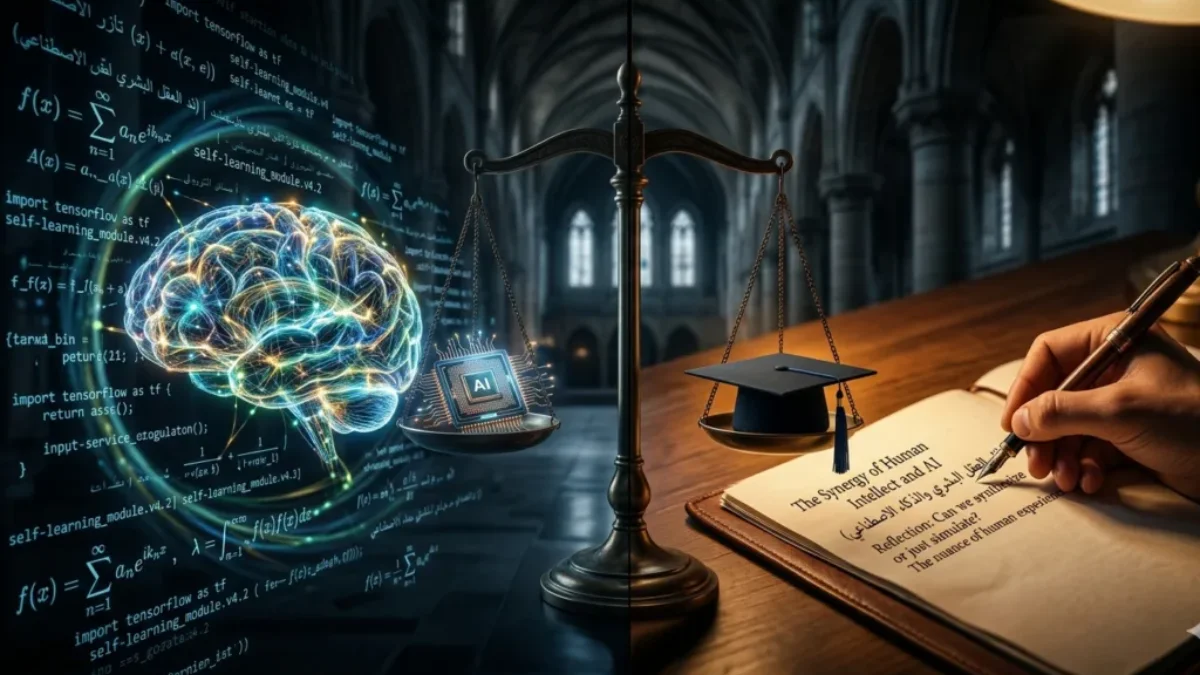
AI for assignments can help you write without plagiarism if used correctly use AI for brainstorming, outlining, explaining concepts, and research synthesis, but never submit full AI output directly. Safe approaches include rewriting AI drafts with your own voice, verifying all sources, and ensuring you can defend every sentence. The real test: Can you explain your work, does it sound like you, and did you verify the facts? Bottom line: Use AI to enhance your thinking, not replace it, so the work is genuinely yours ethical, original, and undetectable because it’s authentically produced by your understanding.
You’re staring at a blank screen. Your assignment is due tomorrow. You know AI can help but will your teacher catch it? More importantly, will the work be flagged as plagiarized?
The truth is: AI for assignments doesn’t have to mean plagiarism. In fact, when used right, AI assignment writers can help you create original work that passes plagiarism checks while actually improving your understanding of the material.
This guide breaks down how to use AI tools for writing assignments without plagiarism the real, practical way that educators actually approve of.
The Plagiarism Problem With AI for assignments
Here’s what most students get wrong: They think plagiarism means the AI will get caught. That’s only half the problem. The bigger issue? AI-generated text can be plagiarism even if it passes Turnitin.
How AI Creates Plagiarism Without You Realizing It
When you prompt ChatGPT or Claude with write my essay on supply chains, the AI pulls patterns from its training data. Sometimes it regurgitates existing work word-for-word. Sometimes it rewrites published material so slightly that it still counts as plagiarism.
That’s why an AI assignment writer alone isn’t enough. The tool generates a starting point then YOU have to make it original.
Why Some AI Tools Claim Plagiarism-Free
You’ve seen the ads: 100% plagiarism-free AI assignment writing. Here’s what that actually means (spoiler: not much). Most services run their output through plagiarism checkers like Turnitin. If it scores low on originality, they rewrite it. But passing a plagiarism checker is original work.
Real talk: Your teacher can tell when something doesn’t sound like you even if Turnitin approves it.
How to Use AI for Assignments Without Creating Plagiarism
The key is treating AI for assignments as a tool, not a ghostwriter.

1: Use AI to Brainstorm and Outline (Not Write)
This is the safest approach. Let AI help you organize your thinking not replace it.
How it works:
- You write your thesis or main argument
- You ask AI to create an outline that supports YOUR idea
- You fill in each section with your own research and voice
Example prompt: “I think supply chain resilience is more important than cost efficiency. Create an outline with 3 main points supporting this thesis and 2 evidence placeholders for each point.”
Why this works: The outline is just a skeleton. You’re doing the thinking and writing.
Plagiarism risk: Very low. The outline is structure, not content.
2: Use AI to Explain Concepts, Then Write Yourself
Confused about what your assignment is asking? Use an AI assignment writer to clarify then explain it in your own words.
How it works:
- Ask AI to explain a difficult concept simply
- Read the explanation
- Close the AI window and write YOUR understanding from memory
Example prompt: Explain supply chain resilience in simple terms. Include one real-world example.
Why this works: You’re using AI as a tutor, not a ghostwriter. You learn, then create.
Plagiarism risk: Almost zero. You wrote it from your understanding.
3: Generate a Draft, Then Rewrite It Completely
This approach works if you’re confident you can make AI’s output your own.
How it works:
- Generate a draft from AI
- Read it, then put it away
- Write your own version from memory (using the draft as inspiration, not a template)
- Only check the original if you’re stuck
Why this works: If you rewrite significantly, it becomes your voice and ideas.
Plagiarism risk: Medium-high if you’re not careful. Stick too close to the original? That’s plagiarism.
Real talk: This is harder than it sounds. Most students skip step 3 and just edit the AI output. That’s still plagiarism.
4: Use AI for Research Synthesis (With Verification)
AI can help you summarize sources but it often makes up citations or misses key points.
How it works:
- Paste a source into AI
- Ask it to summarize the main argument, key evidence, and implications
- Verify the summary by reading the original
- Use the verified summary in your essay
Example prompt: Summarize this article in 3-4 sentences. What’s the main argument? What evidence supports it?
Why this works: AI speeds up research, you ensure accuracy.
Plagiarism risk: Low if you verify. High if you skip verification and use AI’s summary as-is.
Best AI Tools for Writing Assignments And How They Handle Plagiarism
Not all AI assignment writers are created equal. Here’s what actually works:
ChatGPT
Plagiarism risk: Medium
Detection risk: 8-12% flagged by Turnitin (varies by assignment)
ChatGPT is great for brainstorming and explaining concepts. It’s less reliable for full essay writing because it sometimes generates vague or generic content that sounds like AI (which triggers plagiarism checkers).
Best use: Outlining, concept explanation, grammar checking your own work.
How to avoid plagiarism: Never submit ChatGPT’s full output. Use it as a starting point only.
Claude (by Anthropic)
Plagiarism risk: Low to Medium
Detection risk: 10-15% flagged by Turnitin
Claude is more careful about citations and reasoning than ChatGPT. It’s better at following complex instructions and less likely to hallucinate sources.
Best use: Research synthesis, outlining complex arguments, explaining nuanced concepts.
How to avoid plagiarism: Same rule rewrite significantly or use only for planning.
Perplexity AI for assignments
Plagiarism risk: Medium
Detection risk: 6-10% flagged by Turnitin
Perplexity’s strength is research. It pulls from web sources and cites them. That said, it still requires verification.
Best use: Research and source-finding (then reading the sources yourself).
How to avoid plagiarism: Always verify sources before citing them.
Specialized AI for assignments: AssignmentGPT, Toolbaz, etc.
Plagiarism risk: Medium
Detection risk: Varies (these tools often use humanizers to lower detection)
These are built specifically for assignment writing. Some are legitimate tools; others are basically ghostwriting services.
Best use: Only as brainstorming aids, not full submission tools.
How to avoid plagiarism: Don’t submit full outputs. Period.
The Real Risk: AI Detection, Not Just Plagiarism
Here’s where most guides miss the mark.
Even if an AI assignment writer passes plagiarism detection, your teacher might still catch it.
How Teachers Actually Detect AI (Beyond Turnitin)
- Sudden quality jumps: Your essay sounds way better than your usual work
- Inconsistent voice: Some paragraphs sound robotic; others sound like you
- Wrong citations: AI makes up sources that don’t exist
- Generic examples: AI uses the same examples other students’ AI used
- Defensibility test: They ask you to explain your essay verbally. You can’t.
What Actually Passes the Sniff Test
Teachers know AI when they see it. But they also know the difference between AI helped me and AI wrote this.
Work that passes inspection usually has:
- Your voice throughout (consistent tone)
- Specific, verified examples
- A thesis you can defend
- Evidence of your research (not just AI summaries)
- Imperfections (real writing isn’t perfect)
How to Use AI for Assignments and Stay Safe: A Checklist
Before you submit any assignment written with AI for help, answer these:
- Did I do the thinking?
Can you explain every major point in your assignment without looking at it? - Is this my voice?
If you read it aloud, would people recognize it as your writing? - Did I verify the facts?
Did you check citations, statistics, and claims against original sources? - Would I pass a follow-up question?
If your teacher asked explain this section, could you do it? - Is this disclosure-safe?
If your teacher asked did you use AI, could you honestly say how and why?
If you answered no to any of these, rewrite before submitting.
Conclusion
AI for assignments isn’t inherently plagiarism but it can become plagiarism fast if you’re not careful.The safest approach to use the AI to brainstorm, outline, and explain but do the writing yourself. Verify all facts and citations and make sure your voice comes through. Also, consider disclosing AI use to your teacher.
AI should amplify your thinking, not replace it. If you’re using it to skip thinking, you’re cheating plagiarism detector or not. If you’re using it to learn faster and think clearer, you’re using it right. Your assignments should be original because they’re genuinely yours not because a plagiarism checker said so. For more detailed insights and resources on using AI responsibly, visit OpenAIHit.com.
Frequently Asked Questions
Can AI-written work actually pass plagiarism checkers?
Yes, sometimes. Turnitin’s AI detector has a 10-15% false positive/negative rate. Some AI outputs slip through; some human writing gets flagged. The real issue isn’t detection; it’s academic integrity.
Is using AI for assignments the same as cheating?
Not necessarily. Using AI to brainstorm, outline, or understand concepts is legitimate. Submitting AI’s full output as your own is cheating. The line is: Did YOU do the thinking?
Should I tell my teacher I used AI?
Honestly? Yes. Most teachers respect transparency. Saying I used ChatGPT to outline my essay, then wrote it myself is way better than getting caught hiding it. Check your school’s policy first.
What if my school bans AI for assignments?
Follow your school’s rules. If AI is banned, don’t use it. If it’s allowed with disclosure, disclose. The rules vary read your syllabus.
How can I make AI-generated work actually original?
Rewrite it significantly. Change structure, add your examples, use your voice, verify sources. If you’re just editing AI’s output, it’s not original.